The best Redo alternatives give Shopify merchants more exchange and store credit options, wider carrier coverage, and pricing that scales with return volume.
Redo is a good fit for startups thanks to its free return portal and covered return label costs. But it focuses mainly on US merchants and has a limited feature set, so many brands look elsewhere.
We picked these 10 Redo alternatives based on their features and how well they help you keep revenue during the return process.
5 Factors to Consider in a Redo Alternative
When choosing a Redo alternative, weigh five factors: pricing, features, integrations, scalability, and customer support.
The goal is to find a tool that fits your current needs and growth stage at a cost you can control.
1. Pricing That Fits Your Budget
Start with cost: is it more affordable than Redo, and does it fit your return volume? Redo’s free plan is tempting if you’re new to returns management or the ecommerce space. But free often means strict limits on return volume or missing features.
Other platforms offer volume-based tiered pricing or flexible plans that match your return volume, and their paid plans add features like product exchanges, store credit, and better customer support.
Pro tip: Choose a tool with transparent pricing so you know exactly what you’ll pay each month, with no hidden fees.
2. Core Return Features You Need
Look for these must-have features:
- Major carrier support: A good platform connects with carriers like USPS, DHL, and UPS so you can offer the return methods customers expect.
- Return automation: Auto-approving returns, generating labels instantly, and processing refunds automatically save your team hours and cut manual errors.
- Flexible return options: Offering exchanges and store credit alongside refunds helps you keep more revenue.
3. Integration With Your Current Setup
Check whether the platform connects with your current tech stack. Poor integrations slow your team down and hurt the customer experience.
Check these common integration requirements:
- Multi-platform availability: Check which ecommerce platforms the app supports. Make sure it works with your current platform, whether that’s Shopify, WooCommerce, BigCommerce, or Magento. If you’re a Shopify merchant, look for apps with “Built for Shopify” certification for quality integration.
- Customer service tools: Integrations with helpdesk software like Gorgias, Zendesk, and Tidio let you handle return-related tickets in one place.
- Marketing apps: It should also work with email tools like Klaviyo and review apps like Yotpo so you can send return follow-ups and track customer feedback.
4. Room for Business Growth
Your alternative should perform the same whether you handle 100 or 1,000 returns per month. A platform with plans for both SMBs and large enterprises means you won’t outgrow it or have to switch mid-growth.
You also want the ability to add new shipping carriers and upgrade features as you expand to different regions. Since Redo focuses mainly on the US market, make sure your alternative works well in Europe, Asia, or wherever you plan to sell next.
5. Customer Support You Can Rely On
Returns can get complicated quickly, even when using a return management platform. Look for app providers that offer strong customer and technical support to help with problems like delayed shipments, broken return labels, or missing status updates.
The best providers offer 24/7 live support through chat or email, plus clear documentation and video walkthroughs for common issues. Fast response times matter most during peak periods, when return volumes spike.
Top 10 Redo Alternatives and Competitors
Each alternative below has different strengths in return management, carrier integrations, and advanced features. Compare them against your goals, budget, and return volume.
#1 CWILL Returns & Exchanges

CWILL Returns & Exchanges handles returns and exchanges for Shopify merchants. It’s built for Shopify, so setup is simple, and it offers more return management features than Redo.
It helps you keep more revenue through multiple exchange options. You also get detailed analytics about your returns.
For return labels, CWILL Returns & Exchanges integrates directly with 17+ carriers, and you handle every request from one returns dashboard.
Customers can also start their own returns through the self-serve portal, which means less work for your team and more return methods for shoppers.
Carriers: Works with 17+ carriers, including USPS, DHL, UPS, and FedEx, for creating return labels. You can request additional carriers through a form.
Key Features
- Revenue-Retaining Exchanges: Let shoppers swap for a different size, pay the difference for higher-value items, or receive store credit on lower-priced ones. These options keep more sales in your store instead of defaulting to refunds.
- Return Protection: Offer your customers optional return protection at checkout. It covers return shipping costs if they need to send items back, so you don’t absorb those costs.
- Customized Workflows: Set rules to auto-approve returns based on spend, value, or reason, and process exchanges or refunds as soon as items are received. Automation helps you handle high volumes of requests faster.
- Multi-Language Return Portal: Provide a branded self-serve page in 16 languages where shoppers can log return reasons and complete their requests.
- Returns Analytics Dashboard: Track which products get returned most often, why customers send items back, and how much revenue you’ve saved through exchanges. These insights make it easier to refine your policies and product choices based on customer behavior.
Pros
- Easy-to-use interface.
- More affordable than many other Redo alternatives.
- Flexible return methods, including QR code returns, pickups, and self-shipping.
- Plug-and-play app for Shopify.
- ISO 27001 certified and GDPR compliant, with 99.99% uptime.
Cons
- Limited free plan (six returns/month).
- Only works with Shopify.
Best for: Small to medium-sized Shopify stores and DTC brands that process 100+ returns per month.
Integrated with: Shopify and Shopify Plus
Pricing: CWILL Returns & Exchanges provides credit-based tiered pricing starting at $29/month for 50 returns (plus a 14-day free trial).
Try CWILL Returns & Exchanges free on the Shopify App Store.
#2 ClickPost Returns Plus
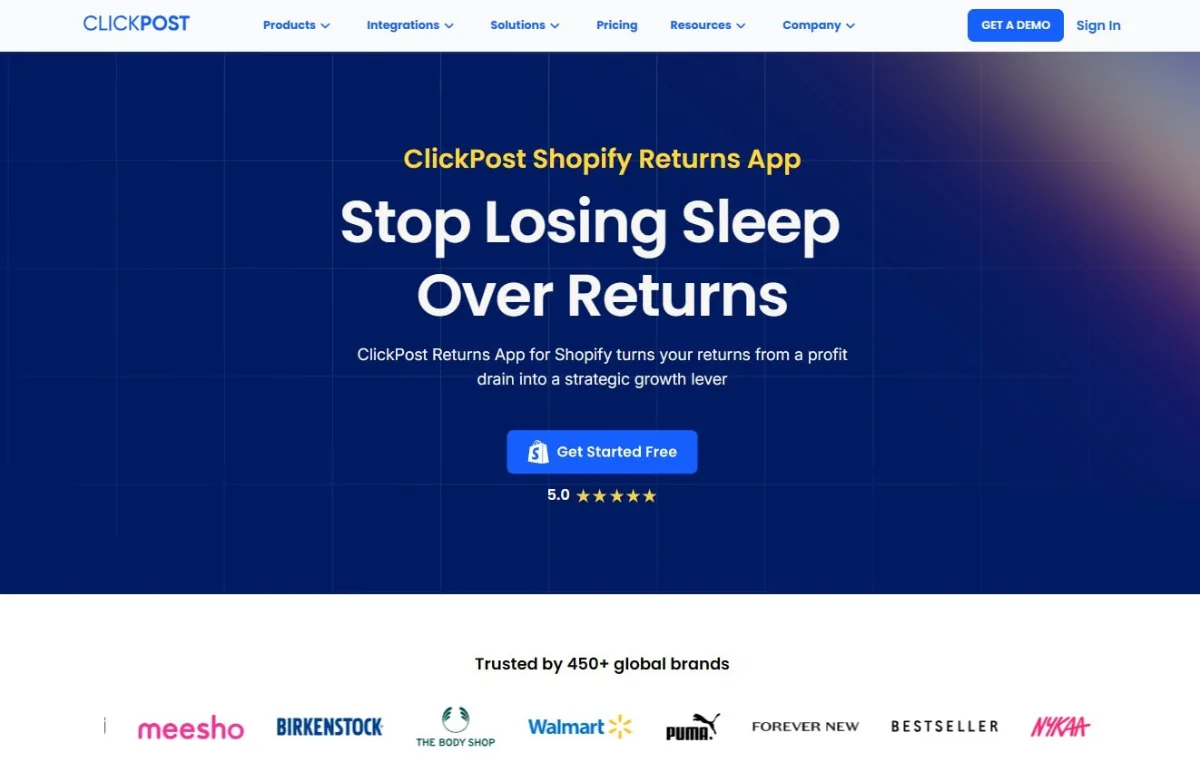
ClickPost Returns Plus offers return management for both your team and your customers. Your team gets a single dashboard where you can track requests, set policies, and spot any patterns. On your customer’s side, they get a branded portal where they can initiate and track their returns.
Carriers: 400+
Key Features
- Branded Self-Service Portal: Your customers can start and track their returns through a portal that feels like part of your store. It keeps the process simple and cuts down on back-and-forth emails with your team.
- Automated Approval and Refund Workflows: Set rules for approvals and refunds so routine requests get handled right away. This saves the most time during peak seasons.
- Real-Time Updates and Notifications: Customers see what’s happening with their refunds and exchanges through automatic emails and status updates.
- Return Analytics Dashboard: Track return reasons, product trends, and refund patterns in one place. With that visibility, you can spot issues early and adjust your policies or product details.
Pros
- Easy to set up and customize.
- Free plan available for up to 100 returns per month.
- Allows single or multiple returns per order.
Cons
- No option to add notes when approving or declining return requests.
- Limited customization and integrations.
Best for: Medium-sized stores that handle 100+ returns per month and need a more detailed return dashboard.
Integrates with: Shopify
Pricing: ClickPost also uses a quota-based tiered pricing model. Its paid plans start at $49/month for up to 225 returns, but you can get started with a free plan.
#3 Loop Returns
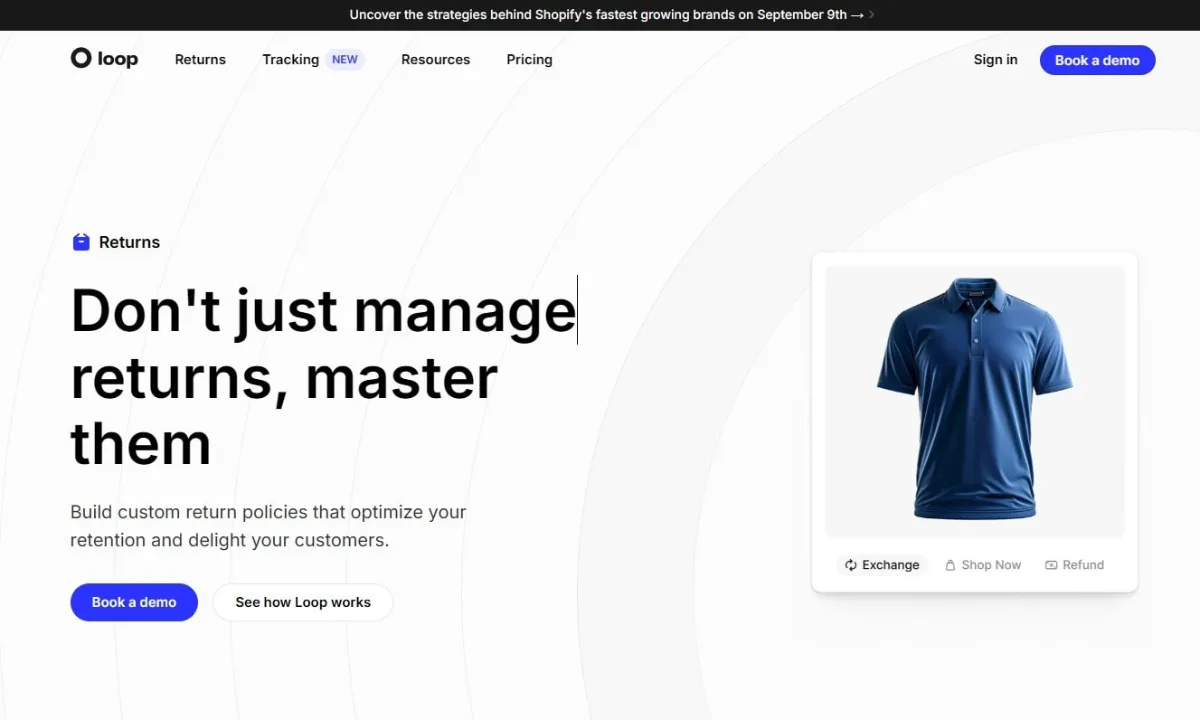
Loop Returns is a returns automation platform known for exchange incentives that nudge customers toward swaps or store credit instead of refunds. It also supports warranty claims and in-store returns for a better post-purchase experience.
Carriers: 21
Key Features
- Exchanges and Store Credits: Offer bonus credits plus “shop now” and “shop later” options that nudge customers toward exchanges or future purchases.
- Point of Sale Returns: Connect online and offline returns so customers can drop items in-store. That saves shipping costs and brings more foot traffic to your stores.
- Fraud Prevention Workflows: Set rules and blocklists to reduce risky returns while keeping the process smooth for loyal shoppers.
Pros
- Integrates with many Shopify apps and Shopify POS.
- Offers accurate delivery estimates to your customers.
- Complies with data protection and privacy laws.
Cons
- Higher cost than most returns apps, which makes it a harder fit for small businesses.
- Only works with Shopify.
Best for: Mid-to-large Shopify stores that process high monthly return volumes and want to keep their sales with better exchange options.
Integrates with: Shopify, Klaviyo, Gorgias, and Rise.ai.
Pricing: Loop Returns uses a subscription-based pricing model. Paid plans start at $155/month, and it doesn’t offer any free trials.
See more Loop Returns alternatives.
#4 Return Prime: Return → Revenue
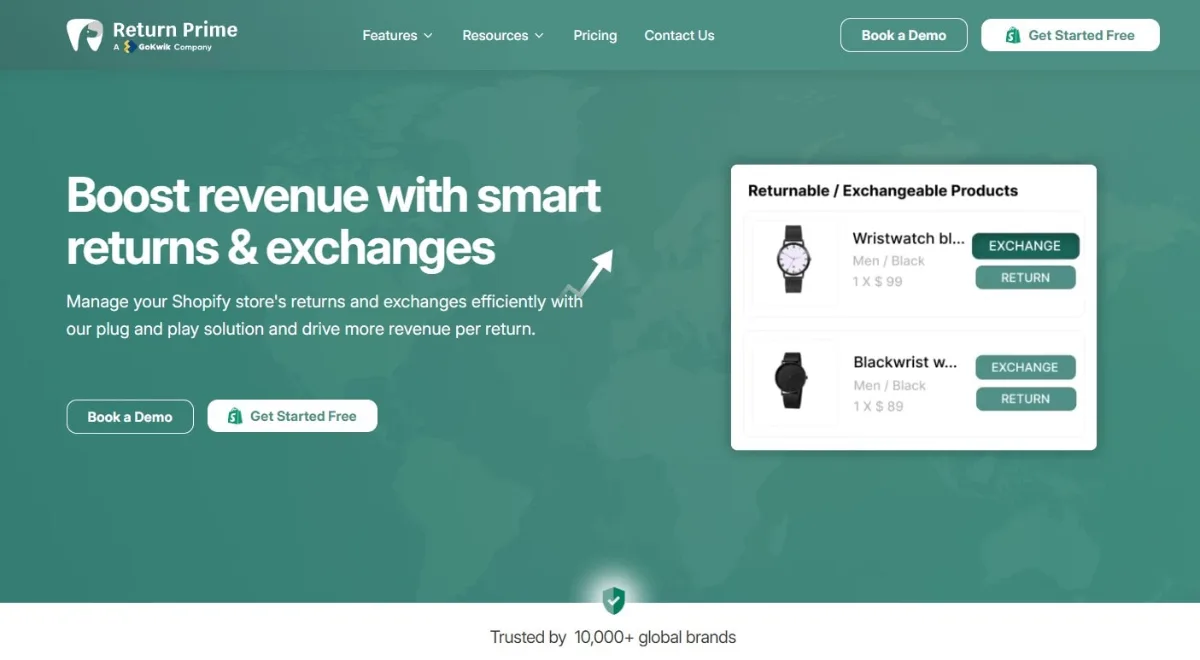
Return Prime automates approvals, exchanges, and refunds while offering your customers simple options like store credits or upsells.
Flexible rules and logistics integrations let you build a returns process that scales as you grow.
Carriers: 11
Key Features
- Wonder Revenue Booster: Show your customers relevant products during the return process and add upsell options to get some extra sales.
- Wonder Promotions: Offer store credits instead of refunds and add small incentives to keep revenue in your store.
- Wonder Smart Exchanges: Make it easy for shoppers to exchange items with discounts or suggestions for similar products. This reduces refunds and keeps your customers engaged with your brand.
- Wonder Bot Automation: Save time by setting rules to auto-approve requests, process refunds, and trigger exchanges.
Pros
- Strong support for cross-border returns and exchanges.
- Connects with 100+ software and logistics platforms.
- Offers a 15-day free trial.
Cons
- Free plan is limited to 5 returns/month.
- Doesn’t offer return fraud protection.
Best for: Growth-stage DTC brands that want to manage 60–450 returns per month and need a revenue-conscious system.
Integrates with: Shopify, Zapier, Klaviyo, Yotpo, and Richpanel
Pricing: Return Prime also offers a quota-based tiered model. It offers a free plan and its paid plans start at $19.99/month for 60 returns.
#5 AfterShip Returns Center
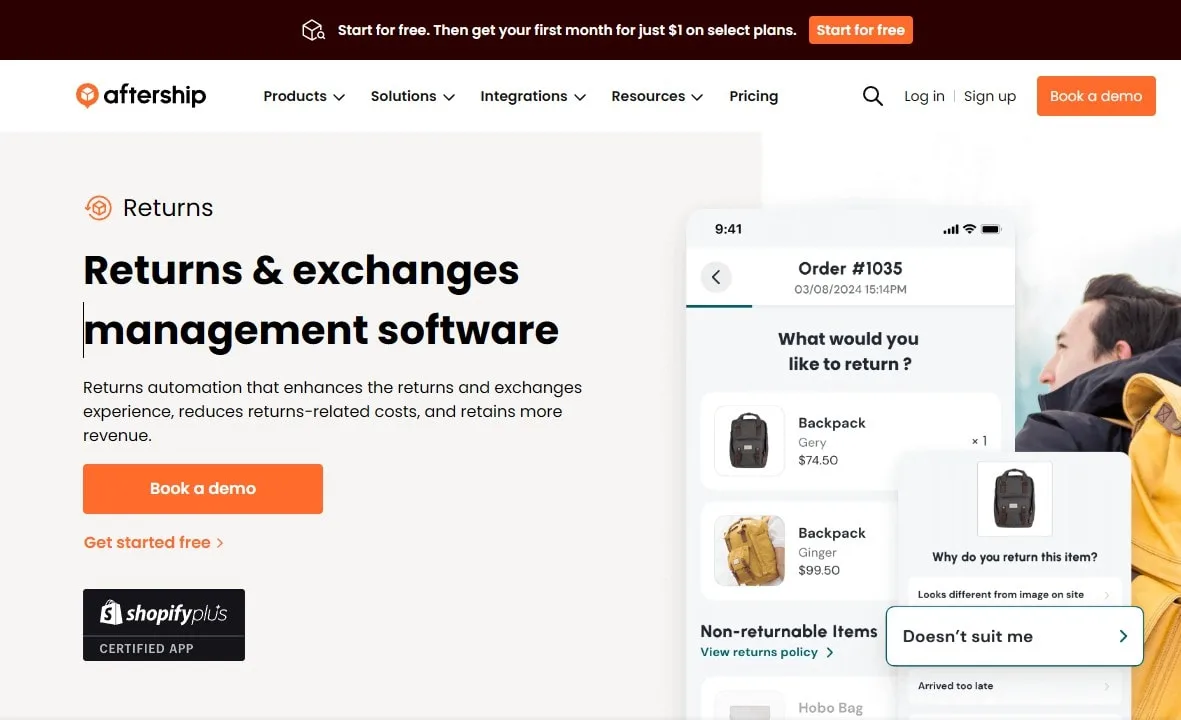
Like Loop Returns, AfterShip Returns focuses on encouraging exchanges and store credits instead of refunds. Plus, it cuts costs with automation, global carrier support, and flexible drop-off options.
Carriers: 44
Key Features
- Branded Returns Page: Give your customers a self-serve page on your store where they can request returns, exchanges, or even gift returns.
- Returns Status Notifications: Keep shoppers updated at every step of their return process with automated messages in their preferred language.
- Shipment Tracking for Returns: Monitor return shipments directly inside AfterShip. You’ll see delays or exceptions right away, so you can act quickly and keep the process moving.
- Returns API and Webhooks: Sync data by connecting AfterShip with the other systems you already use, like your warehouse or order management tools.
Pros
- 310,000+ return drop-off locations.
- Works with many major ecommerce platforms.
- 70+ integrations.
Cons
- Costs climb quickly as return volume grows.
- Interface and setup are less beginner-friendly than other options.
Best for: Growing brands processing 200+ orders per month that want to retain revenue through automation.
Integrates with: Shopify, Salesforce, Magento, BigCommerce, Klaviyo, Attentive, Gorgias, and Yotpo
Pricing: AfterShip uses quota-based tiered pricing starting at $23/month for 60 returns/month. There’s also a limited free plan (three returns/month).
See more AfterShip alternatives.
#6 Happy Returns
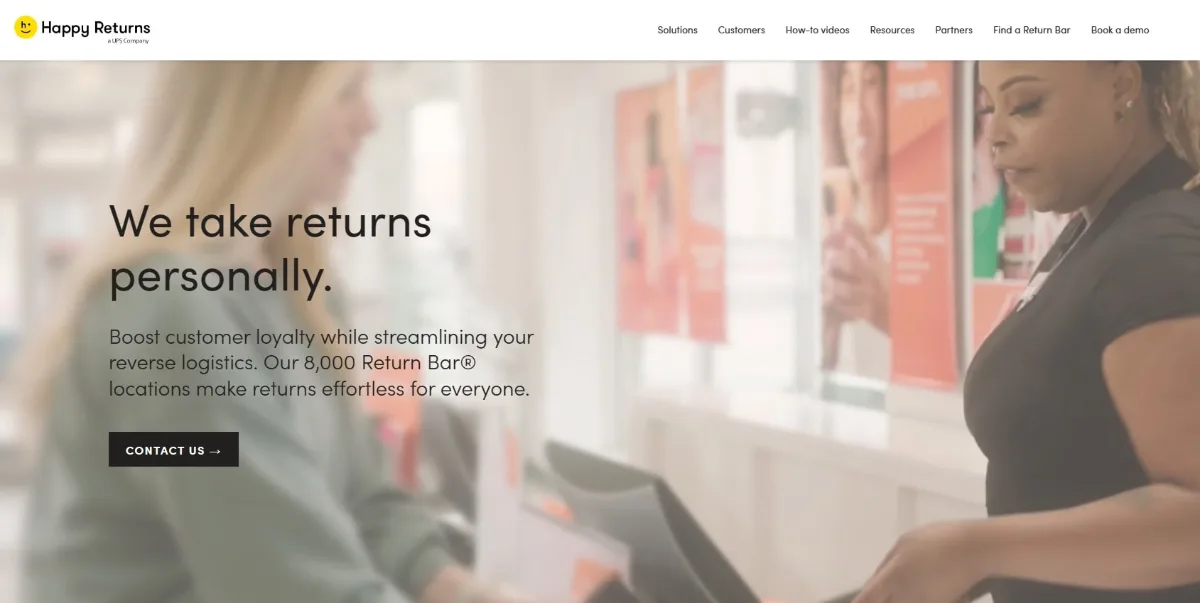
Happy Returns, owned by UPS and Shopify Plus Certified, makes returns easier for merchants and gives customers a simpler, more secure drop-off experience. You benefit from faster restocking, fewer customer complaints, and better fraud prevention.
Carriers: 5
Key Features
- Return Bar Network: Provides over 8,000 locations where your shoppers can return items without packaging or labels.
- Buy Online, Return In-Store (BORIS): Let customers return online purchases at your physical stores.
- Fraud & Loss Defense: Prevents scams and fake return claims through in-person checks at drop-off locations.
Pros
- Access to a nationwide drop-off network backed by UPS.
- Well-suited for merchants who want to combine online and in-store returns.
- Returns are consolidated, which makes warehouse operations more efficient.
Cons
- No public pricing; you need to contact sales.
- Very limited carrier integration.
Best for: Shopify stores, DTC brands, and retailers that run both online and brick-and-mortar shops looking to provide omnichannel returns.
Integrated with: Shopify, parcelLab, Loop, and Gorgias
Pricing: Happy Returns doesn’t publish pricing, but Capterra lists a flat-rate model starting around $500/month. Contact Happy Returns for an exact quote.
#7 ReturnGO Returns
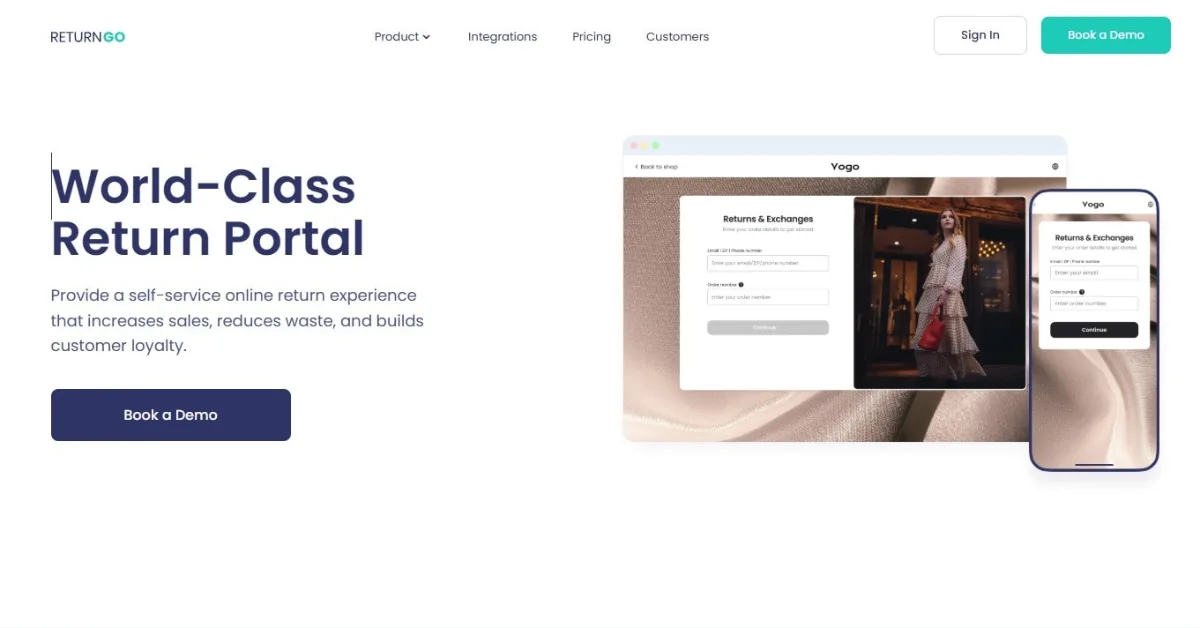
ReturnGO Returns made this list for its flexibility, especially if you want advanced return rules. For example, you can set different policies by product type, promotion, or customer group. You won’t have to force every return through one process.
Carriers: 50+
Key Features
- Branded Self-Service Portal: You can embed a return portal directly into your store so your customers can start exchanges or refunds on their own (and without leaving your site).
- Flexible Policy Rules and Automation: Set return rules by product type, promotion, or customer segment, then let automation handle approvals, exchanges, and refunds for faster processing.
- Revenue-Friendly Alternatives: Go beyond refunds by offering store credit, eco-friendly shipping, or donation options.
Pros
- Flexible return rules for a more customized process.
- Allows you to process unlimited returns with the free plan.
- Responsive support team.
Cons
- Setup can feel complex for merchants.
- No option to exclude specific products from the return and exchange portal.
Best for: Growth-stage DTC and mid-to-large Shopify stores handling 2,000–5,000+ returns per year with complex policy and exchange needs.
Integrated with: Shopify, Shopify Plus, Magento 2, Salesforce Commerce, Klaviyo, Yotpo, and Rise.ai
Pricing: ReturnGO has a quota-based tiered model that starts at $23/month (for up to 20 returns). It also offers a 14-day free trial.
#8 Corso Returns and Exchanges
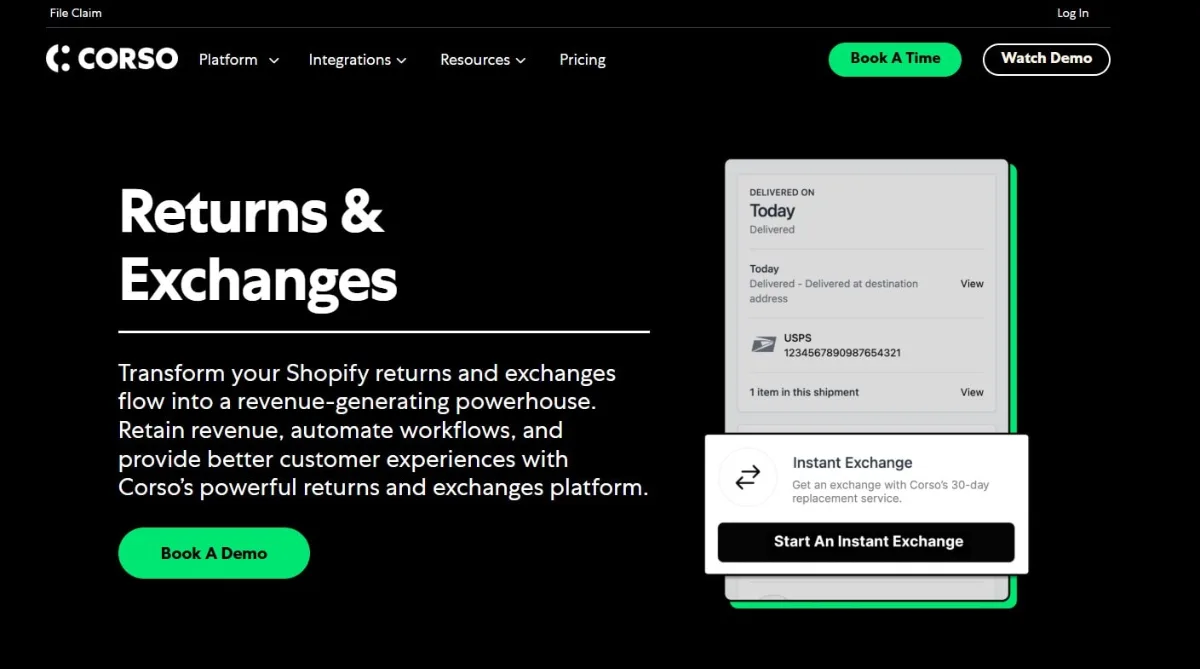
Corso Returns and Exchanges lets you offer customer-paid return options, simplify exchanges, and guide shoppers through a branded portal on your site.
Carriers: No direct carrier integration (partners with shipping software Vesyl).
Key Features
- Integrated Customer Portal: Corso embeds a branded portal on your site where customers can handle tracking, shipping issues, returns, and even warranties in one place.
- Custom Fields & Eligibility Rules: Add your own questions during the return process to gather the details that matter most to your brand. That extra context helps you enforce policies fairly and avoid unnecessary disputes.
- AI-Powered Analytics: Ask questions about your return data and get instant answers. You can spot patterns quickly and adjust products or policies.
Pros
- Offers onboarding support.
- Easy setup with Shopify.
- Provides more post-purchase features like order tracking, shipping protection, and warranty claims.
Cons
- Limited direct carrier integrations.
- Advanced setup may feel like overkill for small stores.
Best for: Medium-to-large-sized Shopify brands with high return volumes that want a more flexible return system.
Integrated with: Shopify, BigCommerce, Gorgias, Rebuy, and Gladly.
Pricing: Corso offers performance-based pricing with no fixed contracts. You only pay a percentage of the revenue you generate.
#9 Shipup Returns Management
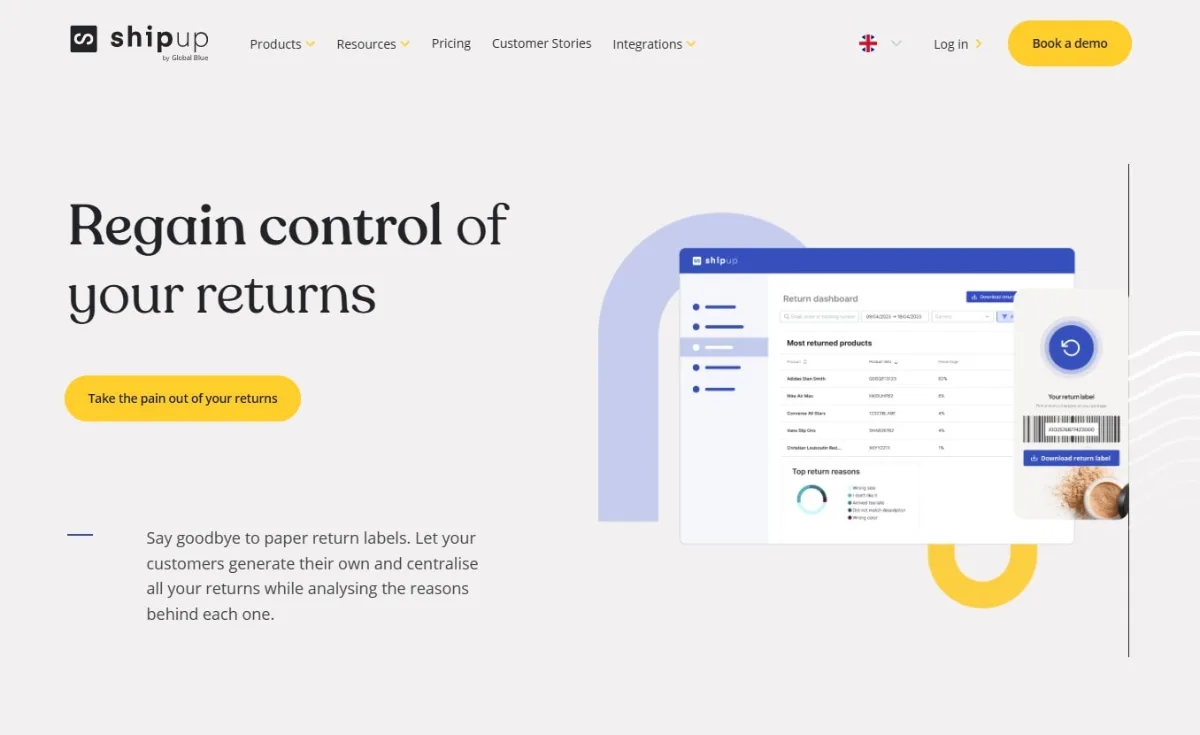
Shipup Returns Management gives customers a digital way to send items back directly on your site, with no paper labels.
Every request appears in a single dashboard where you can track progress, review return reasons, and analyze patterns.
Carriers: 110+
Key Features
- Branded Return Portal: Customers start and monitor their returns without leaving your site, which cuts down on support tickets.
- Centralized Return Dashboard: Manage every return in one place, search by order, and filter by product or reason so your team can find any return fast.
- Return Analytics: Spot your most returned products and common reasons behind them. These insights make it easier to adjust policies, update descriptions, or flag recurring product issues.
Pros
- Digital-first returns process (no more paper labels).
- Unified dashboard that keeps everything in one view.
- Branded tracking and notifications that encourage repurchase.
Cons
- Higher price point than most options.
- No free trial.
Best for: Mid-to-large ecommerce brands that want post-purchase marketing tools alongside return management.
Integrated with: Shopify, Magento, WooCommerce, BigCommerce, Zendesk, Gorgias.
Pricing: Tiered pricing starts at €299/month, but return management requires the Advanced plan (€599/month).
#10 parcelLab Return and Exchange
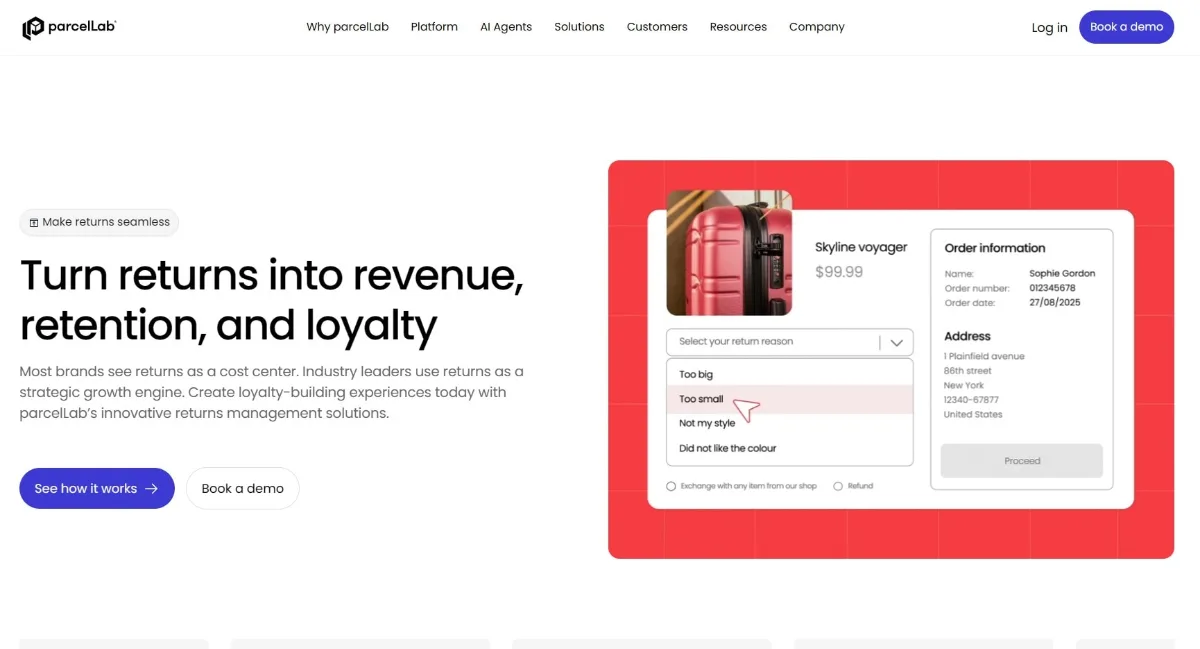
parcelLab Return and Exchange is part of parcelLab’s post-purchase platform. It uses AI to automate return workflows and personalize the return experience.
Carriers: 550+
Key Features
- Return Volume Forecasting: Predicts return spikes based on sales data and seasonal patterns. It helps you plan warehouse capacity for peak periods like post-Black Friday returns.
- Automated Workflow Management: Create different return rules for VIP customers, seasonal items, or specific products so you can reduce manual decision-making for routine returns.
- Multi-Channel Return Processing: Lets customers return online orders in-store or use QR codes instead of printed labels (works well if you have a physical store).
- Advanced Return Analytics: Shows which products get returned the most and why customers send them back. You can spot sizing issues or product problems before ordering more inventory.
Pros
- Broad set of customer experience features.
- Multi-carrier integration.
- Premium pickups for high-value items.
Cons
- No Shopify app for returns (only for order tracking).
- No public pricing.
Best for: Large enterprise retailers and brands with high return volumes (1,000+ returns per month).
Integrated with: Shopify (tracking only), Salesforce, SAP, Magento, Kustomer, Happy Returns, and various warehouse management systems through API integrations.
Pricing: Custom enterprise pricing starting around €2,400 per month based on Capterra. parcelLab doesn’t publish official pricing, and there’s no free trial.
How to Choose the Right Redo Alternative
Match the platform to your return volume, not to the length of its feature list. You won’t need enterprise-level forecasting if you’re processing 50 returns monthly, and basic automation won’t survive peak seasons for high-volume brands.
This table shows which alternatives fit different business types:
| Business Type | Recommended Solutions | Why It’s a Good Fit | Pricing Model |
| Small businesses / Startups | CWILL Returns & Exchanges, Return Prime, ClickPost | Affordable entry points with exchange options, self-serve portals, automation workflows, and multi-language support. | Free trials and pay-as-you-go options |
| Mid-sized ecommerce stores | CWILL Returns & Exchanges, ReturnGO, ClickPost, AfterShip | Branded portals, flexible policy rules, automated workflows, and detailed analytics that scale with order volume. | Tiered pricing |
| Large enterprises | Loop Returns, parcelLab, Happy Returns, CWILL Returns & Exchanges | Enterprise-grade features like POS returns, forecasting, fraud prevention, omnichannel processing, and global integrations. | Tiered and custom pricing |
| High return rate businesses | CWILL Returns & Exchanges, ReturnGO, ClickPost, Loop Returns | Unlimited return handling with fraud detection, automation rules, and analytics that identify return patterns. | Tiered and custom pricing |
| DTC brands | CWILL Returns & Exchanges, Return Prime, Happy Returns | Branded return portals, exchange incentives, and omnichannel experiences that strengthen loyalty during returns. | Monthly subscriptions with free trials |
| Cross-border ecommerce | CWILL Returns & Exchanges, ReturnGO, ClickPost, AfterShip | Multi-language support (16+ languages), international carrier integrations, and cross-border return capabilities | Tiered pricing with geographic flexibility |
| Multi-channel retailers | Happy Returns, parcelLab, Corso | Buy-online-return-in-store, branded drop-off networks, and unified customer portals for omnichannel return handling | Custom or performance-based pricing |
| Growth-stage brands | CWILL Returns & Exchanges, ReturnGO, Return Prime, Corso | Advanced policy customization by product type, revenue-friendly alternatives like credits or eco options, and performance-based pricing | Quota-based tiered pricing |
Each platform offers different strengths depending on your business size, return volume, and budget. Pick one that matches your current stage, then use its free trial to test it against your real return flow.
Try CWILL Returns & Exchanges free
Redo Alternatives FAQs
Yes. CWILL Returns & Exchanges, ClickPost, ReturnGO, and Loop Returns all work directly with Shopify and Shopify Plus. They sync order data automatically, so return statuses update in your Shopify admin without manual entry. If you also sell on other platforms, AfterShip, ReturnGO, and Corso support BigCommerce or Magento as well.
Yes. Several Redo alternatives handle international returns better than Redo, which focuses mainly on US merchants. CWILL Returns & Exchanges offers a return portal in 16 languages and works with global carriers. AfterShip sends return notifications in the shopper’s preferred language, and Return Prime is built for cross-border returns and exchanges.
Yes. Most Redo alternatives protect revenue by steering customers toward exchanges and store credit instead of refunds. CWILL Returns & Exchanges lets shoppers swap sizes, upgrade to higher-value items, or take store credit. Loop Returns adds exchange incentives and fraud prevention, and ReturnGO offers store credit and flexible refund policies.
Start with budget, integrations with your current tools, scalability, and the level of customer support you need. Then match the tool to your return volume: a store processing 50 returns a month needs different features than one handling 1,000. Also check for multi-language support, fraud protection, and returns analytics if your customers or business type call for them.

Content Specialist
I’m passionate about creating SEO-friendly content that also resonates with readers. I take data and insights and turn them into actionable, practical ideas. My mission? Helping websites drive organic traffic and grow sustainably.