Dropshipping is a huge business. The global market hit $365.67 billion in 2024 and is still growing. It’s easy to see why it has low upfront investment and no inventory to manage. But one issue comes up for almost every merchant running this model: dropshipping returns.
In this article, we’ll talk about why handling returns is harder for dropshipping businesses, how to manage them properly, and what you can do to reduce them.
Why Handling Returns Is Harder for Dropshipping Business
The dropshipping business model keeps costs low, but handling returns can be complex due to no warehouse, different supplier policies, and high shipping costs.
No Physical Address to Accept Returns
We all know how most dropshipping merchants run their dropshipping stores from the comfort of their homes. Sharing a home address for returns is rarely a smart move, especially when it comes to customer trust, privacy, and peace of mind.
Asking customers to send items directly to a dropshipping supplier may also not work well. Most suppliers are focused on B2B operations and are not set up to handle returns from end customers, which can lead to delays, ignored customer requests, and lower customer satisfaction.
Each Supplier Has Different Return Policies
Working with multiple suppliers in a dropshipping business allows you to offer a wider range of products without holding inventory. However, it also means dealing with different return policies, and some suppliers may not accept returns at all.
If your return policy reflects each supplier’s terms, it can easily confuse customers and damage your brand. Mixed rules like 14-day returns, 30-day returns, or no returns at all make the return process unclear and negatively impact customer experience.
Customer Standards Stay the Same
Most customers won’t know if your online store uses a dropshipping model or not. They might have a hunch later on, but they’ll probably treat you the way they treat other brands.
What does that mean? Whatever the state of your backend logistics is, they’ll expect a smooth return process. And the customer expectation is high here. GoDaddy’s return shipping report even showed that 77% of shoppers check a store’s return policy before they buy anything.
As a dropshipping business, creating a “fair” return policy might feel a bit like walking a tightrope between what your suppliers allow and what your customers actually expect.
International Return Shipping Is Expensive
50Folds mentioned that return costs go around 20% to 65% of an item’s original value. If your supplier is based overseas, the return shipping fees will likely fall on the higher end.
Now, imagine if you only need to return 2-3 items? The hassle, lost profit margins, and the costs won’t be fair… but you have to do it for the customer’s satisfaction.
How to Handle Dropshipping Returns
Handle dropshipping returns with a clear policy, a PO box, or returnless refunds for low-value items. An exchange-first approach and letting customers pay return shipping also help protect your margins.
Start With a Clear Return Policy
To handle dropshipping returns, create a clear return policy that covers your suppliers’ rules. Collect each supplier’s return windows, item conditions, and limitations, then set your own policy to manage customer expectations and return shipping costs.
For suppliers that don’t accept returns, add disclaimers and list these items as non-returnable. Include clauses for acceptable item conditions and defective products to prevent abuse, protect profit margins, and keep customers happy while efficiently handling returns in your dropshipping store.
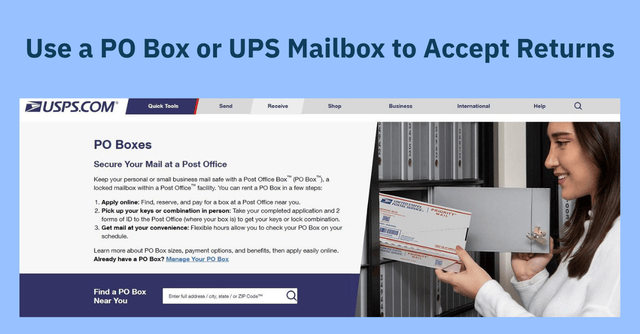
Use a PO Box or UPS Mailbox to Accept Returns
If you can’t handle returns at home, a PO box or private mailbox is a smart, low-cost option. It gives your dropshipping business a secure return address and protects customer trust.
Carriers like USPS and UPS offer mailbox services for around $5–$30 per month. It’s a practical solution for stores working with multiple suppliers, without needing warehouse space or holding inventory.
The process is simple:
- Your customer receives a shipping label and sends the return to your PO box.
- You receive and inspect the return item.
- Then decide to ship orders back to the supplier or dispose of low-cost items.
Some services also provide a real street address, so you can accept returns from any carrier. This improves customer experience and aligns with different supplier policies.
Exception: For large or heavy items, direct the end customer to the supplier. Handling these yourself can increase costs and reduce business efficiency.
Consider Returnless Refunds for Certain Items
Returnless refunds are a simple way to handle customer returns in a dropshipping business. Instead of going through a full return process, you let customers keep low-value or damaged items and issue a refund request directly.
This approach improves customer satisfaction and meets what customers expect from a modern online store. It also reduces costs by avoiding return shipping and simplifying operations within your dropshipping business model.
Encourage Exchanges Over Refunds
Return requests don’t always have to end in refunds. You can prioritize an exchange process for customer returns, especially when items are still usable but need a different size or variant.
To improve customer satisfaction and customer loyalty, offer incentives like discounts or bonuses to make exchanges more appealing. Tools like ParcelWILL Returns & Exchanges can automate the return process by redirecting customer requests to an exchange page first, helping you keep more sales while maintaining a smooth experience.
Let Customers Pay for the Return Shipping Fee
Charging return fees can be controversial, but 72% of merchants now charge for at least one return option, according to NRF’s 2025 return report. This helps ecommerce businesses manage returns and refunds, especially with rising costs to ship returned items.
You can add a small fee at checkout or deduct it from the refund after a return request is approved. This approach helps your business manage risk, protect inventory, and keep more money from each purchase while maintaining stable sales.
How to Reduce Dropshipping Returns Before They Happen
Most return requests come from unmet expectations, and a lot of that happens before the customer even places an order. So here are a few things you can do to reduce dropshipping returns in your store:
Here are a few things you can do to bring those numbers down:
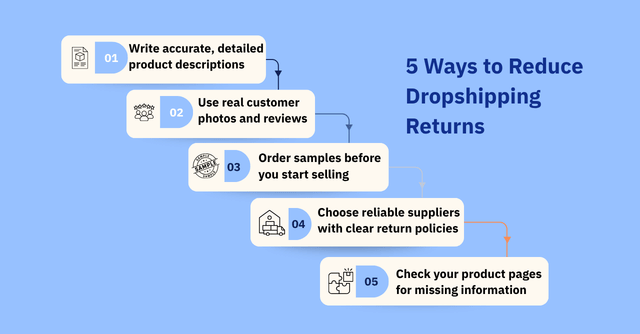
- Write accurate, detailed product descriptions: Include exact dimensions, materials, sizing charts, weight, and any limitations on use. The more specific you are, the less room there is for disappointment.
- Use real customer photos and reviews. Real photos from actual customers set more accurate expectations and give new buyers a better idea of what they’re actually getting. As a bonus, they also help with conversion rates.
- Order samples before you start selling: Before listing any product, order a sample from your supplier and check it against the listing description, packaging quality, and overall condition. One supplier with a quality problem can quietly drive return rates up across your whole store.
- Choose reliable suppliers with clear return policies: A supplier with a reasonable return window and a clear process makes your life a lot easier when returns do happen. If a supplier refuses to share their return policy, that’s worth paying attention to.
- Check your product pages for missing information: Go through your listings and look for anything a customer might need to know before buying. Missing size guides, vague material descriptions, or unclear product photos are small gaps that add up to a lot of return requests over time.
How CWILL Handles Dropshipping Returns for Your Store
CWILL Returns & Exchanges is a returns management software that can help you process return requests more efficiently and also make them profitable.
It integrates with leading shipping providers through platforms like Shippo, Easypost, and Easyship, including carriers such as USPS, UPS, FedEx, DHL, and Royal Mail. You can access discounted shipping rates and generate prepaid return shipping labels with automatic tracking.
Automate the Entire Return Process From Return Portal
With ParcelWILL, your customers can submit and track their own returns through a self-service portal. They can select the item, pick their reason, and also go for the solution they want.
For dropshipping stores with multiple suppliers, every return follows the same process regardless of which vendor fulfilled the original order.
Plus, setting up the self-service portal is so easy. All you need to do is:
- Install the app from Shopify.
- Add your return window, set eligible resolutions, and select the non-returnable items.
- After that, you can start customizing the portal to publish an in-brand one.
- Go live and let your customers manage their return requests any time (as long as it’s within your return window).
Enable Flexible Return Resolutions
As for resolutions, you can offer multiple options, including refund to the original payment method, refund to store credit, exchange or replace the item, refund via manual bank transfer, or even set up a custom return solution.
With these options in place, every return can be handled consistently without your team needing to make judgment calls each time, while also creating opportunities to upsell through exchanges, replacements, or store credit.
Conclusion
Handling dropshipping returns isn’t easy, but there are practical steps you can take to make it more manageable. Plus, you can reduce the volume of returns with a clear policy and the right suppliers that provide quality products.
If you want a simple way to manage returns on Shopify, try ParcelWILL Returns & Exchanges. It automates the entire return process, connects with over 1,400 carriers worldwide, and gives your customers a self-service portal to handle their own returns.
Install it for free(14-day free trial available).
FAQs for Dropshipping Returns
Does a dropshipping business need a return policy?
Yes, your dropshipping business needs a clear and detailed return policy. It’s a must if you really want to gain the trust of your customers and also protect your business from any legal disputes with customers.
How does dropshipping work with returns?
Returns in dropshipping are a bit complex and are approached in different ways. Some online retailers know how to balance their return policy with their suppliers’ so they can process the returns on behalf of customers. But sometimes, customers have to do it on their own and also pay for the return shipping.
What happens if my supplier doesn’t accept returns?
If your supplier doesn’t accept returns, you’ll likely cover the refund cost yourself. Your best options are offering a returnless refund or a partial one. To avoid this situation, always check a supplier’s return terms before listing their products in your store.
What should I do if my supplier rejects a return or stops responding?
Document everything first, including order details, photos, and communication with the supplier. If they don’t respond, file a dispute through your payment processor or platform mediation. In the meantime, resolve the issue for your customer to protect your store’s reputation.

Marketing Manager
Jaelle Lin is the Marketing Manager at CWILL, driving DTC growth on Shopify across retention, loyalty, and post-purchase experience. She works with brands to optimize the entire customer journey from acquisition to order tracking, shipping protection, returns, and lifecycle engagement, helping build sustainable, long-term revenue through customer relationships.