Key Takeaways
- Loyal customers have a higher AOV and CLV, making repeat purchases critical for the health of ecommerce brands.
- Customer loyalty programs must mature from being purely discount-focused to building emotional loyalty.
- Emotions, values alignment, and community are much more effective at building loyalty than pricing, which can backfire.
- Loyalty programs fail when they aren’t supported, communicated to customers, and iterated on.
- Every brand can use the principles of loyalty to delight customers, even if a broader program doesn’t fit.
Customer loyalty makes the difference between sustainable business growth and stagnating sales. Digital platforms are saturated with advertisements and customers have more purchasing choices than ever, making acquisition expensive. Strong relationships with your customers turn one purchase into recurring revenue, increasing profitability and helping you forecast sales.
We sat down with Justin Risso, Head of Revenue at CWILL, to talk about why customer loyalty is important. Justin explains the benefits for businesses and the emotional and habitual layers that drive loyalty. He also walks through his experience with what loyalty programs need to succeed, and how misconceptions can hold them back.
What Is Customer Loyalty?
Customer loyalty is a relationship a person has with a brand that causes them to make repeat purchases and speak positively about their experiences.
People build habits and preferences, and they’re driven by complex factors like emotional judgments or their perception of value for money. Risk aversion also comes into play when people spend. People often choose purchases that feel good, that they can expect a reliable experience from, or that provide them with additional value.
How a customer views value isn’t always directly related to the price. Justin uses the example of Starbucks.
“Buy a cup of coffee from Starbucks or buy a cup of coffee from your local roaster. Starbucks has a much higher earning potential and value potential for you in that cup of coffee than Jimmy can give me down the street. So I think one goal is to be able to provide that higher level of value for the same good.”
A loyalty program is how you nurture these relationships and behaviors into reliable recurring income for your business.
Why Customer Loyalty Matters for Ecommerce Brands
Customer loyalty is important for four core reasons:
- Loyal customers spend more per purchase.
- Happy customers help you acquire new customers.
- A base of repeat purchasers makes financial planning more predictable.
- Loyal customers give valuable feedback and behavioral information.
According to Nielsen research, 85% of purchases in over 80 categories involved a brand the consumer had tried in the past. Loyalty is the engine that drives successful businesses.
Loyal Customers Spend More
Justin explains that loyalty “raises the ceiling [of] every purchase that a customer makes with you.” Over time, he says, “your most loyal customers are definitely spending significantly more money.” This is important for direct-to-consumer brands because increasing your average order value helps to offset shipping costs.
Loyal customers come back for multiple purchases. “They spend more because they feel more confident. They feel more comfortable. They know the product.” Loyal customers also have a higher customer lifetime value (CLV) over the course of their relationship with your brand.
When Phrozen, a 3D printing company, launched a loyalty and referral program with CWILL Loyalty & Referrals, they saw:
- 50%+ increase in AOV for member purchases
- 18,600+ loyalty members
- 38%+ redemption rate
Phrozen promoted the program across several channels, and the case study reports a €40,000 increase in retention revenue.
Happy Customers Reduce Customer Acquisition Costs
Loyal customers are more likely to become brand advocates, which lowers the customer acquisition cost (CAC). When they leave good reviews, talk about your brand on social media, or refer people they know, they make it easier to attract new customers.
A customer typically interacts with an ecommerce brand across at least three different touchpoints before making a purchase, and it could be many more. Referrals shorten that path:
- A review or social media post is a touchpoint you haven’t paid for directly.
- A referral could skip touchpoints completely.
This means you haven’t paid advertising costs, so it’s usually cost-effective to offer perks. A discount for both the existing and new customer or a co-branded promotion can encourage referrals.
Repeat Purchases Create Predictable Revenue Streams
Loyalty programs and subscriptions help you forecast financials with a high degree of confidence. You have a stable base of revenue from which to fund growth initiatives like new products or promotional campaigns. To mature as a business, you need to get out of the trenches of fighting for every sale and being reactive to the market.
If you can make yourself sticky in customers’ minds, then they’ll come back regardless of what your competitors do.
Loyal Customers Help You Understand Your Core Audience
“[Loyalty] is an opportunity for you to truly know and align with your customer base on what matters to them,” Justin explains. This is key to your transition away from price wars and toward customers who see the value in their experience with you.
Repeat customers are more likely to give you positive feedback, yes, but they’re also more likely to give you constructive feedback on how you can improve. If they’re already invested in you, but there’s friction in the experience, they’ll let you know.
There’s also value in what they don’t say: repeat business is an opportunity for you to track behavior over multiple experiences. “It can be a way to really feed all different kinds of data points. Incentivizing review content, incentivizing taking a survey, incentivizing reading a blog. All of these things trickle down to giving you more insight in terms of what your customers feel or find most interesting.”
How Customer Loyalty Has Changed in the Past Few Years
Loyalty programs used to look like punch cards, but then everyone wanted to give you a punch card and it was just another burden on your mind.
Everyone is grappling with this challenge of how to be sticky without people feeling like you’re giving them homework. Justin sees it happening digitally and in brick-and-mortar stores, but the transition is messy and leaves room for wasted effort.
Justin says the bigger change is what brands want from loyalty: “Where it’s really started to go in the past four years or so has been focusing more on: How do we get more from our customer beyond just the transaction? How do we get them ingrained with our ethos? And how do we make ourselves sticky as a brand in a marketplace that’s filled with commoditized products?”
On digital platforms, ads bombard you all the time, sometimes feeling like they’re reading your mind. Brands have responded by moving from discount-based perks to trying to build deeper emotional preferences.
Why Emotional Loyalty Lasts Longer Than Discount Loyalty
A customer’s sense of value isn’t based on the price alone. The price is an anchoring factor, but value means much more: time, effort, quality, reward, and emotional responses all play a part.
When companies try to earn loyalty through price alone, they’re encouraging the very behavior that will cause customers to eventually leave: discount-seeking.
Discounts Can Make Loyalty More Difficult
Justin notes: “I’m a part of five different loyalty programs. Whichever one has the highest discount for me today is the one that I’m going to go to, because there hasn’t been anything that really drives me to feel like I’m truly loyal to this brand.”
Discounts can even make the same product seem to work worse. In a 2005 study by Baba Shiv, Ziv Carmon, and Dan Ariely, participants all drank the same energy drink. One group paid full price, and the other paid a discounted price. The group that paid full price solved more puzzles.
Does this mean you should end discount rewards, price-matching, and other financial incentives? Absolutely not, but as Justin explains, rewards programs need to be more sophisticated to build deeper relationships with customers.
He says that brand loyalty programs have “… become more points-based [and] redemption-based, [with] different earning campaigns [like] ‘leave us a review.’ All of those things are becoming more and more commonplace, and so that’s why I think with loyalty, the next frontier is the emotional side.”
Emotion Is the Strongest Predictor of Loyalty
Positive emotions fuel positive customer behaviors. In 14 years of research, Qualtrics has consistently found that compared to a customer’s success and effort, emotion is most strongly correlated with loyalty.
When customers care about a brand beyond the value of an individual transaction, they’re more likely to care about the experience as part of their life. A coffee shop visit becomes a habit, or a purchase becomes a values-based decision.
Values and Community Build Loyalty, Even Online
A customer seeing that you contribute to issues that are important to them builds loyalty. Take a brand that supports a cause like the Special Olympics because they know their core community cares about it. Bombas donates to partners serving people experiencing homelessness with every purchase. This gives every transaction emotional weight.
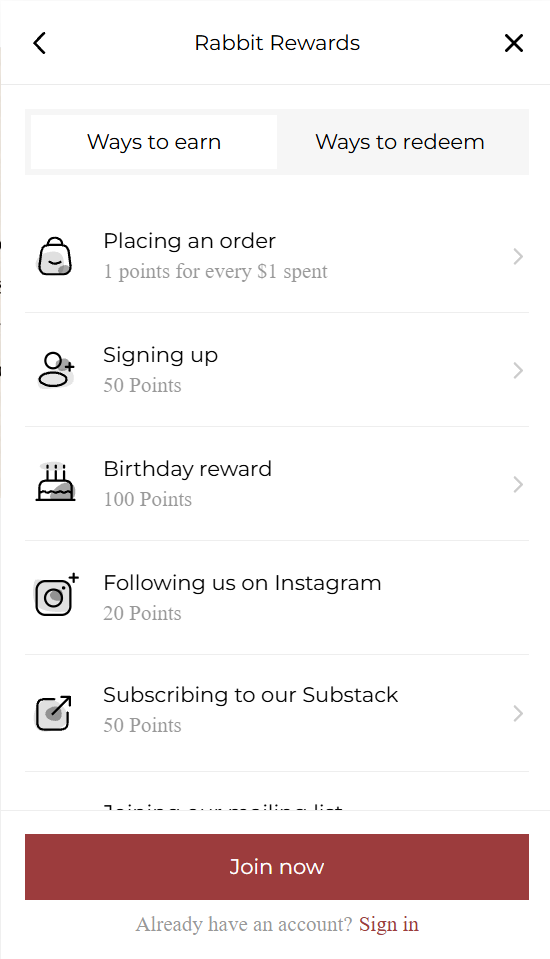
You can also build a community around a brand using loyalty programs. Faith-based bookstore The Rabbit Room recently began a points-based program that rewards members for engaging with content they care about. Shoppers earn points the normal ways: with purchases, for following social accounts, and on their birthday.
But The Rabbit Room also publishes a newsletter and a Substack full of articles about faith, relevant book reviews, as well as poetry and music.
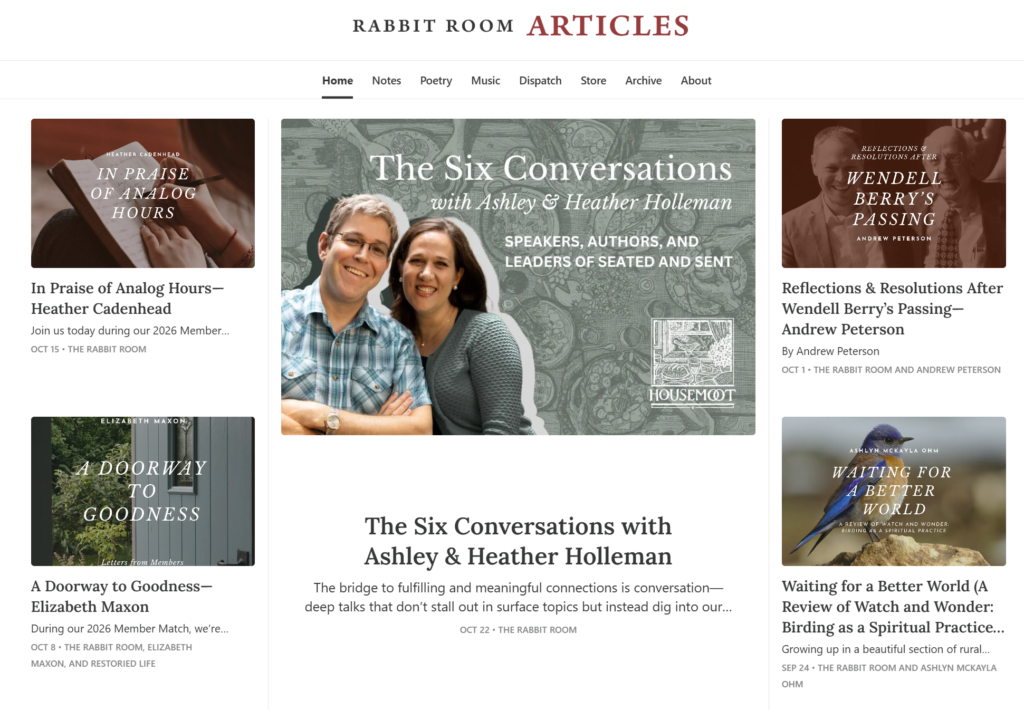
So a customer earns reward points for following the Substack, which is carefully curated to be of real interest and value to them (instead of marketing material). Now they’re part of a community with shared values and opportunities to contribute.
Why Customer Loyalty Is a Cross-Team Job
At The Rabbit Room, loyalty is shared by multiple teams. Team members who work on product selection, marketing, social media, physical events, and editorial for the newsletters all contribute.
Another side of successful loyalty programs is logistics. Justin explains that if a loyalty program is siloed to marketing, “then that cuts out a lot of opportunity for the experiences that can create more loyal customers… The product is one part of it, the messaging around the product, the marketing of the product is one part of it, but then there’s also the 3PL side, the logistics side.”
Shipping and returns shape loyalty:
- One of the metrics Qualtrics tracks is “forgiveness.” An easy and efficient returns process can outweigh the frustration of an issue with an item, and even help you keep the sale.
- Exceptional customer service can come as a pleasant surprise during a bad experience, and still get you a raving review from the customer. An issue with service can damage an otherwise positive experience, leading to “it’s a great product but…”
Your ability to secure loyalty relies on more than the product and the genius in your marketing team. If you’re struggling to track shipments or scale support to handle post-purchase issues, customer interactions after the sale can damage your loyalty efforts.
Where Customer Loyalty Programs Break Down
Before you name the points and release a loyalty program, you need to be prepared for the additional management it will take to keep running. You need to know which teams can support new responsibilities, and whether your business is ready to scale to support new KPIs.
Unredeemed Points Are a Financial Liability
Points accrue liability because every unspent point is a promise of future value, so it sits on your balance sheet as a liability until customers redeem it. If 100 people redeem $5 of points on the same day, that day has an additional $500 in costs. Finance teams have to track unspent points.
Justin points out: “Every CFO’s worst fear is that in one day, everybody who has points comes back and redeems them [at the same time]… And so managing that financial liability is huge.” Discounts eat into the profit on a sale, so your finance team needs to be in the conversation early. Justin advises that you understand the margins, because “you don’t want to discount away all of your revenue and all of your profit.”
To avoid financial disruption, Justin notes that you should manage the total balance of unspent points:
- You could run intermittent promotions: “This weekend only, maybe instead of 100 points to redeem $10, it’s 50 points to redeem $10. And so you can drive a lot of people to come back and use some points.”
- You could also cap points or put an expiry on them, and run messaging campaigns to remind customers to come and spend them. “Hey, your points are going to expire in 60 days. You should use them now instead of waiting until the last minute.”
Timing the expiries and reminders helps your finance team plan for when the liabilities are likely to mature.
Programs Left Unchanged Go Quiet
Are you prepared to manage your program long-term? Justin notes that if you set up a loyalty program and expect it to work on its own, you’re setting it up to fail.
“Iteration is the number one thing that every loyalty program will thrive on, as well as what they will live and die on… There’s no greater risk [of] a dead loyalty program than just [saying], ‘We’re going to set it this one time and then forget it.’”
Iteration and communication are the two cornerstones that ensure programs get used and have the intended effect. Loyal customers give you feedback and data, and you need to use it:
- If you don’t collect that information, then you’re not validating the benefit of the expenses.
- If you’re not using the data to improve customer experiences, then the program becomes forgettable.
Loyalty programs are also in danger of being one-time discount machines. Justin explains: “The majority of people, when they join loyalty programs, it’s because they have an immediate need for a discount or some kind of advantage. And so after they get that immediate advantage, it’s up to you to incentivize them to come back.”
People have pockets full of points cards and email inboxes full of marketing emails. One sign-up email isn’t going to cut it. Justin advises frequent reminders: “If you have a loyalty program that’s not constantly being communicated around, or doesn’t have mentions of it in your post-purchase emails, or anything like that, that is a very quick way to let your program just quietly die.”
Perks That You Can’t Scale
Some perks start out popular and quickly outgrow your ability to deliver them, especially when you start doing cross-promotion or adding elements that you don’t own.
Justin says that while he values special perks like VIP tiers, you have to be careful how you implement them. You can be “as creative as you can scale.”
But scalability is a limiting factor: “If you scale a VIP tier program and you get free tickets to a festival, that’s not your festival.” And when you start to offer things you don’t own, you have much less control over the experience. An issue with availability, a partnership that suddenly ends, and other surprises can end up giving the customer a negative association with your loyalty program.
“I’ve seen a lot of brands who will over-promise things and then [are] unable to deliver those things because it’s a creative idea, but they can’t actually scale the perk… If you’re giving away tickets to Sesame Place, that’s probably a partnerships component as well.”
Does Every Brand Need a Loyalty Program?
No, not every brand needs a loyalty program. But every brand can use loyalty and the psychology behind it to build sustainable revenue.
Any brand can implement specific parts of a loyalty program:
- Earning campaigns for points on repeat purchases.
- VIP tiers for exclusive perks.
- Referral incentives to encourage customers to spread the word.
Justin warns against matching your competitors. It’s “probably the last thing you want to do,” because if every program is the same, “it again just becomes a race to whoever’s got the steepest discount.” Browse loyalty program ideas, then pick the parts that work best for the customers you serve.
Justin uses the example of a baby brand, where loyalty points don’t make sense. A year after the baby is born, those points stop being relevant. But you could build a customer referral program to cut down on the CAC for new customers.
He explains that you could sort your reviews to show five-star reviews from the past year, then reach out to those customers and say: “Did you know that if you refer a friend, you get a reward?” Make that benefit relevant to where they are in life:
- A Target gift card to go buy Cat & Jack clothing (parents will always need new clothing for their kids at every age).
- A gift subscription to the Calm app to get your baby to go to sleep.
How to Start Building Customer Loyalty
Here are four steps, based on Justin’s advice, to start building a loyalty program from your data:
- Know who your customer is and tailor the program to them. Use surveys to learn who they shop for and who’s in their household, then segment your campaigns. As Justin puts it, “You don’t want to send ‘Hey, buy this tutu today’ to a family who has three boys.”
- Pick the parts of loyalty that fit your category and customer. Maybe you take the same approach as Louis Vuitton: you never discount your products. A points program won’t fit, but you could offer a VIP program instead.
- Plan how to communicate the program. Mention it in your post-purchase emails and on your mailing list. If you’re a community or cause-focused brand like The Rabbit Room, you might add a newsletter or Substack as well.
- Review the program on a schedule. Track how the program impacts performance using the KPIs that matter to you. Do the points increase CLV enough to justify the liability? How much do reviews and recommendations reduce CAC? What direct feedback are you getting from customers?
Ready to start earning more per customer? CWILL Loyalty & Referrals helps you build loyalty programs that encourage customers to leave great reviews, refer their friends, and spend more money with you.
Frequently Asked Questions
Customers become loyal when they have an emotional attachment to a brand. They know the product, or they believe in what the brand stands for, or they’re confident in the experience they’ll get. That confidence lets them spend more, because they’re less worried about what happens if something goes wrong.
Does Every Business Need a Loyalty Program?
No, not every business needs a full loyalty program. But every business can benefit from parts of loyalty programs and the psychology behind them. It’s a matter of choosing what rewards fit into your customers’ lives.
Loyalty programs fail most often because they are not well communicated, because the financial liability grows faster than the profit the program brings in, or because they don’t respond to customer feedback. A program that’s set up once and never updated or promoted, for example in post-purchase emails, quietly loses members.
Is Customer Loyalty the Same as a Loyalty Program?
No, customer loyalty is a behavior where customers repeatedly purchase from a brand or speak positively about it. A customer loyalty program is the strategy that brands use to encourage this behavior to generate consistent revenue.

Freelance Writer & Editor
Ben Steele is a content strategist with over 9 years of experience in SEO. A self-described content goblin, he’s widely recognized for his contributions to SEO and PPC as a curator and editor of expert voices. He usually spends his time with his daughters, writing, or playing video games. Or doomscrolling LinkedIn. No one’s perfect, right?