Key Takeaways
- Build your loyalty program strategy around your own data (average order value, customer acquisition cost, first purchase value, review complaints, customer lifespan, and gross margin) instead of copying a program like Sephora Beauty Insider.
- Set one measurable goal tied to a problem in your data, such as raising repeat purchase rates from 20% to 25% in six months, and don’t count sign-ups as success, because a metric that can only go up can’t show whether the program works.
- Promote the program with teaser content 1–2 weeks before launch, then keep members coming back with monthly status emails, “you’re X points away” nudges, and rewards that change regularly.
- Judge results by comparing repeat customers in the program with repeat customers outside it, changing one variable at a time, and tracking time to second purchase, VIP tier movement, and redemption rate.
The most valuable customer is the one you keep. A loyalty program rewards repeat customers with things like points, VIP tiers, gifts, and perks, turning one-time buyers into brand loyalists. A loyalty program strategy is the plan behind that program.
This guide covers what to know before you start (or rework) a loyalty program, what to reward, what to track, and how to keep members engaged.
What is a Loyalty Program Strategy?
A loyalty program strategy is the plan behind your loyalty program: which business problems it needs to solve, what your customer data says about how people buy from you, and which KPIs show whether it’s working. The program is what customers see, like points, VIP tiers, and rewards. The strategy decides which of those you offer and how much you can afford to give back.
“At the core, a loyalty program strategy is a detailed understanding of what problems you’re looking to solve as a business, as well as a deep understanding of your customer data,” says Justin Risso, Head of Revenue at CWILL.
That’s also why repeat customers are worth investing in. “The first purchase is already going to be the most expensive purchase that a customer ever makes with you,” Justin says, because you paid to acquire that customer. Every purchase after that costs you less, and when a loyal customer refers a friend, you gain a new customer without paying full acquisition cost again.
What to Know About Your Customer & Your Business
It can be tempting to look at a wildly successful loyalty program (like Sephora Beauty Insider) and decide your brand needs the exact same thing. But as Justin explains, few brands can match Sephora’s ability to scale rewards, perks, benefits, communication, point of sale (POS), and omnichannel experiences.
Copying a competitor’s program ignores the most important thing about a loyalty program strategy: it should be built specifically for your customers, margins, and budget.
Here’s what to know before you build your loyalty program strategy.
1. Customer Acquisition Cost (CAC)
Customer acquisition cost (CAC) is what you spend in marketing and sales to win one new customer. Justin puts it first on the list of things you should know. CAC shows what a returning customer is worth to you, and the more expensive new customers are, the more you can justify spending to bring existing ones back.
2. Average Order Value (AOV)
Average order value (AOV) tells you what a typical order is worth. Then there’s the first purchase value, which Justin calls “a really key one that people often overlook.” It tells you in what way (and at what price point) customers tend to enter your brand.
That entry point changes by industry. Someone buying clothes is usually testing the brand with one item and then deciding whether they want to spend more with that brand. Something like kitchenware works the other way. People “don’t make a foray in there with just one spoon at a time,” Justin points out. They buy a full set, then fill in accessories over time if they are happy with their experience.
So the strategy will shift too—a clothing brand’s program should pull customers into a larger or more expensive second order, while a cookware brand’s program should bring them back for add-ons.
3. Review Data
To build a solid loyalty program, you need a clear grasp of what your customers think could be better about your brand. This one isn’t immediately obvious, but it makes sense from a strategy standpoint.
Justin suggests reviewing the data for trends: are customers frustrated they can’t reach support, that shipping is slow, or that a product they like doesn’t come in enough colors?
Some of these will be addressed at the business level, but those pain points can also make the best VIP perks. If customers feel unsupported when something breaks, Justin offers the example of giving them a dedicated customer service line in Tier 2. The reward becomes something that matters to them, not a generic discount. If you collect reviews through CWILL Product Reviews, read them in bulk before you design your tiers.
4. Customer Lifespan & Intent
Some products are needed for a season, and therefore your customers won’t necessarily be “loyal” by the very nature of the product. Justin gives the example of a maternity clothes brand whose customers buy for a few months, then stop. “You can’t drive people to have more babies,” he says. When the customer/merchant relationship has a natural end date, a program built around repeat purchases won’t be effective. So it makes sense to shift the strategy to referrals.
Learn more about how to build a referral program that converts.
5. Know Your Own Numbers, Too
Knowing your customer gives you invaluable feedback on what your loyalty program should do, but knowing your numbers gives you the reality of what you can afford.
Gross margin is what’s left of each sale after the product cost. Every point, discount, perk, and free gift comes out of it. This margin sets how generous your program can be before it starts costing you money on your best customers.
Your catalog and product lifespan decide how often a customer can realistically be expected to buy again. Consider the following questions:
- Do you have a lot of SKUs or one main SKU?
- What do your products cost on average?
- How long do those products last?
A brand with one hero product that lasts five years needs a very different program from one with hundreds of products that run out every month.
How to Set Loyalty Program Goals
The best loyalty programs excite customers while solving the problems you discover in your data. As you set goals, decide which metric will show success. For example, you may aim to move your repeat purchase rate from 20% to 25% within six months. That way, you’ll know at the end whether the program worked.
The table below helps you figure out what goals make the most sense to pursue for your brand.
| If your customer data shows: | Then set your loyalty program goal around: |
| Small first orders | Average order value on the second purchase |
| Few returning customers | Repeat purchase rate |
| A long lapse between first and second purchase | Time to second purchase |
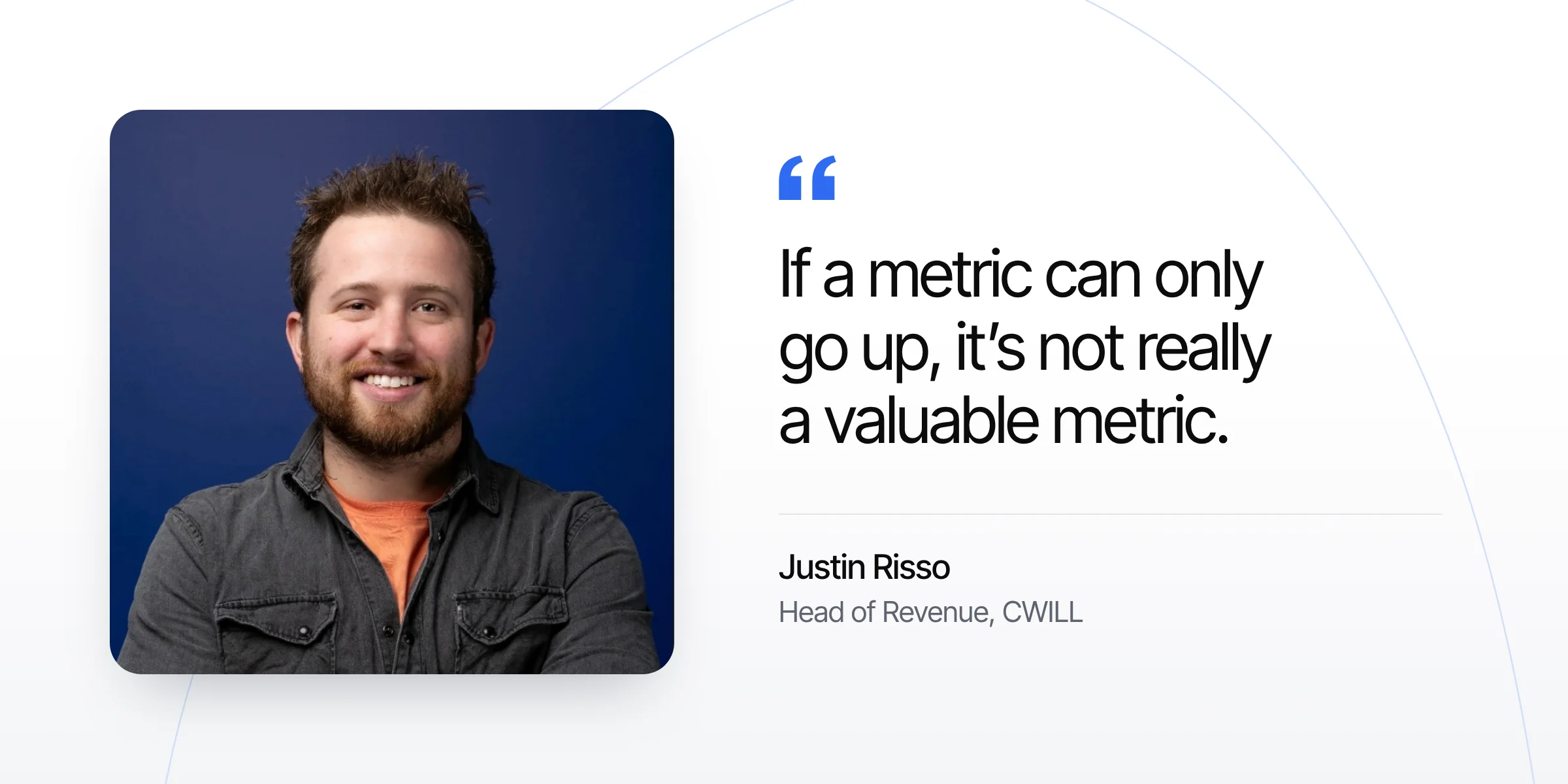
One thing to avoid measuring as a goal? Sign-ups. Many brands judge the success of their program by how many people join, but Justin argues that “if a metric can only go up, it’s not really a valuable metric.”
Think of it like a gym that measures success by memberships sold. Yes, the number climbs in January, but this says nothing about how many people actually show up in March. Loyalty sign-ups work the same way: members accumulate whether or not the program changes how anyone shops.
How to Design the Program: Structure, Earning Rules, and Rewards
Once you have your customer data analyzed and your goal defined, it’s time to design your rewards program. You’ll need to decide:
- What kind of program to run
- What to reward (making a purchase, buying from a new category, leaving a review, etc.)
- What your customers get back (dollars off, free products, early access, event invites, etc.)
Tools like CWILL Loyalty & Referrals let Shopify brands set up all three without custom development.
Here’s a quick breakdown of the types of loyalty programs and who they’re best for.
| Program type | How it works | Who it’s best for |
| Points | Customers earn points for purchases and certain actions, then choose to redeem them | Brands that want to reward everyday purchases and actions and incentivize future purchases |
| VIP tiers | Customers get better perks as they spend more | Brands with a core group of loyal, high-value customers |
| Paid memberships | Customers pay up front for ongoing perks | Brands that operate with frequent purchases and perks worth more than the fee |
| Hybrid programs | Points plus tiers | Brands that want to give everyday rewards and a long-term reason to stay |
| Community programs | Membership gets customers access to people, events, meetups, or a members-only group | Brands whose customers share a hobby or values, and smaller brands that can’t compete on discounts |
The biggest difference between these programs is how much work the customer does: whether the program relies on active or passive engagement. Starbucks Rewards runs on frequent, near-daily purchases, so members track their balance and check what’s available to redeem; the program rewards visits. Amazon Prime charges a fee up front and engages members passively: they get exclusive discounts, streaming, and other perks they don’t have to redeem to enjoy, so the program rewards commitment.
Earning Rules: What to Reward and Why
Reward the behavior your goal depends on. If customers only know you for one product, then it makes sense to reward them when they buy in other categories. Chubbies does this, and Justin says it lifts order value, purchase frequency, and lifetime value. If you sell in store, connect your POS system so customers don’t lose out on earning “just because they’re buying in a brick-and-mortar.”
Rewards & VIP Tier Perks Customers Will Work For
The best rewards match what your customers actually care about. Princess Polly’s top tiers offer exclusive events and festival giveaways because “their customer base is all about exclusivity,” and double points wouldn’t land the same way. Kylie Cosmetics lets members redeem points for free products, which gets them trying new categories at little cost to the brand. Keep the spacing between tiers attainable: 49.1% of US consumers say it takes too long to earn rewards, according to Antavo’s 2026 report.
How to Promote a Loyalty Program and Keep Members Engaged
It may seem obvious, but your customers have to know your loyalty program exists for it to be effective.
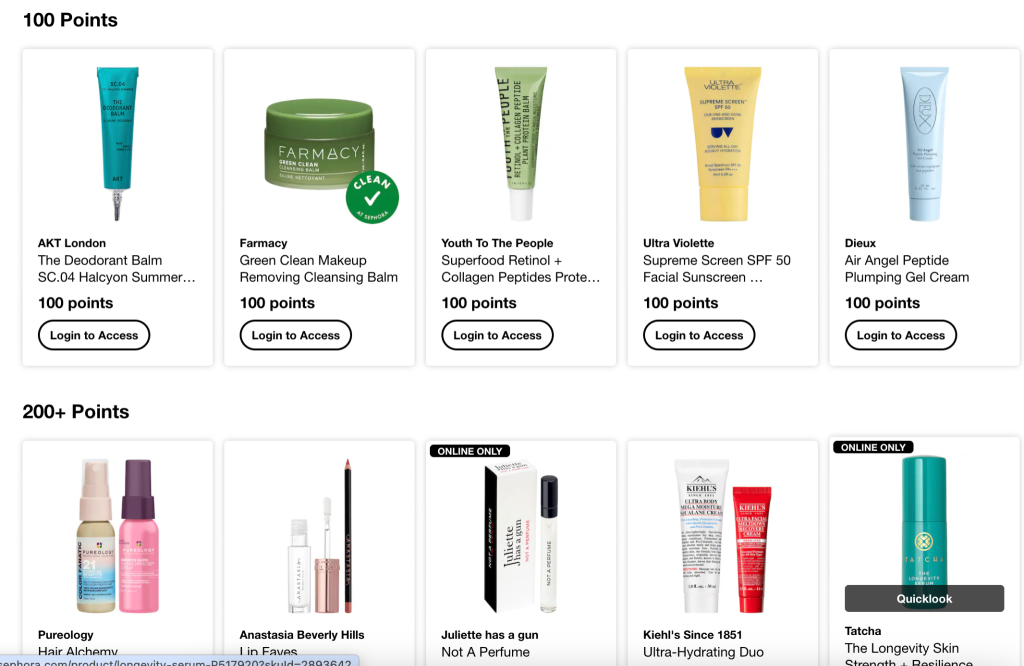
Justin points to Sephora’s stores as a model: shoppers hear about the program at checkout, including any perks they can use that day. Ecommerce brands rely on email, SMS, and on-site messaging to do the same job.
Before Launch: Teaser Content
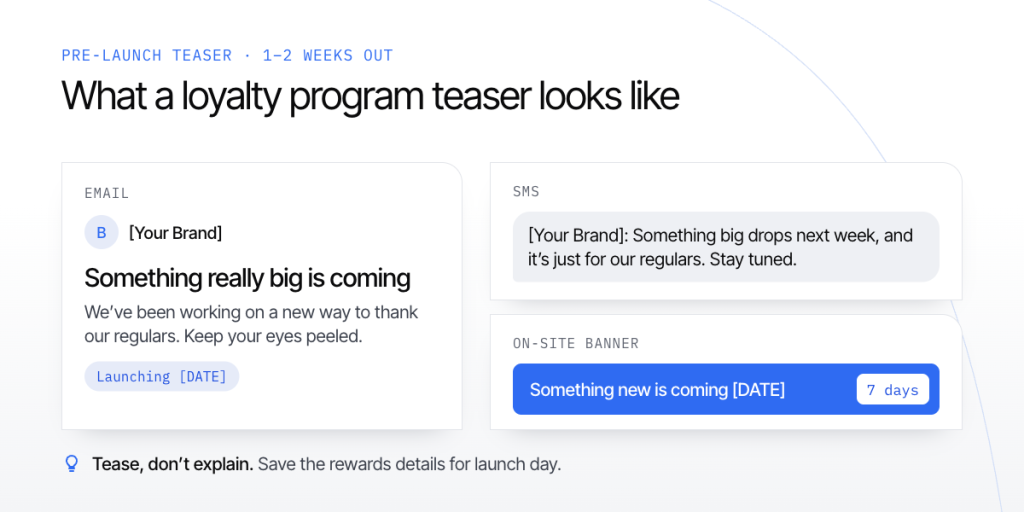
Start promoting before the program goes live. Justin recommends teaser content one to two weeks out, along the lines of “something really big is coming” and “keep your eyes peeled,” so by launch day, customers are already curious and ready to join.
After Launch: Monthly Status Emails and “Points Away” Nudges
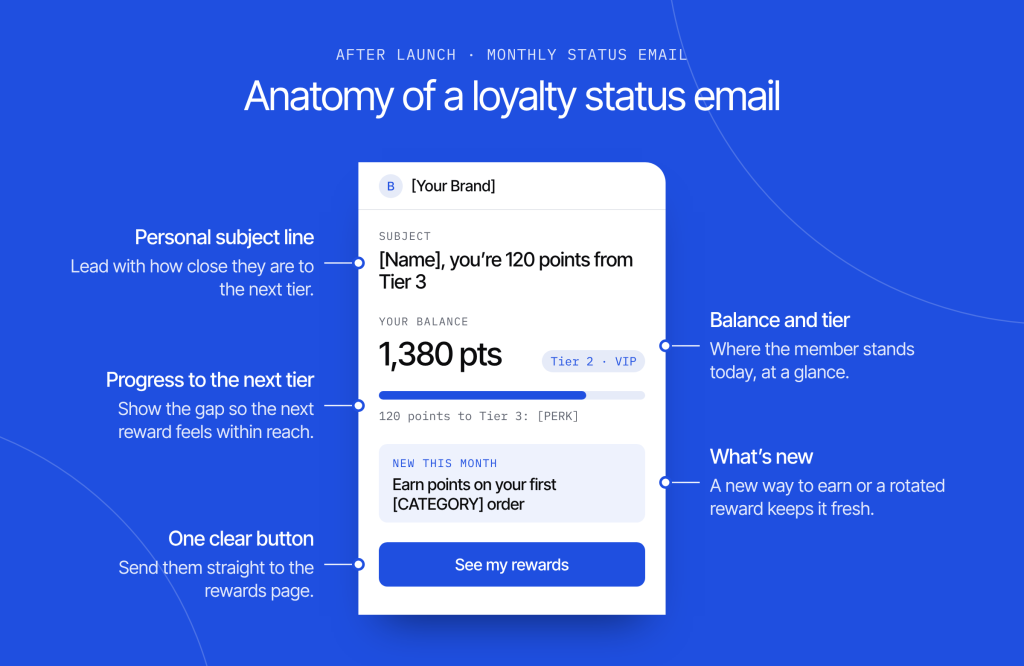
After launch, the job is to keep members aware of where they stand. It’s “incredibly important to make sure that people understand where they are in the context of the program,” Justin says. You can do this either with quick monthly status emails or “you’re X points away” nudges, which you can automate in a platform like Klaviyo.
Keeping the Program Fresh
“The best loyalty programs are ones that are dynamic and introduce things pretty constantly,” Justin says. This can mean adding new ways to earn, rotating rewards, and telling members when something changes. A reward program like Sephora’s refreshes twice a week, giving members a reason to check back out of curiosity (and potentially buy something while they’re there) even if they’re not quite ready to redeem. Don’t let members do everything on day one, either.
“Most customers have an immediate need for a discount when joining a loyalty program and as such they complete all of the non-transactional campaigns on day one. If you don’t iterate and introduce new campaigns regularly the program goes stale and is nothing more than a discount program based entirely on transactions and lacking any kind of true depth when it comes to loyalty,” Justin says.
Loyalty Program Metrics: What to Track & What to Ignore
Below, we’ll cover the most valuable metrics to track and what isn’t as useful.
Compare Repeat Customers to Repeat Customers
Be sure you’re looking at comparable customers, as a common mistake is comparing loyalty members with non-members. Members are often your most engaged customers to begin with, so the gap may not reflect the program itself. Instead, compare repeat customers in the program with repeat customers outside it.
Change One Variable at a Time
If you launch new earning rules, a new tier, and a holiday promo in the same month and sales go up, you won’t know which one worked. Justin’s advice is to “isolate one variable and modify that variable,” so you can be sure which one is working (or not).
Time to Second Purchase and VIP Tier Movement
The time to second purchase shows whether the program is decreasing the time it takes for customers to come back. Tier movement shows whether your tiers are working. If members reach Tier 2 in a week but sit there for six months, ask whether they’re stuck or the next tier feels out of reach.
Redemption Rate
Redemption rate is the share of earned points that members actually spend, and it shows whether your rewards are worth working toward. In the US, 26.2% of loyalty points go unspent. A low rate points to rewards that cost too many points or don’t appeal to your customers, so fix the rewards before adding new ways to earn. Phrozen reached a redemption rate of 38%+ with CWILL Loyalty & Referrals, where members earn points for every $10 spent and for leaving reviews.
Loyalty Program Examples We Love
Your loyalty program is an extension of your brand, and it should look and sound like it. All the loyalty programs mentioned below do an excellent job of matching their brand’s aesthetic.
Chubbies
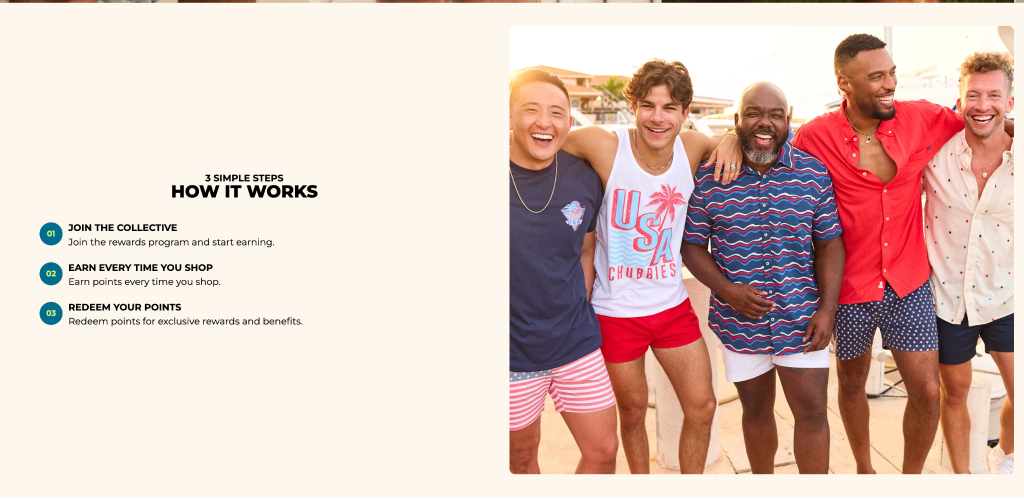
As you may know, Chubbies is a brand largely built on short shorts. The problem? Its customers were skipping the rest of the options (things like swim, pants, tops, kids’ clothes, and NFL gear). Its loyalty program (called a “collective”) was designed, in part, to fix that. It rewards a customer’s first purchase in each category, so there’s an incentive to try something new.
Its tier names are on-brand too and go from “Weekend Amateur” all the way up to “Weekend Hall of Famer.”
Kylie Cosmetics
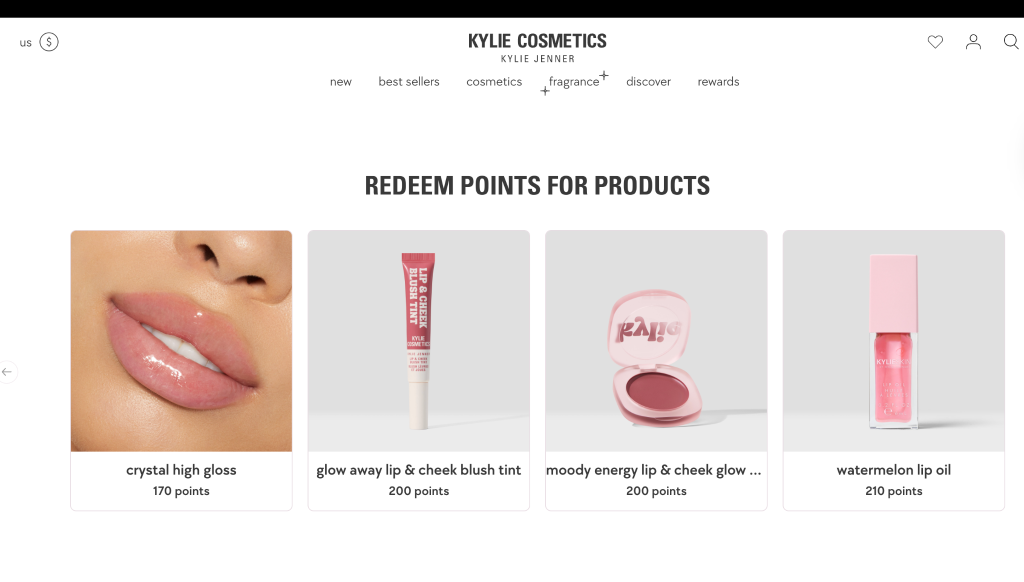
Most people associate lips with the Kylie brand, and that can be tricky for a brand that also stocks a wide array of fragrance, eye, and brow products. Letting members redeem points for products gets them to experiment with new categories at little cost to the brand (and hopefully find something they love and will buy again or recommend).
Princess Polly
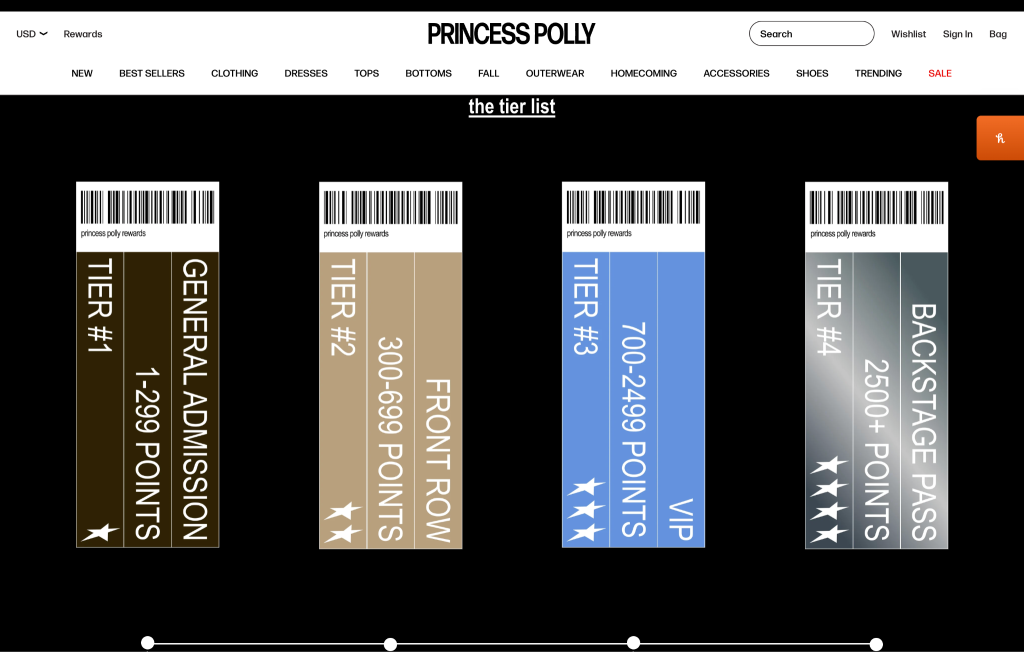
Princess Polly’s tiers (General Admission, Front Row, VIP, and Backstage Pass) appeal to the brand’s festival-loving customers, and so do the perks, which include event invites, exclusive merch, a monthly $100 gift card draw, and an annual major giveaway, typically to a festival.
Sephora Beauty Insider
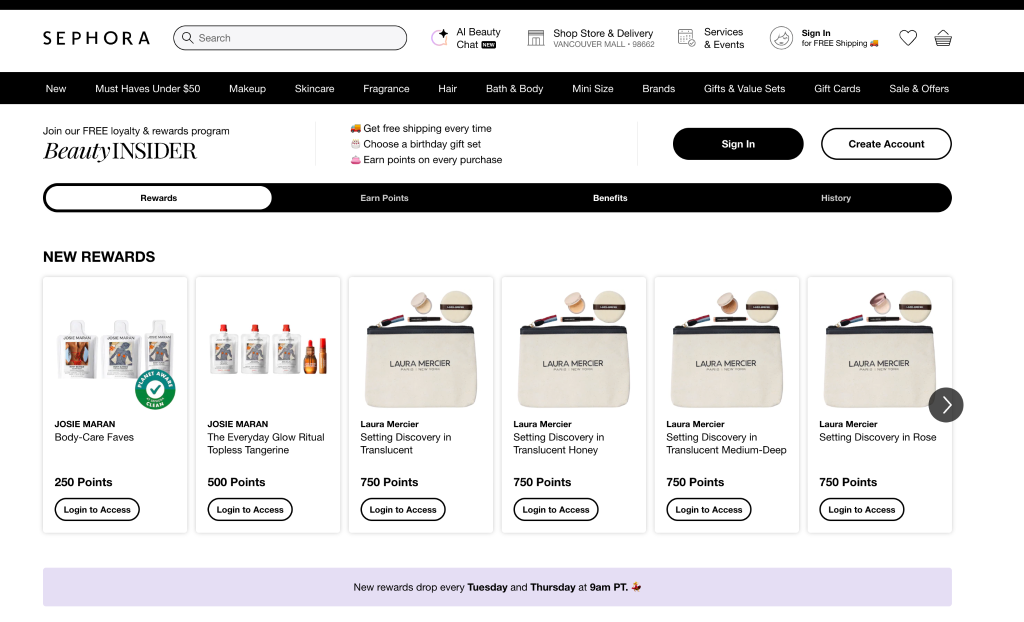
With Sephora’s Rewards Bazaar, members can spend their points on samples, bundles, and experiences, with new rewards added every Tuesday and Thursday to keep things fresh and exciting. Even if you only have a small number of points, you can see what’s available at every tier, which can feel aspirational and get you shopping more (especially when the top item is a night in a hotel in New York).
Loyalty Programs for Small Brands
Justin says he is a firm believer that a “loyalty program can work for largely anybody if the mechanics behind it are correct.” New brands should consider using their program as a way to build brand awareness and community. He gives the example of Gymshark, which started as one person making gym clothes and wearing them to the gym until other lifters started asking about them.
Lululemon took a similar route with an ambassador program, giving free clothing to respected local yoga instructors to wear while teaching. A loyalty program can borrow these strategies: reward customers for the things that spread the word, like reviews, photos, following on social, and referrals.
Build the Program Your Data Points To
A loyalty program strategy starts with what you know about your customers and your margins. Pick one goal from that data, and the metric that will show whether you hit it. Your first version doesn’t need Sephora’s scale. It needs earning rules that reward the behavior your goal depends on, rewards your customers would pick for themselves, and regular reminders of where members stand.
After launch, change one thing at a time and watch time to second purchase and VIP tier movement. When a tier stalls or a reward sits unredeemed, adjust it and tell members what changed.
CWILL Loyalty & Referrals handles points, VIP tiers, and referrals for Shopify brands without custom development.
FAQs About Loyalty Program Strategies
It’s best to measure whether customers who join are changing their buying habits, not how many people join. Track repeat purchase rate and average order value, and watch how quickly new customers place a second order and how long members take to move between VIP tiers. Sign-up counts, by nature, can’t decline, so they’re not a useful measure of performance.
Yes, a loyalty program can work at any stage if it rewards the actions that matter to your business right now. “Regardless of what stage you’re at, there’s a way to get your customers to engage with your brand in the ways that are impactful for you at that stage,” Justin says. Loyalty program ideas for small businesses may reward customers for learning about the product, leaving reviews, and spreading the word (and those early fans often become the community that helps a young brand stand out).
Not necessarily, but for most online stores, a loyalty app is far easier than building a program yourself. Software tracks points, applies tiers and rewards at checkout, and connects with email tools to send balance updates. Shopify brands can install an app like CWILL Loyalty & Referrals to handle points, VIP tiers, and referrals without custom development.
Freelance Writer & Editor
Grace Gallagher is a writer and editor with 10+ years of experience covering health, wellness, lifestyle, and culture. Her work has appeared in Health, Verywell Health, Verywell Mind, Parents, Romper, Healthline, and more. She has also written for brands including Hims & Hers, Moon Juice, Vital Proteins, and Veracity Self-Care.
Grace holds a BA from Hobart and William Smith Colleges and an MFA in creative writing from Hunter College.
You can visit her website or connect with her on LinkedIn for more information.