Referral codes are a small part of referral marketing, but they have an impact on how referrals are shared, tracked, and rewarded.
In this article, we’ll explain everything you need to know about referral codes: what they are, how they work in a referral program, different types, and why you should opt for referral marketing. You’ll also learn about a powerful software that can simplify and automate your referral program.
What is a Referral Code
A referral code is a unique and trackable code assigned to an existing customer in a referral program. It contains a mix of letters and numbers that a buyer can easily share with people they know. Invite code and referral ID are some of the other terms used to describe it.
Referral codes are an important piece of referral marketing. With them, you can monitor the real score of your word-of-mouth effort through real data.
Plus, unlike a generic promo code that anyone can use and no one can trace, a referral code stays linked to one customer, no matter where they share it. It creates a fair system and allows businesses to grow their customer base using multiple channels.
What a Good Referral Code Looks Like
Good and effective referral codes follow a simple pattern: a customer or brand name followed by a few digits. Some great examples are JAMIE25 or SHOP15.
When creating one, here are the qualities to keep in mind:
- Short and memorable: Customers should be able to remember it without having to check their phones all the time.
- Personal: Avoid jumbled numbers and letters (that look like a Wi-Fi password).
- Clear reward attached: The number should hint at what they’re getting, like 10, 15, or 25 percent off, right away.
Now that you know what a referral code is, let’s talk about how it works.
How Does a Referral Code Work?
Referral codes only work if you already have a referral program (and software) in place. It doesn’t work on its own, so be sure to set it up first. But once you have that in place, you can generate a unique code (for each customer), give out rewards, and monitor every referral in your system.
Generating a Unique Referral Code
Referral software lets you assign referral codes ONLY to existing customers who join the program. They can do that through your online store or app.
The system then automatically generates a “unique identifier” for that customer. Most referral software allows you to personalize codes… and even provide a QR-code feature for referrers.
We recommend that you take advantage of that so your customers can use referral codes that feel like theirs (like ANNA10) and not something robotic (like X9F7K2L8Q3). Even I can’t memorize that.
Sharing Referral Codes and Referral Links
Okay. Now, your customers can share their referral code. They usually send it via messaging apps, social media posts, or email. And some customers even share them with family and friends, in person.
Normally, eCommerce businesses provide a dashboard (from the referral program software) where customers can get their code or referral link. You know, in case they forgot it. From there, they can copy the code… and track their referral activity and rewards.
Referral Tracking and Attribution
A new customer enters the referral code during checkout or sign-up. This is where the referral attribution happens. The software records the transaction with the help of tracking cookies. It then connects the code to the right referrer… and checks if they’re now qualified for the reward.
Every successful referral program uses referral software to connect the referrer and the new customer, making it easy to track successful referrals and customer behavior.
These insights help merchants optimize their referral marketing strategy, improve customer loyalty, and grow their referral program over time.
Conversion and Reward Distribution
In a referral program, rewards are sent only after a referred customer completes a qualifying purchase. Referral program software automatically verifies the referral code, tracks successful referrals, and handles reward distribution.
Most customer referral programs reward both the referrer and the new customer. This approach helps encourage customers, strengthen customer loyalty, and retain more loyal customers.
Once your referral code system is set up, referral software can automate reward distribution, track referrals, and simplify the entire referral process, helping lower customer acquisition costs with minimal manual work.
Types of Referral Codes (With Examples)
How your referral code looks can affect customers’ participation, sharing methods, and the result you get. Here are the four types of referral codes you can choose from:
Alphanumeric Referral Codes
Alphanumeric referral codes combine letters and numbers. They are the most common type you’ll see in referral programs. Here’s an example from Ibotta’s referral program:
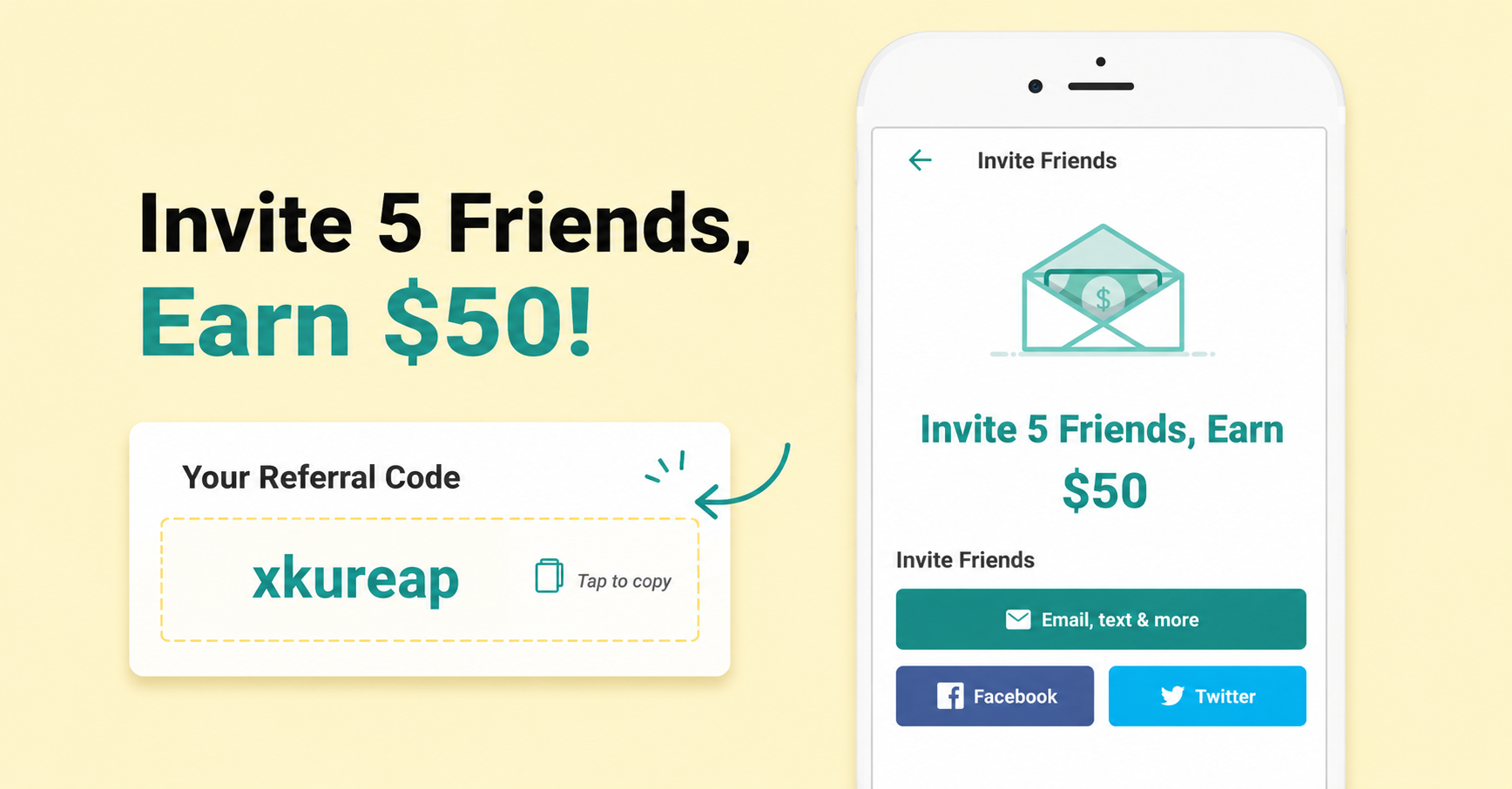
Some other examples are: REF847, BONUS23, or STORE56.
Alphanumeric codes are great because they are easy to share anywhere (even offline, like through a card or in person). But they are less convenient than a clickable referral link since customers have to type them in manually. Also, one simple typo (wrong number or letter) means the referral gets lost.
Personalized Referral Codes
Personalized referral codes also use letters and numbers (like alphanumeric), but they include the customer’s name or nickname in the code.
Some great examples are:
- EMMA15
- JAMES20
- OLIVIA10
The biggest pro is its human element. Just imagine your customer recommending sharing their code and saying, “Use ELLEN30” instead of “You can type: QWAERDX.” There’s nothing wrong with random codes, but they’re harder for people to recall or repeat when recommending your store.
The con is that it’s more prone to duplication, as many customers share the same names. But this won’t be an issue with good referral program software (they can help you create variations so each code stays unique).
Referral Links
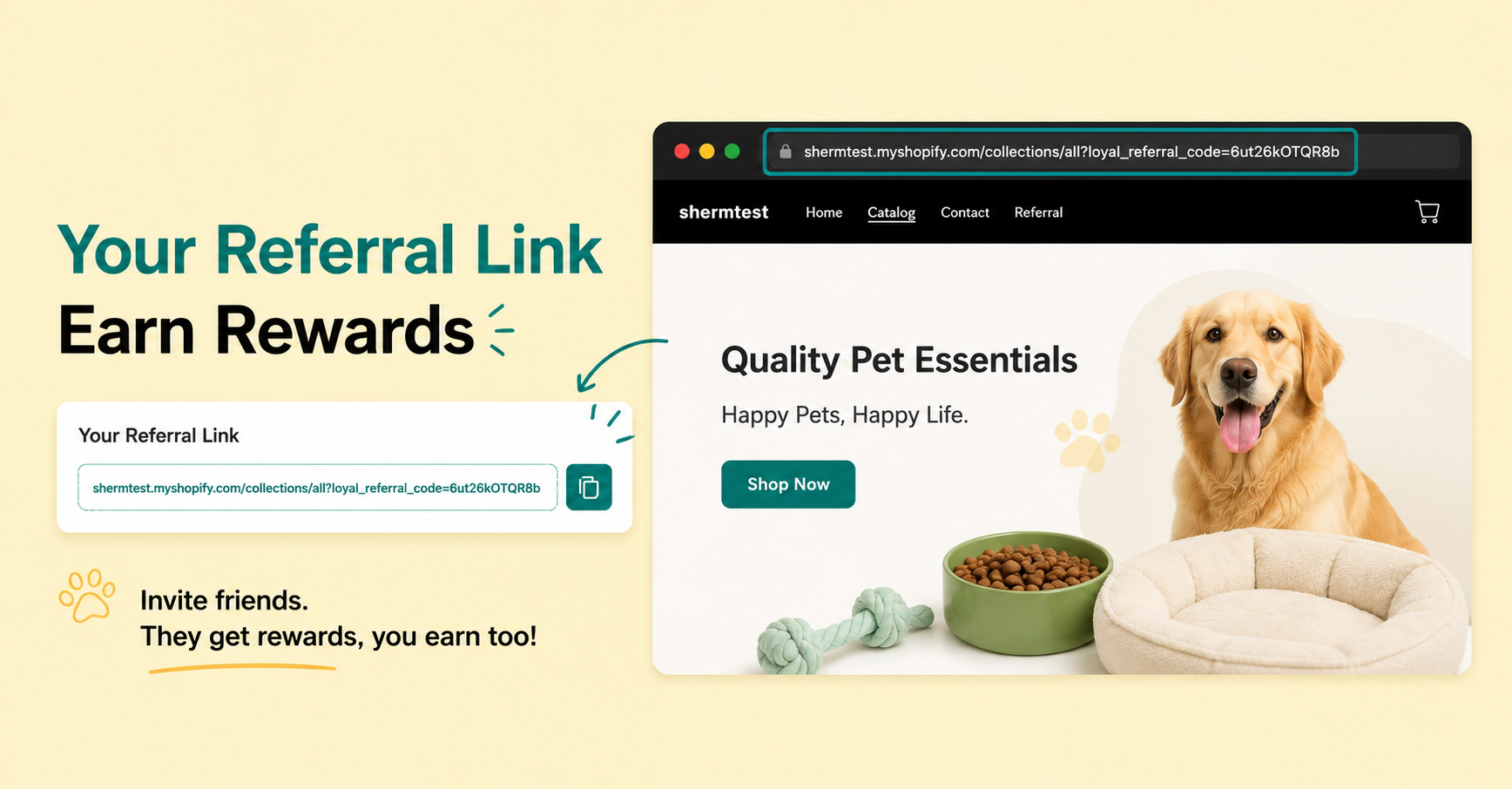
Unlike the usual codes, referral links are unique URLs provided for each customer. They can simply share this with their referees. The system will automatically record the referral and attribute it to the right referrer once the required action is taken (signed up or bought an item).
Referral links are perfect for online sharing because customers only need to copy and send the link. It’s more frictionless than code since no one has to manually type anything. But it’s a bit hard to share offline as it’s difficult to memorize.
Here’s an example from our own TrustWILL loyalty program that you can create:
Campaign or Generic Referral Codes
The last type of referral codes is campaign or generic codes. These shared codes are distributed by merchants to multiple people, instead of the usual customer-specific codes used in referral programs.
Yes, they look more like discount codes. But campaign codes are still considered referral codes because they reward customers for bringing in new buyers.
Some examples of generic codes are:
- SALE50
- WELCOME15
- FRIEND20
- SAVE10
Campaign codes are more ideal for large promotions. We’re talking seasonal referral campaigns (like a Black Friday invite event) or influencer collaborations where creators promote the same code to their audience.
But the major downside is limited referrer identification. Since many people use the same code, it becomes harder to tell which specific customer actually generated the referral.
Why Referral Marketing Matters for Your eCommerce Business
As customer acquisition costs continue to rise, referral marketing offers a more sustainable way to attract, convert, and retain customers through trusted recommendations.
Build Trust to Drive Customer Acquisition
Referral marketing works because people trust people. Prefinery found that 83% of customers trust personal recommendations, making it easier to encourage customers to share a customer’s referral link or join your referral system.
A referral code gives new shoppers confidence before their first purchase, while a referral code system helps retain customers, boost customer satisfaction, and streamline referral attribution through automated rewards.
Reduce Customer Acquisition Costs
Unlike paid ads, referral marketing only costs you when it delivers results. You reward customers after they successfully refer a new customer, making customer acquisition more cost-effective.
A well-designed referral program ties every reward to a successful referral, helping you control acquisition costs while driving sustainable growth.
Increase Customer Loyalty
When a customer refers a friend, it shows genuine trust in your brand. According to GrowSurf, referred customers have a 37% higher retention rate than customers acquired through other channels.
A referral program with a referral code rewards both customers, encourages repeat purchases, and automates reward distribution to improve customer loyalty with less manual effort.
How Referral Codes Fit into a Referral Program
A referral code on its own does not do much. It needs a system around it to actually work. Here is how it all connects.
Build Your Referral Program with Referral Codes
A referral code works best as part of a referral program or loyalty program. Most brands use a dedicated landing page or referral program section where existing customers can access their referral link and start sharing.
Make your referral link easy to find. A simple referral code system encourages customers to share more, improves the referral process, and drives more successful referrals.
Connect Referral Codes with Customer Touchpoints
A successful referral marketing strategy makes referral codes easy to find. Share every referral link through email, social media, messaging apps, and your referral program to encourage customers to participate.
The easier it is to use referral codes, the more likely customers are to share them. Placing a customer’s referral link in post-purchase emails helps drive more successful referrals and customer loyalty.
Analyze Referral Data for Retention Insights
Unlike generic discount codes or a coupon code, a refer-a-friend program helps you gain valuable insights into customer behavior, showing which customers, channels, and campaigns drive the best results.
By connecting referral software, you can track online transactions, answer common referral code questions, and optimize your referral marketing with data from satisfied customers.
Automate Referral Program Management
Managing a referral program manually is not realistic once it starts to scale. Referral program software takes care of reward distribution, referral validation, and even answering customer inquiries about their referral status, all without you having to step in every time.
That automation is what allows merchants to run a referral program across hundreds or thousands of customers without losing track of anything. Instead of chasing down completed referrals and issuing rewards one by one, the system handles it. You just monitor the results and adjust when needed.
Start Your Referral Program with TrustWILL
Setting up a referral program does not have to take weeks. With TrustWILL, eCommerce merchants can launch one directly from their Shopify store, configure the rewards, and start tracking referrals, all from one place.
Here’s how to get it running.
Configure Referral Program Rules
Go to Program > Referrals to set up the rewards for both the referrer and the new customer. TrustWILL gives you several reward options to choose from, including amount discounts, percentage off, free shipping, free products, and points.
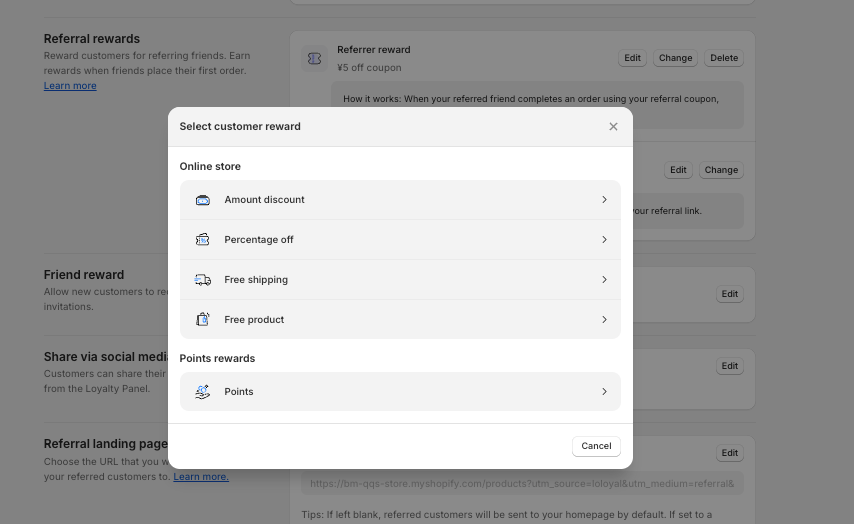
From the same settings page, configure the following:
- Social sharing channels: Choose which platforms your customers can use to share their referral links. TrustWILL supports Facebook, X, and email.
- Referral Popup: When a new customer lands on your store through a referral link, a popup appears automatically. They enter their email to claim their reward. You can customize the background image, text, and button redirect link from the popup settings.
- Referral Link destination page: This is the store page new customers land on after clicking a referral link. It can be your homepage, a product page, or any other page on your store.
Show Referral Information Across Your Store
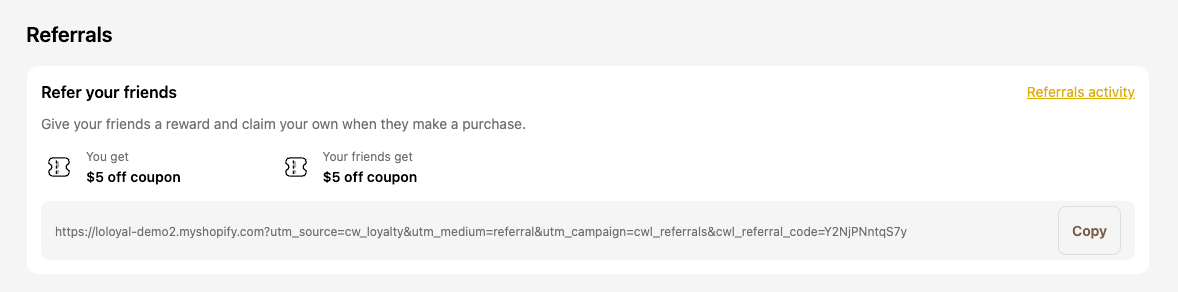
Once your program is live, you want customers actually to see it. TrustWILL lets you display your referral program in three places: the Widget, the Loyalty Page, and the Loyalty Hub. Customers can find their personal referral link from any of these placements and share it right away.
You can also connect TrustWILL with Klaviyo to promote your referral program through email, which supports:
- Adding referral links inside emails
- Sending referral campaign notifications
- Automatically reminding customers to invite their friends
Track Referral Performance
For merchants
Open the Customer page, click on a specific customer, and their referral link will be visible in the right-hand sidebar. You can also view your overall referral performance inside the Analytics panel.
For customers
They can track their referrals by clicking Referral Activity inside the Widget or Panel. It shows completed and pending referrals in one view.
They will also receive an email notification once a referral reward has been credited to their account.
Conclusion
A well-structured referral program gives your store a clear way to reward customers who recommend your brand to others. With referral codes, you can track where new customers come from, measure performance, and manage rewards without doing everything manually.
If you want a simple way to run this on Shopify, try TrustWILL Loyalty and Referrals. It lets you set up two-sided rewards, track every referral, and manage your program in one place.
FAQs About Referral Codes
What is My Referral Code?
Your referral code is the unique code linked to your account in a brand’s referral program. You can usually find it in your account dashboard under sections like “Refer a Friend,” “Invite Friends,” or “Rewards.” You can share it with friends so they receive a reward when they sign up or shop.
How Do I Create a Referral Code?
With referral program software like TrustWILL, creating referral codes is automatic. Every existing customer receives a unique referral code or referral link, while the referral software tracks successful referrals and automates reward distribution.
What Are Some Examples of Referral Codes?
Common referral code examples include alphanumeric codes (A7K92B), personalized codes (EMMA15), and referral links like yourstore.com/ref/emma15, making it easy for customers to share and invite friends.
What’s the Difference Between a Referral Code and a Referral Link?
A referral code is a short code customers enter manually at checkout, while a referral link is a unique URL that tracks the referral automatically when someone clicks it. Both work well in referral programs. Codes are easy to remember, while links are faster to share and track.