Global CO₂ emissions went up to 38.11 billion metric tons in 2025 (from 4.86 billion in 1990). This “scary growth” has pushed governments, organizations, and even customers to demand greener business practices. And one popular solution for ecommerce brands is carbon-neutral shipping.
In this article, we’ll show you what carbon-neutral shipping is. We’ll also discuss the benefits it offers to your business and how to apply it with a simple, affordable platform.
What is Carbon Neutral Shipping?
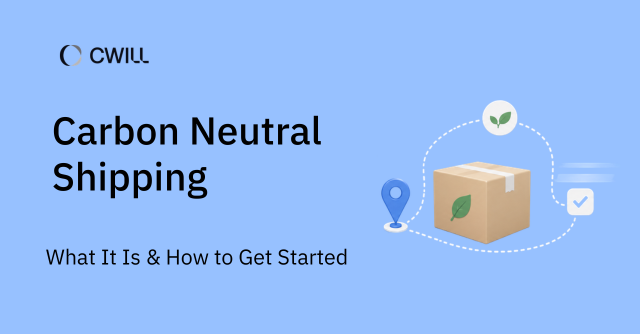
Carbon-neutral shipping is when ecommerce brands take action to balance the greenhouse gas emissions brought by delivering packages.
Imagine your online store ships about 30,000 packages/month to different parts of the U.S., and you release around 57,000kg of CO₂ per month from those deliveries.
If your business is “carbon-neutral,” you have to “offset” the carbon dioxide equivalent through environmental restoration projects. Another way is to reduce emissions by using cleaner transport methods.
Here’s one thing we want to clear up: carbon-neutral shipping isn’t the same as sustainable packaging. Carbon-neutral shipping is about reducing greenhouse gas emissions in transportation. But sustainable packaging is about the materials you use to wrap up your items.
You have to know which one you offer, so you can be honest with your customers.
Why Carbon Neutral Shipping Matters for Ecommerce Businesses
Carbon-neutral shipping is becoming more popular because of what it does for both the environment and your business (in reputation and revenue). Here are the three reasons why you need to consider this practice.
Reduce Cart Abandonment with Transparent Green Practices
In a 2024 DHL ecommerce survey, 59% of online shoppers in 24 countries voted that sustainability is “very” important for them. On top of that, 54% want to see the CO₂ emissions of their delivery.
We can see here how carbon-neutral shipping is becoming more of a “deciding factor.” If you add it at checkout, you can expect more completed orders. Plus, providing customers with more details (like the sustainable projects you support) can serve as strong proof.
With that, you can enjoy a higher conversion rate… and more sales!
Future-Proof Your Business Against Stricter Emission Rules
More countries are committing to achieving carbon neutrality by 2050, with stricter rules to reduce carbon emissions and greenhouse gas emissions. This makes carbon neutral shipping increasingly important for ecommerce brands.
By adopting carbon neutral shipping early, you can build future compliance and shipping costs into your operations. As regulations on carbon emissions increase, you’ll be better prepared without passing extra costs on to customers.
Carbon neutral shipping also helps businesses prepare for mandatory carbon footprint assessment and carbon emissions reporting. With accurate data on your carbon footprint, you’ll be ready as more countries introduce reporting requirements.
Taking a proactive approach today helps ecommerce brands meet future sustainability goals, demonstrate sustainable business practices, and support long-term carbon neutrality with confidence.
Build Long-Term Customer Loyalty
One study even showed that 80% of customers stick with brands that actually practice sustainability and are transparent about it.
It reflects your values, and that’s important for customers because buying from you means they’re also doing their part for the environment (without making much effort).
How Does Carbon Neutral Shipping Work?
There are two ways to achieve carbon-neutral shipping: through carbon reduction or carbon offsetting. Let me explain how each works and their pros and cons.
Carbon Reduction
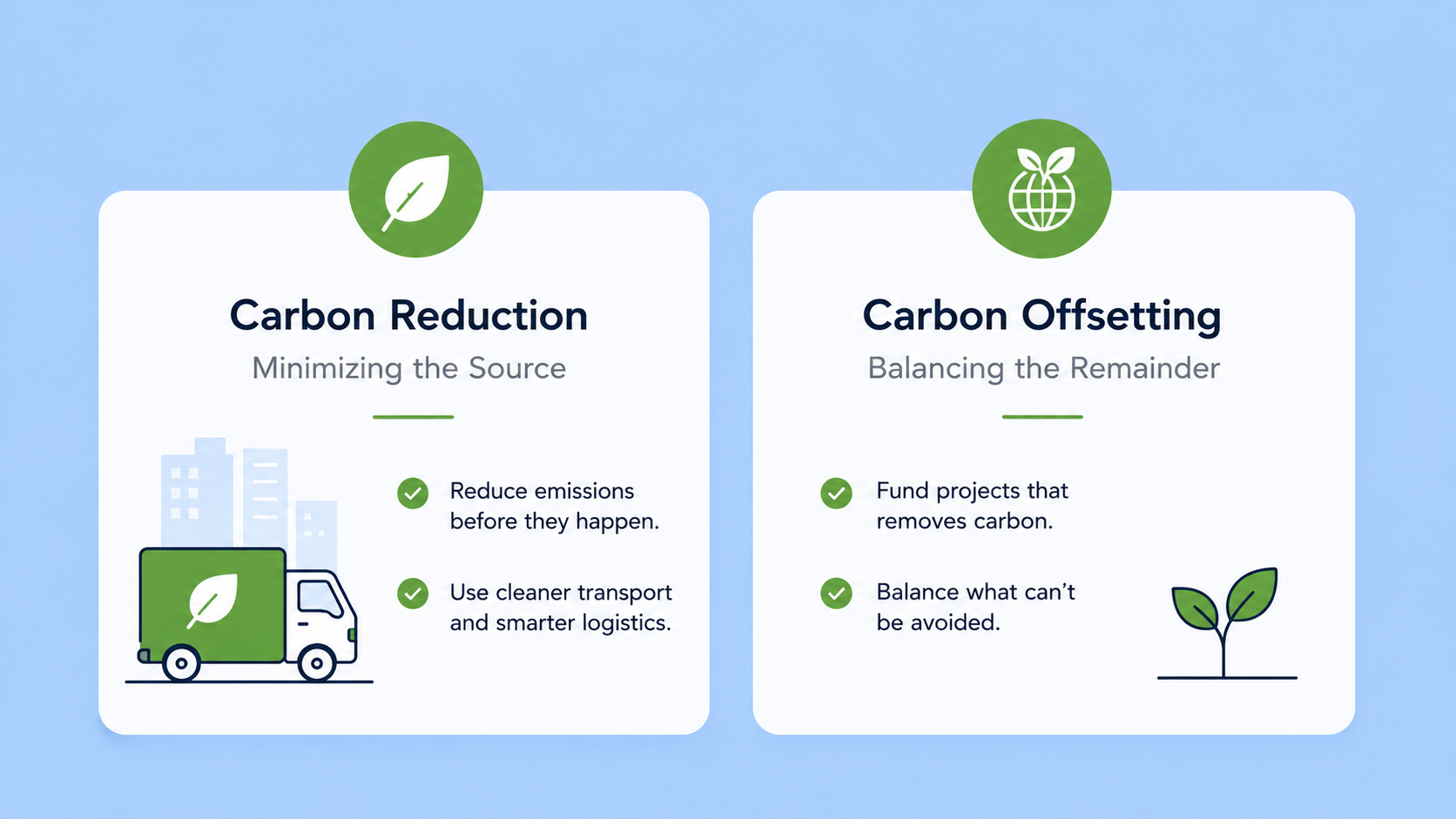
Carbon reduction focuses on reducing greenhouse gas emissions at the source. It supports carbon-neutral shipping by improving the shipping process, optimizing the supply chain, and using eco-friendly transportation powered by renewable energy.
One major benefit is that it helps reduce carbon emissions, lower your carbon footprint, and cut shipping costs at the same time. Better logistics also reduce fuel consumption and other emissions generated.
The challenge is the higher upfront investment. Many ecommerce brands, especially smaller businesses, may find it difficult to adopt greener carriers, infrastructure, or carbon-neutral shipping options because of the initial cost.
Carbon Offsetting
Carbon offsetting is one of the easiest carbon neutral shipping options for ecommerce brands. It helps offset emissions by funding verified carbon offset projects, reducing the overall carbon footprint of your shipping operations.
After completing a carbon footprint assessment, you calculate carbon emissions (often measured as carbon dioxide equivalent), purchase carbon credits, and support projects like reforestation initiatives, wind farms, and renewable energy sources to combat climate change.
While carbon offsetting supports achieving carbon neutrality without changing your existing shipping process, it doesn’t directly reduce carbon emissions or lower emissions generated from fuel consumption, fossil fuels, or packaging.
The best approach is to combine carbon reduction with carbon offsetting. By improving your supply chain, adopting eco-friendly packaging, and supporting trusted carbon offset projects, ecommerce brands can offer carbon-neutral shipping, reduce greenhouse gas emissions, and build long-term customer trust.
How to Implement Carbon Neutral Shipping to Your Business
Implementing carbon-neutral shipping for your ecommerce business doesn’t have to be expensive. You can get started by choosing the right carrier partners, offering carbon offsetting at checkout, and offering other delivery options.
Partner with Eco-Friendly Carriers
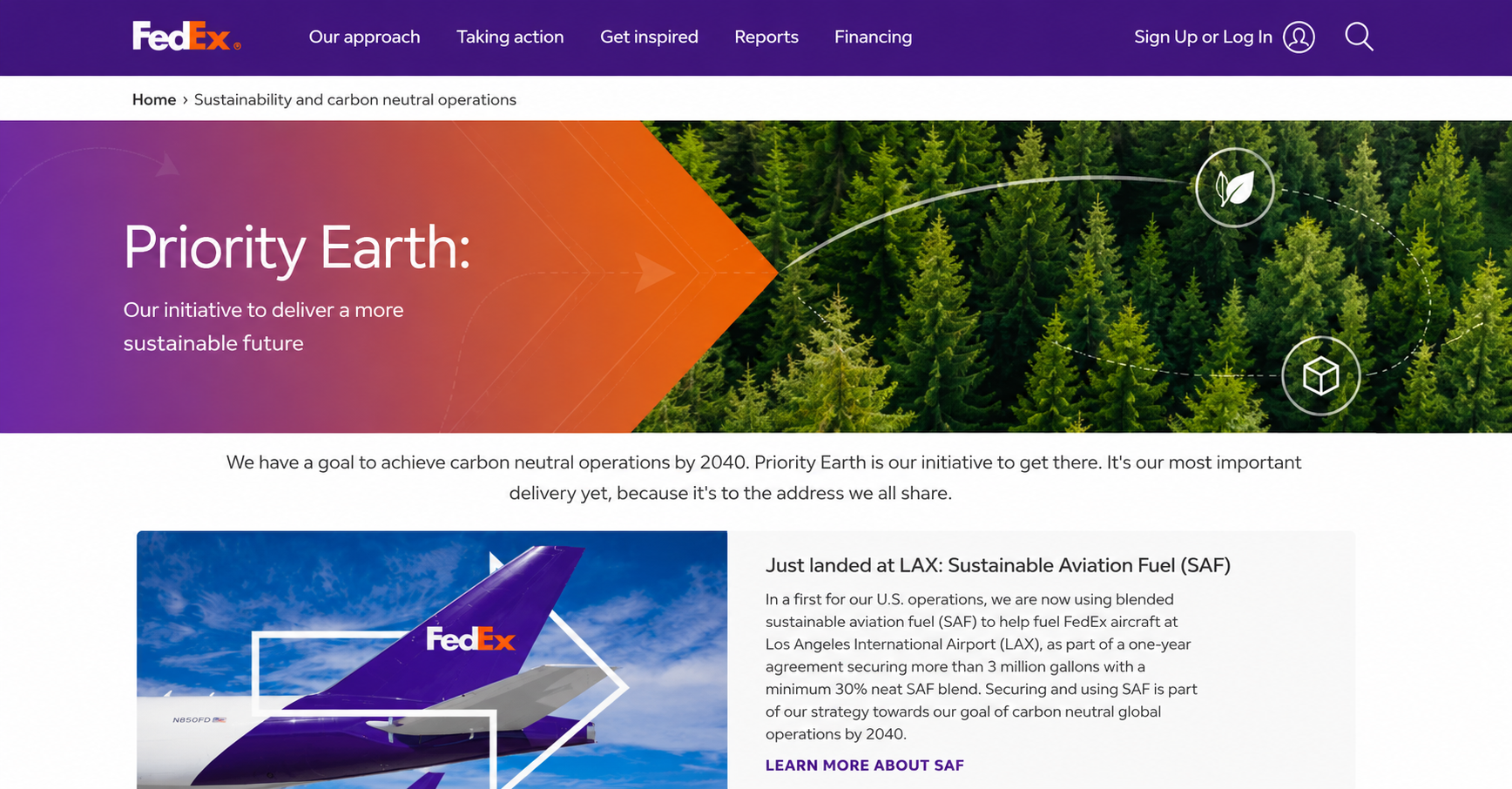
Let’s start with choosing “eco-friendly” carrier partners for your business. The good news is that most major shipping platforms are already offering carbon-neutral programs you can check out. But as for local carriers in your country, you might have to do more research.
Here are some shipping carriers and what they do for the environment:
- DHL GoGreen: They fund reforestation and renewable energy projects.
- USPS: Moving more freight from planes to trucks… and adding more electric vehicles to their fleet
- FedEx Priority Earth: Putting $100 million into carbon capture research and switching delivery vans to electric
Besides their carbon-neutral programs, these carriers also offer optimized routes to use less fuel and “idle” times between stops. That’s another win for your business, your customers… and the environment!
PRO-TIP: Add a “green” logo or a quick note about your carbon-neutral shipping partners. So it’ll be visible to anyone who visits your Shopify stores (whether they’ll buy that moment or are just checking).
Offer Carbon Offsets at Checkout
Another way is to add a carbon offset option at checkout. Your conversion rate can increase if you do this, as customers (especially Gen Zs) care a lot about where they spend their money. First Insight’s report even showed that 73% of them are willing to pay more for sustainable products. Imagine how happy they’ll be if you make it easy for them.
Some Shopify apps like Shopify Planet let you choose who pays for carbon-neutral shipping: you, your customers, or both. Customers can opt in by paying a small fee (usually under $1) for their order to participate in carbon offset projects.
Others, like our ParcelWILL app, include carbon offsets automatically with shipping protection (more on this later).
One of our clients wasn’t doing any carbon-neutral programs before. But then, they realized they were losing sales to competitors who do. After switching to our app and enabling shipping protection, their conversion rate went up by 40% in just a few months.
Enable Out-of-Home Delivery Options
Have you been thinking of offering PUDO (pick-up/drop-off) points and local lockers? This is your sign to go for that.
Offering carbon-neutral shipping options, and not just the usual door delivery, can really help lower the emissions from last-mile delivery (which is the most carbon-intensive part of the shipping process).
Imagine if your delivery partner has to drop 50 orders in one neighborhood. The total carbon dioxide emissions might be around 10kg (if it’s 0.2kg per package). But if 15 of your customers opted for local lockers, that can go down to 7kg. Your carbon dioxide emissions and fuel costs? Both reduced.
It can also lessen the bad experience from failed deliveries. With pick-up points, your customers can choose the time when they’ll grab their orders.
Cut Down Emissions from Returns
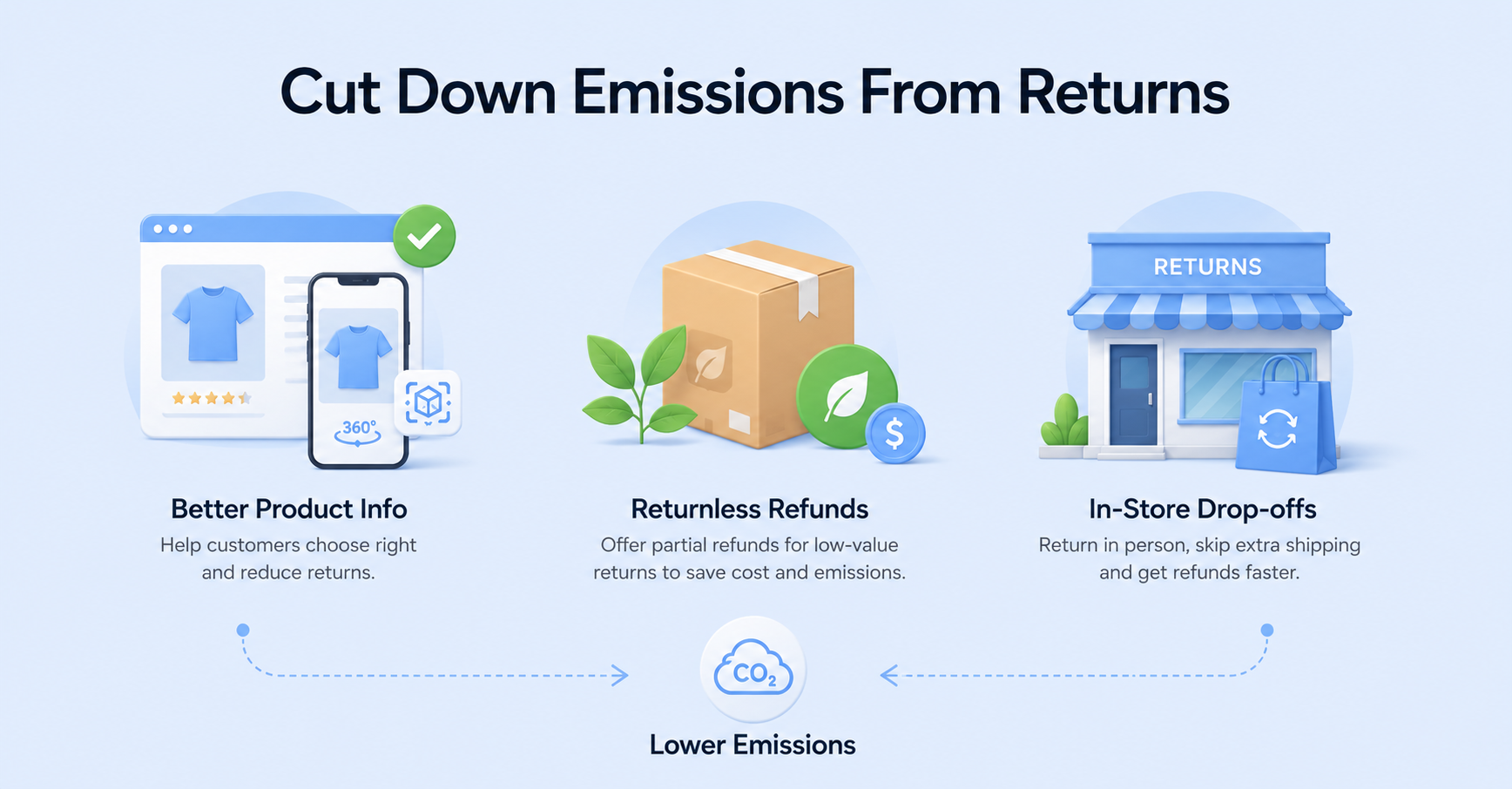
Besides the shipping that gets your product to customers, reverse logistics also contribute to your total carbon footprint. Every time a customer sends something back, that package makes another trip that burns fuel and creates more emissions. So what can you do as an ecommerce merchant? You can work on reducing returns in a few different ways:
- Better descriptions and AR tools: Detailed sizing guides, 360-degree product views, or AR try-on features help customers figure out if something will actually work for them before they order. Getting the right product from the start means fewer packages heading back to your warehouse (and less fuel burned in the process).
- Returnless refunds: For low-value items where return shipping would cost more than the product itself, you can offer a partial refund and let the customer keep or donate the item. Besides being eco-friendly, you’ll also save money on shipping costs and reduce carbon emissions from the extra trip.
- In-store drop-offs: If you have physical locations or partner with local retailers, let customers return items in person instead of mailing them back. This skips the extra delivery trip entirely, and customers get their refunds or exchanges right away without waiting for a package to show up at your warehouse.
How to Activate Carbon Neutral Shipping with ParcelWILL
ParcelWILL helps you offer carbon-neutral shipping without changing how you fulfill orders. Once you install the app, every protected shipment automatically includes a carbon offset, so you’re working toward achieving carbon neutrality without doing the calculations yourself.
Getting started with the app
After you install ParcelWILL Order Tracking in your Shopify store, it creates a virtual product called Worry-Free Delivery that represents your shipping protection.
To show it to customers, head to Shopify Themes → Customize → App embeds and turn on the Protection widget. The widget shows up on your cart or checkout page, and customers can opt in by paying a small extra fee.
How the carbon offsets work
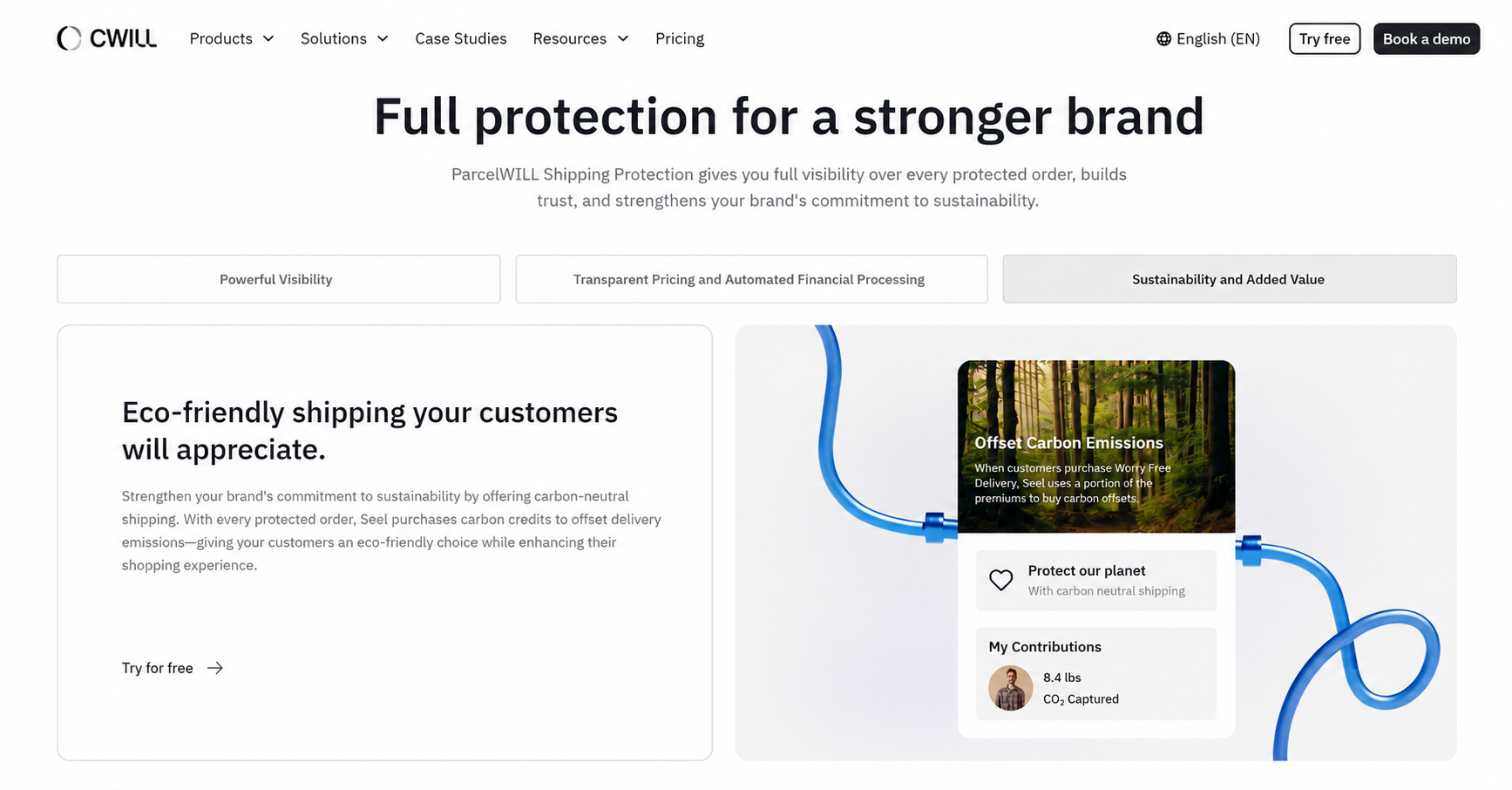
Every order that’s protected by ParcelWILL automatically includes a carbon offset from verified reforestation initiatives and renewable energy projects.
A portion of the protection fee goes toward purchasing carbon credits that fund these programs. You don’t have to track emissions or manage offsets on your own (which honestly saves a ton of time). Each protected shipment becomes carbon neutral without you lifting a finger.
What this does for your brand
Besides covering shipping problems like loss, damage, delays, and porch theft, ParcelWILL also shows customers you’re serious about sustainable practices.
The carbon-neutral messaging appears at checkout, which helps with eco-conscious shoppers who care about environmental impact.
You’re protecting your revenue from shipping issues while proving you’re not just talking about sustainability but actually doing something about it.
Conclusion
That’s all for this guide on carbon-neutral shipping. If you really want to protect and grow your business, you have to invest in practices that meet customer expectations and prepare you for stricter regulations ahead.
Using tools like ParcelWILL can help you offer carbon-neutral shipping while protecting orders from loss, damage, and theft. It automatically offsets emissions with every protected delivery, so you’re taking action without adding extra work to your fulfillment process.
FAQs for Carbon Neutral Shipping
What does carbon-neutral mean for shipping?
Carbon-neutral shipping means reducing or balancing the CO₂ emissions from delivering packages. It can be through funding environmental projects that pull carbon out of the atmosphere or minimize what’s the greenhouse gases being released.
How are shipping emissions actually offset?
Logistics providers calculate the carbon footprint of each shipment, then buy equivalent carbon credits to support verified environmental projects, including reforestation initiatives and renewable energy sources like wind farms.
How do I know if my carrier is carbon-neutral?
Many major carriers support carbon-neutral shipping. Businesses can use UPS Carbon Neutral Shipping to offset emissions or choose FedEx’s eco-friendly shipping programs for similar benefits.
What is carbon-efficient delivery?
Carbon-efficient delivery is also about cutting down the emissions per package. It focuses on optimizing delivery routes, batching shipments together, and using low-emission vehicles.

Marketing Manager
Jaelle Lin is the Marketing Manager at CWILL, driving DTC growth on Shopify across retention, loyalty, and post-purchase experience. She works with brands to optimize the entire customer journey from acquisition to order tracking, shipping protection, returns, and lifecycle engagement, helping build sustainable, long-term revenue through customer relationships.