Key Takeaways
- 79% of customers expect proactive updates when their order is disrupted. Only 44% feel they get them. That’s the gap where post-purchase dissonance lives.
- Post-purchase dissonance can lead to refund requests, WISMO support tickets, negative reviews, and lower customer lifetime value.
- Real-time tracking, proactive notifications, and a frictionless return process are key ways to prevent post-purchase dissonance.
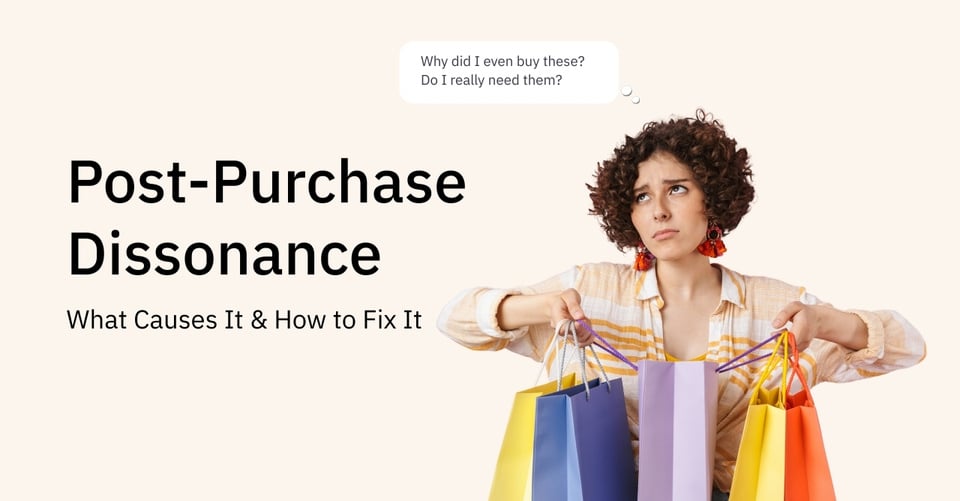
Post-purchase dissonance is the doubt and unease customers feel after completing a purchase, and it can turn an excited buyer into a refund request within days. Four out of five Americans go through this at some point, even when they do their research before buying.
In this guide, we’ll show you what triggers these post-purchase problems, share post-purchase dissonance examples, and give you some tips (and tools) to reduce the chances of it affecting your business.
What Is Post-Purchase Dissonance?
Post-purchase dissonance is when customers feel uneasy after making a purchase. It’s also called “buyer’s remorse.” And it’s commonly caused by doubt, delivery delays, unreached expectations, and lack of perceived value.
Types of Post-Purchase Dissonance:
- Buyer’s remorse: After spending, customers feel regret and wonder whether the price was really worth it.
- Social comparison dissonance: Triggered by seeing an alternative post-purchase: a competitor’s product that is cheaper or has similar features. Eric’s earbuds scenario above is a textbook example.
- Delivery-expectation dissonance: Long or vague delivery timelines give customers time to second-guess themselves. Every day without a tracking update is a day spent wondering.
- Product-reality dissonance: The item arrives and doesn’t match what the product page described. The gap between promise and reality triggers immediate disappointment.
How Post-Purchase Dissonance Affects Your Business
Post-purchase dissonance doesn’t just hurt one part of your business. The effects are cumulative and they tend to arrive in the same order.
Increases Support Workload
Your support team bears the cost first. WISMO tickets pile up, response times slow, and your team spends their day answering “Where is my order?” instead of solving real problems.
If 60 customers contact support in the same week, and each interaction takes 10 minutes, that’s 600 minutes spent on questions that better order communication would have prevented entirely.
Phenom Elite, a Shopify sports equipment retailer, tracked this cost directly. As their order volumes grew, WISMO tickets grew with them and pulled customer satisfaction scores down in the process. After adding automated real-time notifications and customizable tracking pages to their post-purchase flow, WISMO tickets dropped by 66% and CSAT lifted by 4.5%.
Leads to Order Cancellations and Refund Requests
Most merchants assume customers cancel because orders are late. Mitto’s research tells a different story: 55% of consumers have canceled a delayed shipment specifically because of poor communication, not because of the delay itself. And 76% say bad communication during a delay hurts more than the delay ever would.
Silence costs more than honesty. A flash sale makes this concrete: your team gets buried processing orders, confirmation emails don’t go out, customers reach out and messages go unanswered. That’s not a shipping problem. It’s a communication problem that can become a direct trigger for cancellations and refund requests.
Damages Customer Lifetime Value (CLTV) and Repeat Purchases
Around 72% of customers are willing to spend more if you provide a great customer experience. Without that experience, you potentially lose repeat purchase revenue.
Myvpro, a vaping accessories retailer, ran into exactly this. Most customers were buying once and not coming back, and a complicated returns process was making it worse.
After streamlining their returns experience, launching a loyalty and referrals program, and actively collecting reviews, repeat purchase rate climbed by over 30% and average order value from loyalty members rose by 52%.
How to Minimize Post-Purchase Dissonance with Better Tracking
The best way to prevent post-purchase dissonance is to make customers feel informed and in control from the moment they check out. Five practices make the biggest difference:
- Give real-time tracking updates: Customers shouldn’t have to wonder where their order is. Real-time tracking gives them the answer before they have to ask which means fewer WISMO tickets and less anxiety on their end.
- Use branded tracking pages: 80% of consumers want delivery status updates. A generic carrier tracking page does the job, but a branded page does it better. When customers land on a page that looks like your store, reads your language, and surfaces product recommendations, that’s a post-purchase touchpoint that builds trust instead of doubt.
- Send proactive shipping notifications: Send customers an update at every stage: order confirmed, shipped, out for delivery, delivered. Each notification is a reassurance that costs you nothing but cuts off a support ticket before it’s written.
- Provide accurate delivery estimates:Vague windows create anxiety. Specific estimated delivery dates help set realistic expectations and give customers something concrete to hold onto.
- Add tracking links to confirmation emails: Every confirmation email should include a direct link to the tracking page. One click should take a customer from their inbox to knowing exactly where their order is.

#1 Shopify Tracking Solution for eCommerce
Final Thoughts
Post-purchase dissonance can be narrowed down to the experience your customers have between checkout and delivery. Your job is to fill that gap with information, reassurance, and proof that you’re paying attention.
Merchants who get this right don’t just reduce refunds. They build the kind of post-purchase experience that turns a first-time buyer into a repeat customer.
Try CWILL’s post-purchase software and give your customers the transparency they need after every purchase.
FAQs About Post-Purchase Dissonance
Post-purchase dissonance is when your customers feel uneasy or regretful after buying something. It’s also called post-purchase (cognitive) dissonance or buyer’s remorse.
One example of dissonance buying behavior is when a customer buys a $300 smartphone and immediately starts researching cheaper alternatives. They question their decision, worry they overpaid, and feel anxious until the phone arrives.
The terms are often used interchangeably. Buyer’s remorse is the general feeling of regret after a purchase. Post-purchase dissonance is the broader psychological state. It includes remorse but also covers anxiety, uncertainty, and the gap between expectations and reality.
When customers experience post-purchase dissonance, return rates tend to rise. Customers who feel anxious are more likely to request refunds as a way to resolve their doubt. Proactive communication and easy access to order tracking can reduce this significantly.
Note: This blog was originally written in English and translated using an automated tool to make the content accessible to a global audience. We believe in sharing valuable insights with everyone and apologize for any inaccuracies. If you spot any errors, please feel free to contact us for corrections. Your feedback helps us improve and ensures the content’s value is fully realized.

Content Director | 9+ years decoding B2C & B2B eCommerce, obsessed with SaaS and retail storytelling
Words are my weapon—crafting killer copy, decoding trends, and turning data into gold. When not strategizing: Coffee addict, pun enthusiast, and book lover. Ready to level up your eCommerce game? Let’s chat. ☕️