Key Takeaways
- USPS is usually cheaper for light packages going to homes: it doesn’t add a residential surcharge on Priority Mail, while UPS adds $6.50 per package on Ground.
- For packages over 70 lb, UPS is the only option of the two, since it takes packages up to 150 lb.
- Only UPS Next Day Air, UPS 2nd Day Air A.M., and USPS Priority Mail Express refund your shipping cost if a package arrives late.
- Use our tracking benchmark to check your own orders: across 442.7 million packages from 1,687 carriers tracked through TrackingMore by CWILL, 89.9% returned at least one tracking update and 84.2% reached a final status.
USPS is usually the cheaper choice for light packages going to homes, while UPS is the better fit for anything over 70 lb and deliveries that need a guaranteed arrival time. For most stores, the decision comes down to package weight, value, and destination.
Once you’ve picked a carrier, the next question is whether its tracking is working for your customers. We’ve included a benchmark from the 1,687 carriers TrackingMore by CWILL tracks to check against. Below, we compare UPS and USPS on cost, speed, limits, and guarantees, then show how to measure tracking on your own orders.
UPS vs USPS at a Glance
USPS is usually a better fit for light packages going to homes (residential areas) or PO boxes, while UPS tends to be a better fit for heavy, high-value, or time-sensitive deliveries (guaranteed-time orders).
| Feature | UPS | USPS |
| Best for | Heavy, large, or high-value orders; guaranteed-time delivery | Light, lower-value packages going to home |
| Ground delivery time | UPS Ground: 1–5 business days | Ground Advantage: 2–5 days |
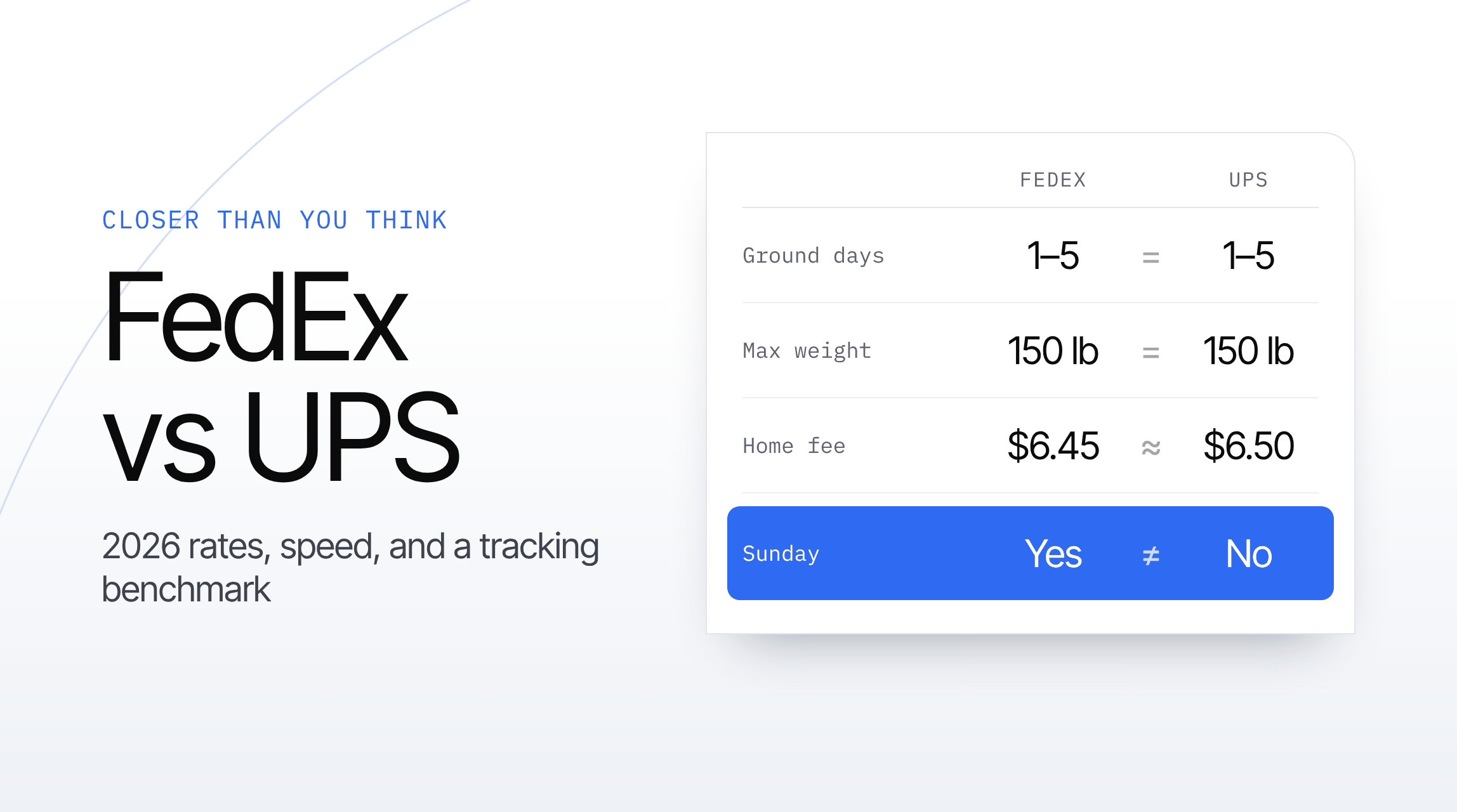
| Max weight | 150 lb | 70 lb |
| Residential surcharge | Ground: $6.50 on daily rates | None on Priority Mail |
| PO boxes | Not delivered (Ground Saver can deliver) | Yes |
| Included coverage | $100 per package ($50 on Ground Saver) | Up to $100 on Ground Advantage, Priority Mail, and Priority Mail Express |
Which Is Cheaper, UPS or USPS?
For light packages going to homes, USPS is usually cheaper. The difference comes mostly from the fees UPS adds on top of the base rate, such as the residential surcharge. For heavier packages, the gap narrows, and USPS can’t take anything over 70 lb at all, so if you’re consistently shipping packages that weigh more than that, the choice is made for you.
It’s always a good practice to compare quotes for your actual package weight, box size, and destination zone, since both carriers price based on those factors.
On base rates alone, USPS Ground Advantage costs less than UPS Ground for 1, 5, and 10 lb packages in every zone below. The one exception is a 10 lb package going to the farthest zone, where the two are nearly tied.
| Package | Zone 2 (near) | Zone 5 (mid) | Zone 8 (far) |
| 1 lb, UPS Ground | $11.99 | $14.10 | $15.03 |
| 1 lb, USPS Ground Advantage | $8.08 | $9.29 | $11.22 |
| 5 lb, UPS Ground | $14.19 | $18.65 | $21.72 |
| 5 lb, USPS Ground Advantage | $10.41 | $14.53 | $20.24 |
| 10 lb, UPS Ground | $15.91 | $20.46 | $26.29 |
| 10 lb, USPS Ground Advantage | $12.91 | $17.81 | $26.39 |
UPS Ground daily rates from the UPS 2026 Rate and Service Guide (updated September 7, 2026). USPS Ground Advantage commercial prices from USPS Notice 123, effective October 4, 2026, the start of USPS’s temporary holiday pricing. These are base rates: UPS adds a $6.50 residential surcharge on home deliveries, plus a weekly fuel surcharge. Both carriers bill by dimensional weight when it’s higher, and Shopify Shipping or negotiated rates will be lower.
Why UPS Adds Fees That USPS Doesn’t
Put simply, UPS charges a residential surcharge because delivering to a home costs a private carrier more than delivering to a business. Businesses usually take several packages at once, during set hours, at an easy drop-off location.
A home usually takes one or two packages at a time, which means more driving between stops (more fuel), and more failed attempts when nobody’s there. USPS doesn’t need the fee because its carriers already visit nearly every home address for mail delivery, so dropping off a package doesn’t add much.
On a small, low-cost order, that difference matters. A $6+ surcharge can be a large share of what you pay UPS to ship a lightweight package.
Two other UPS fees can add to the cost. The delivery area surcharge applies to rural or hard-to-reach ZIP codes and is added on top of the residential surcharge, so a rural home delivery pays both. The fuel surcharge is a percentage that UPS resets weekly: as of October 26, 2026, it was 29.50% for UPS Ground, so a label with a $10 base charge picks up about $2.95 in fuel fees. USPS adds neither on Priority Mail.
UPS and USPS Surcharges Side by Side
| 2026 Fee | UPS | USPS |
| Residential surcharge | Ground: $6.50 on daily rates | None on Priority Mail |
| Delivery area surcharge | Residential Ground: $6.55; extended area: $8.85 | None on Priority Mail |
| Fuel surcharge | Percentage based on a fuel price index, reset weekly | None on Priority Mail |
UPS vs USPS Fees: What Changed in 2026
Both UPS and USPS changed prices this year (and USPS changed its prices more than once).
- UPS: an average 5.9% general rate increase, effective December 22, 2025.
- USPS, January 18, 2026: Ground Advantage up 7.8%, Priority Mail up 6.6%, and Priority Mail Express up 5.1%.
- USPS, April 26, 2026 – January 17, 2027: a temporary 8% increase.
- USPS, July 12, 2026: Ground Advantage commercial ounce tiers removed, raising prices by an average of 11.8%.
- UPS, December 21, 2026: another average 5.9% increase, announced for 2027.
Holiday pricing is another cost factor. UPS charges a $0.50 demand surcharge on residential Ground and Ground Saver packages from October 25, 2026–January 16, 2027, rising to $0.75 from November 22 – December 26. USPS has a temporary holiday price change from October 4, 2026 – January 17, 2027, which varies by product, weight, and zone.
Dimensional Weight: Why Light, Bulky Boxes Cost More
Carriers also want to avoid losing truck space on bulky, light boxes (products like pillows, apparel boxes, or packaged home goods). This is where dimensional (DIM) weight comes in. Carriers calculate it by multiplying the box’s length × width × height, dividing by a set number (the DIM divisor), and charging for whichever is greater: actual weight or DIM weight. A smaller number means a higher billed weight.
In July 2026, USPS cut its divisor from 166 to 139, matching the 139 UPS uses on daily business rates (UPS uses 166 on retail rates). That removed one of USPS’s advantages for light but bulky items. If you ship those, check your box sizes against both carriers’ rates, not just your package weights.
Delivery Speed, Reliability, and Weekend Delivery
For everyday ground shipping, UPS and USPS publish similar delivery windows. The bigger difference is which services are guaranteed: a guaranteed service refunds your shipping cost if the package arrives late, while every other published time is an estimate (and you will not receive a refund if it’s late).
| Service | Delivery time | Guaranteed? |
| UPS Ground | 1–5 business days | No |
| UPS Ground Saver | About 1–2 days longer than UPS Ground | No |
| USPS Ground Advantage | 2–5 days | No |
| USPS Priority Mail | 2–3 days | No |
| USPS Priority Mail Express | 1–3 days, by 6 PM | Yes, money back if late |
| UPS Next Day Air | Next business day | Yes, money back if late |
| UPS 2nd Day Air A.M. | Second business day | Yes, money back if late |
Saturday and Sunday Delivery
UPS delivers Ground packages to homes on Saturday at no extra fee, but doesn’t deliver on Sunday. USPS delivers Priority Mail on Saturday with no surcharge, and Priority Mail Express can arrive on Sundays and holidays in many markets for an extra fee.
On-Time Delivery Rates
Shipping analyst ShipMatrix reported December 2025 peak-season on-time rates of 97.2% for UPS and 94.1% for USPS. During peak, UPS gave longer delivery estimates than usual, which made its on-time rate easier to hit.
Tracking Tools: UPS My Choice vs USPS Informed Delivery
Both carriers offer free accounts that send your customers delivery alerts. UPS My Choice lets customers get delivery alerts and photos, see an estimated delivery time, and change the delivery date or location, with paid upgrades for confirmed two-hour delivery windows. USPS Informed Delivery is free and sends text or email alerts about a package’s status, along with preview images of incoming mail.
Size Limits, PO Boxes, and Insurance
Weight and Size Limits
Good news if you have decision fatigue: if you ship anything over 70 lb, the choice is made for you, because USPS won’t take it.
| UPS | USPS | |
| Max weight | 150 lb | 70 lb |
| Max size | 108 in length; 165 in length + girth | Ground Advantage: 130 in length + girth; Priority Mail: 108 in |
PO Boxes and Military Addresses
Another decision largely made for you: UPS doesn’t deliver to PO boxes. The exception is UPS Ground Saver, which can deliver to PO boxes and APO/FPO military addresses because USPS handles the final leg. USPS delivers to both.
Included Coverage and Claims
| UPS | USPS | |
| Included coverage | $100 per package (unless you declare more); $50 on Ground Saver | Up to $100 on Ground Advantage, Priority Mail, and Priority Mail Express |
| Claim deadline | Within 60 days of scheduled delivery | Damage: up to 60 days after mailing. Loss: 15–60 days (Ground Advantage, Priority Mail); 7–60 days (Priority Mail Express) |
For anything worth more than $100, it makes sense to declare extra value or add shipping protection.
Dropshipping and Handoffs: When the Last Mile Changes Carriers
Sometimes the carrier on the label isn’t the one that brings the package to the door. That changes what your customer sees in tracking, and if you dropship, your customer service team already knows it’s where a lot of confusion starts.
Imported Orders and Last-Mile Tracking Numbers
Dropshipping merchants told us similar stories: their suppliers only provide a tracking number for the final leg in the US. During the 7–12 days the order spends in international transit, that number shows nothing. To the customer, the order looks like a scam.
Choosing UPS or USPS doesn’t fix this, because neither carrier has the package yet. What helps:
- Ask suppliers for a tracking number that covers the whole trip, not just the last leg.
- Tell customers the expected delivery window at checkout and in the order confirmation.
- Send an update before the last-mile tracking starts, so the silence doesn’t look like a missing order. You could consider outright mentioning that the carrier may change to set realistic expectations.
UPS Ground Saver and USPS Delivery
UPS Ground Saver may be delivered by UPS or USPS, so a customer who paid for UPS shipping may see a USPS truck at the door (and they could feel confused or duped). In 2026, UPS shifted part of its Ground Saver volume back to USPS for the final leg of delivery.
Expect it to take about one to two days longer than UPS Ground. The handoff also lets Ground Saver reach PO boxes and military addresses when other UPS services can’t. Its included coverage is also lower ($50 vs $100 on UPS Ground).
If you use it, mention the possible USPS handoff in your shipping policy or tracking emails, so customers aren’t caught off guard.
Measure UPS vs USPS on Your Own Orders
Published delivery times and industry averages only go so far. Your own orders show which is faster, UPS or USPS, for your products and your customers, which is why it’s important to track your data.
Track these by carrier:
- Transit time: how long orders take from first scan to delivery.
- Exceptions: how often packages hit address issues, get damaged, or are returned to sender.
- “Where is my order?” tickets: how many support requests each carrier generates.
For tracking itself, use our benchmark as a baseline. Across 442.7 million packages from 1,687 carriers tracked through TrackingMore by CWILL, 89.9% returned at least one tracking update, and 84.2% reached a final status. Treat these as a reference point rather than a target, since they cover every carrier and include international shipments.
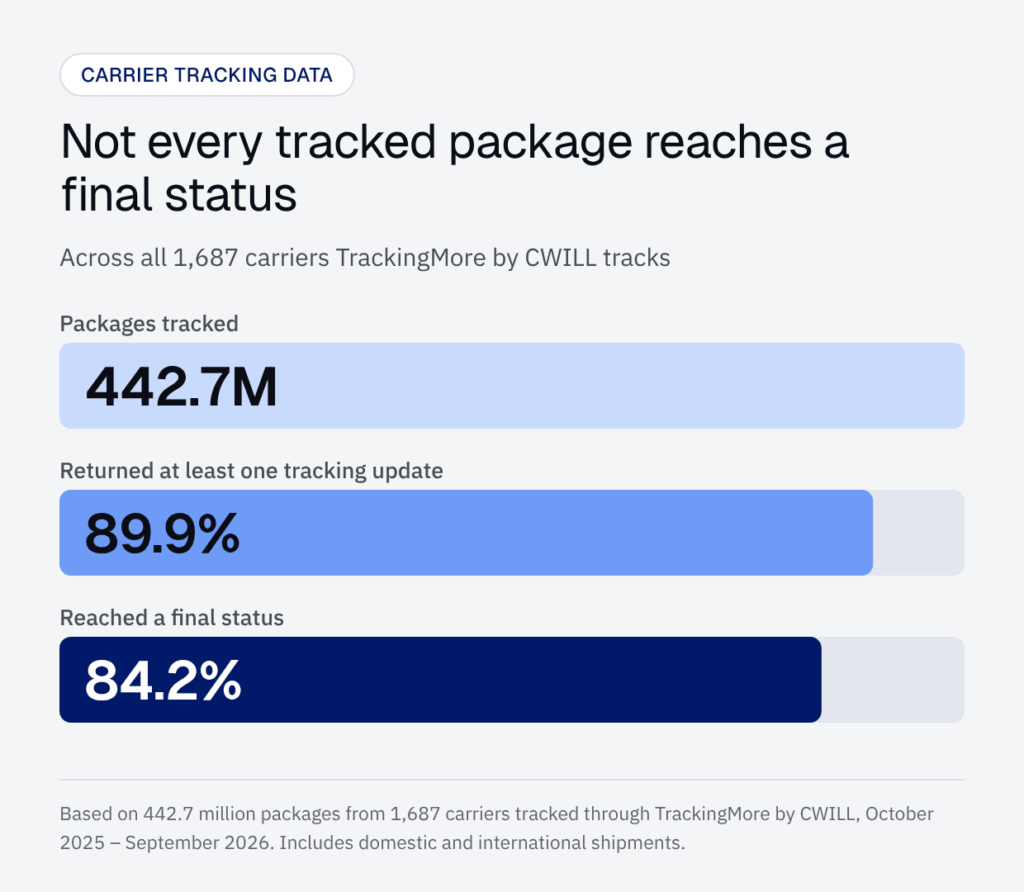
The packages outside those numbers are the ones your customers ask about. A tracking number that never updates looks like an order that never shipped, and one that stops partway looks lost, even if the package is still moving. Those are the orders that tend to turn into “where is my order?” emails.
If your share is well below the benchmark, look first at what happens before the carrier scans each package. Until that first scan, customers see a “label created” or pre-shipment status, and if they click the tracking link too early, the carrier may show “not found.” One Shopify merchant told us they moved warehouses and printed labels for 124 packages that never shipped, and nobody noticed until customers started complaining.
A few other things cause the same gaps: a typo in the tracking number, a tracking number saved under the wrong carrier, and a handoff between carriers, like a Ground Saver package passed to USPS. Once a package is in transit, watch for delivery exceptions, such as a bad address, damage, or a return to sender. Merchants often hear about these from customers first.
To head most of this off, send the shipping confirmation after the first carrier scan, not when the label prints, and show a “preparing your order” message while orders sit in pre-shipment.
How to Choose Between UPS and USPS: Rules of Thumb by Merchant Type
There’s no single winner in UPS vs USPS. Most stores do best picking a default shipping carrier for their Shopify store by package type and weight, and many use both.
Light, Low-Value Products
Best for: USPS Ground Advantage. With no residential surcharge, it’s often the cheapest way to ship light packages primarily to homes, and it reaches PO boxes. If your products are light but bulky, compare box-size pricing too, since USPS’s July 2026 DIM change narrowed its advantage there.
Heavy or High-Value Orders
Best for: UPS. It takes packages up to 150 lb (USPS stops at 70 lb), and its guaranteed air services cover orders with a hard deadline.
Dropshipping Stores
Best for: whichever carrier your supplier uses, plus clear expectations. The carrier matters less than the tracking gap before the package reaches the US. Push suppliers for full-route tracking and tell customers the delivery window up front. A branded tracking page can carry that message in one place.
After You Choose a Carrier, Watch Your Tracking
Whichever carrier you choose, keep an eye on tracking. Compare your own orders against the benchmark above, and catch packages that sit in pre-shipment or stop updating before customers have to ask.
CWILL Order Tracking shows transit times, exceptions, and “where is my order?” volume for every carrier you ship with, so you can see which one is working for your store. Try CWILL Order Tracking free
FAQs
USPS is usually cheaper for light packages going to homes, because it doesn’t add residential, delivery area, or fuel surcharges on Priority Mail. UPS charges a residential surcharge of $6.50 on Ground at daily rates, plus a weekly fuel surcharge. For heavier packages, the gap narrows, and USPS can’t ship anything over 70 lb.
Why is UPS shipping so expensive?
UPS shipping often costs more because of the fees added on top of the base rate. Delivering to homes costs a private carrier more per stop, so UPS adds a residential surcharge, a delivery area surcharge for rural ZIP codes, and a fuel surcharge that changes weekly. As of October 26, 2026, the UPS Ground fuel surcharge was 29.50%.
It depends on what you measure. For on-time delivery, ShipMatrix reported December 2025 peak rates of 97.2% for UPS and 94.1% for USPS, though UPS gave longer delivery estimates than usual during peak. For tracking, the gaps customers notice most, like a “label created” status before the first scan, happen with both carriers.
Across 442.7 million packages from 1,687 carriers tracked through TrackingMore by CWILL, 89.9% returned at least one tracking update and 84.2% reached a final status. If your own share is well below those numbers, check when labels are created and when tracking numbers go out to customers. Treat these as a reference point rather than a target, since the benchmark covers every carrier and includes domestic and international shipments.
For ground shipping, UPS isn’t much faster: UPS Ground takes one to five business days and USPS Ground Advantage takes two to five days. The bigger difference is guarantees. UPS Next Day Air, UPS 2nd Day Air A.M., and USPS Priority Mail Express refund your shipping cost if they arrive late. Ground services don’t.
People usually choose UPS for heavy packages and orders with a deadline. UPS ships packages up to 150 lb, while USPS stops at 70 lb, and its Next Day Air and 2nd Day Air A.M. services come with a money-back guarantee. For light packages going to homes, USPS is usually cheaper because it doesn’t add a residential surcharge on Priority Mail.

Freelance Writer & Editor
Grace Gallagher is a writer and editor with 10+ years of experience covering health, wellness, lifestyle, and culture. Her work has appeared in Health, Verywell Health, Verywell Mind, Parents, Romper, Healthline, and more. She has also written for brands including Hims & Hers, Moon Juice, Vital Proteins, and Veracity Self-Care.
Grace holds a BA from Hobart and William Smith Colleges and an MFA in creative writing from Hunter College.
You can visit her website or connect with her on LinkedIn for more information.