Key Takeaways
- Big-brand programs run on budgets most Shopify brands don’t have, so copy one idea, not the whole program.
- Points and discounts are a starting point, not a strategy. The best programs add something that fits their customers.
- A loyalty program members can finish in one day goes cold, so add a new way to earn each month, such as points for reading new content.
- Some of the strongest programs focus on community, giving members a reason to stay that a coupon can’t match.
The customer loyalty programs worth copying solve one business problem or give members a community to belong to. Points and discounts alone are what shoppers expect now. Justin Risso, Head of Revenue at CWILL, spent years in Customer Success setting up loyalty programs with merchants, and he’s heard plenty of brands ask for “the same loyalty program that Sephora has.” Your brand may not have Sephora’s resources or large customer base (or its pain points), but you can still borrow from its loyalty program.
Below, Justin breaks down eight programs, what your Shopify brand can copy from each, and what to skip.
What Are Loyalty Programs?
A loyalty program rewards customers for coming back through incentives like points, tiers, perks, or exclusive access. Most programs fall into one of four types:
- Points programs let customers earn points on purchases and other actions (like reviews, referrals, or following on social), then trade them for discounts or products.
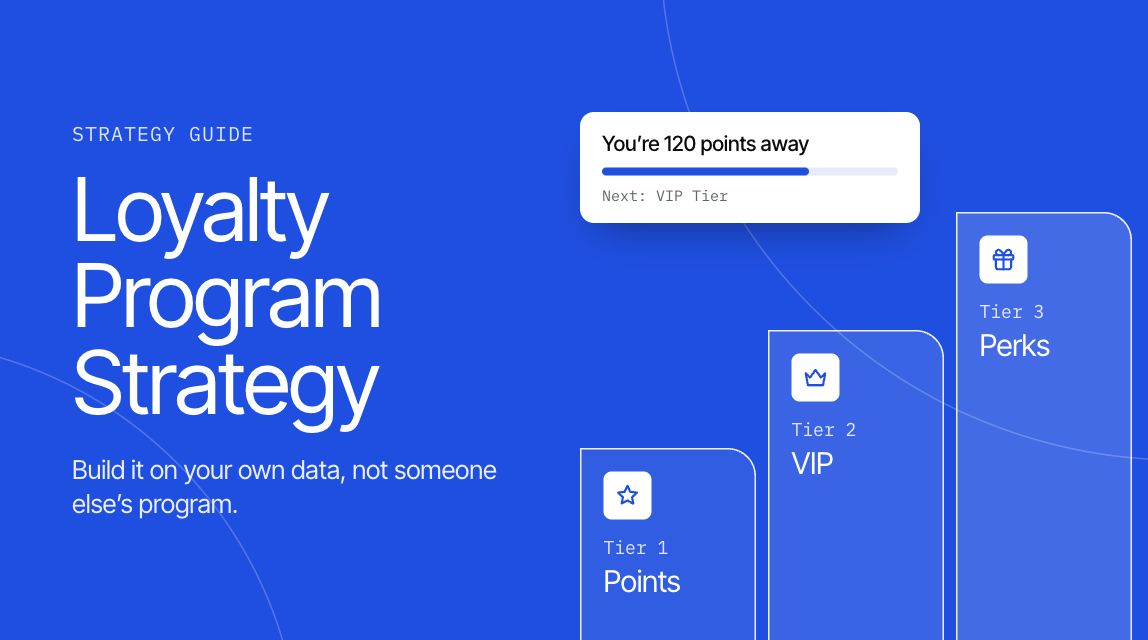
- Tiered programs add better perks the more customers spend, so there’s always a next level to reach (and an incentive to buy something).
- Paid programs charge a membership fee up front for benefits that start right away.
- Value-based programs reward actions tied to the brand’s values, like trading in used gear or supporting a cause.
Many programs combine types. Starbucks puts tiers on top of points, and REI charges a one-time fee for a lifetime co-op membership and pairs it with other perks like trading in gear.
“The first purchase is already going to be the most expensive purchase that a customer ever makes with you,” Justin explains. You paid to acquire that customer, and first-time buyers often spend less while they’re still testing your product and brand.
Every purchase after that costs you less. “The second time they come back, you didn’t have to spend customer acquisition costs,” Justin says. If that customer later refers a friend, you gain a new customer you didn’t have to pay anything to acquire.
Big-Brand Customer Loyalty Programs: What to Copy and What to Skip
Starbucks and Sephora run two of the most well-known and copied loyalty programs in retail. They also have apps, store networks, teams, and budgets most Shopify brands can’t match. While it doesn’t make sense to copy their loyalty programs exactly, Justin recommends borrowing selectively. “Take pieces of it and implement similar things on a smaller scale,” he says.
Treat these programs like a recipe from a famous chef: keep the technique, and swap in ingredients that make sense for you.
Starbucks Rewards
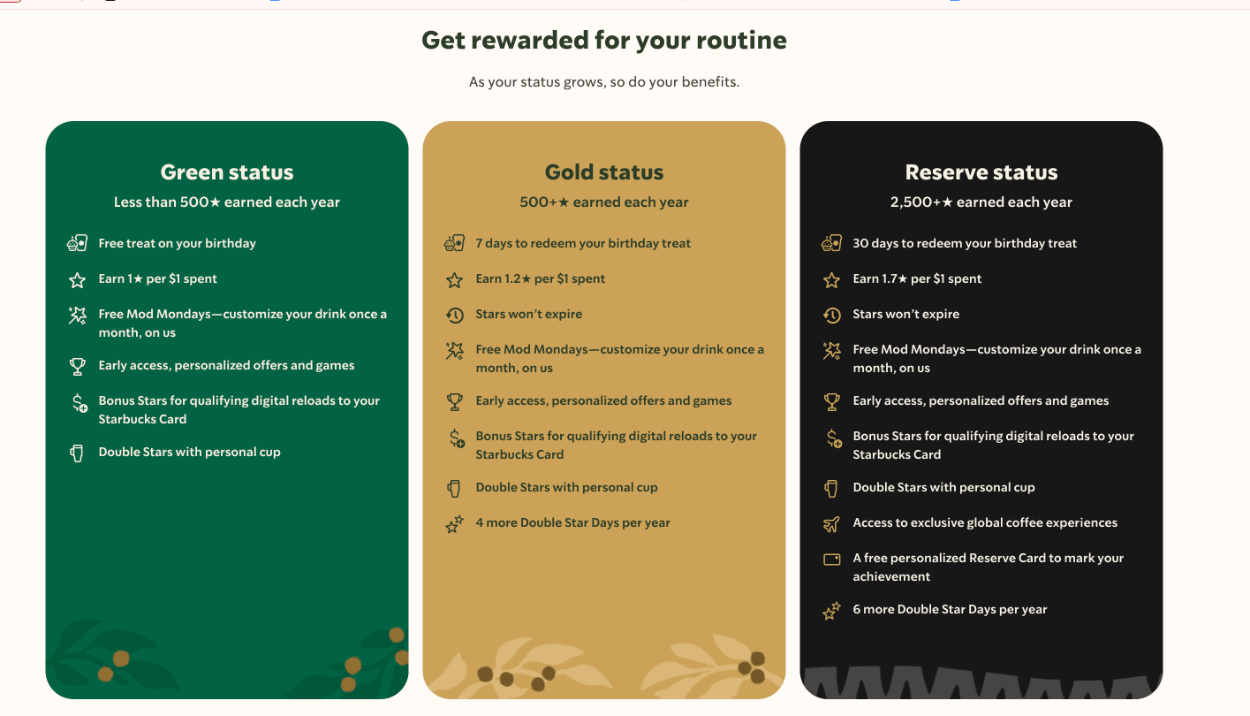
Starbucks has three levels: Green, Gold, and Reserve. Members reach Gold at 500 Stars in 12 months and Reserve at 2,500. The key feature is expiration. Green Stars expire after six months, while Gold and Reserve Stars never expire as long as members keep their status. Members get a nudge that their Stars are expiring soon, and because no one wants to miss out on what seems like free money, this incentivizes them to visit Starbucks.
“It drives habit,” Justin says. Members move up to protect the Stars they’ve already earned.
What to Copy: Make points last longer at higher tiers, and track how long members stay in each tier. “Are people getting stuck?” Justin asks. A long stall means the next tier isn’t motivating enough or it is too difficult to reach.
What to Skip: Opulent Reserve perks like curated coffee trips to Tokyo, Milan, or Costa Rica. They only work at Starbucks’ scale.
Sephora Beauty Insider
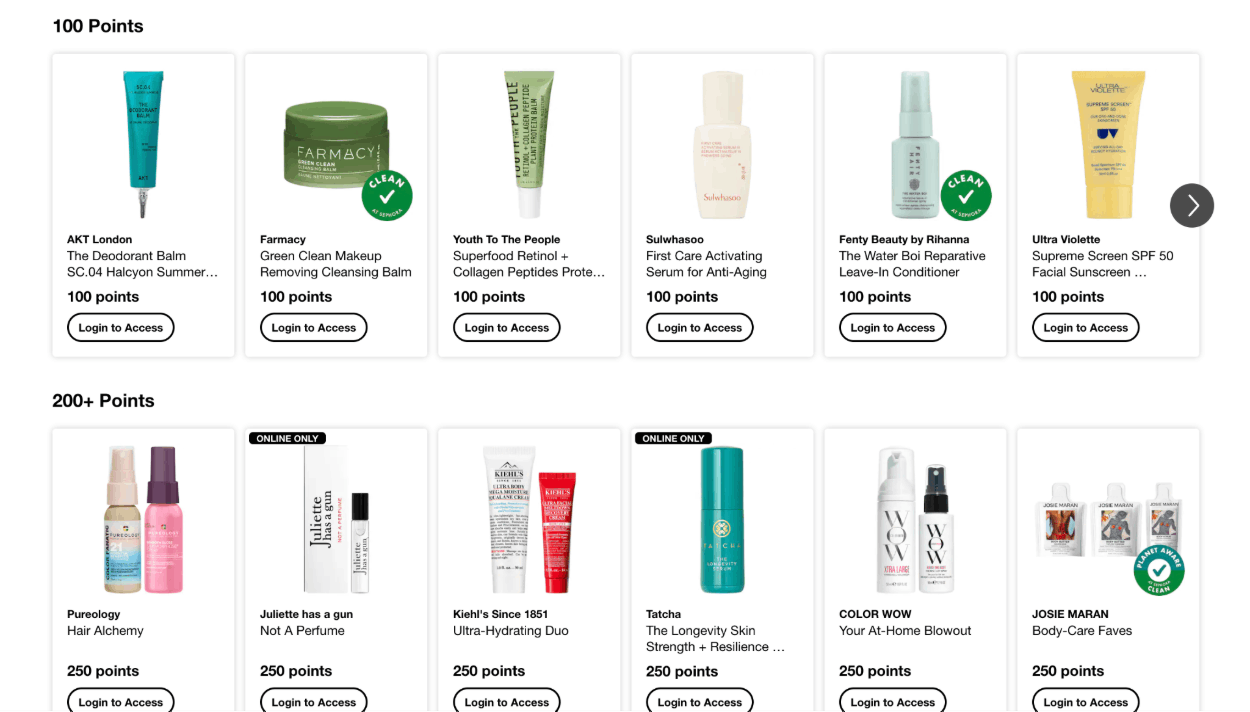
Sephora’s tiers are based on yearly spend: Insider is free, VIB starts at $350, and Rouge at $1,000. Members redeem points in the Rewards Bazaar, which includes samples, new products, and experiences. Because the rewards change every month, there’s always a reason to come back and check.
What to Copy: Rotate two or three rewards each month and email members when they change.
What to Skip: The huge catalog of reward options is likely too much overhead for most brands. A few products you swap on a schedule do the same job.
Community-Led Loyalty Programs: REI and Rapha
Justin’s two favorite programs don’t win on points. Both charge members to join, and both give them something to belong to.
REI Co-op Membership
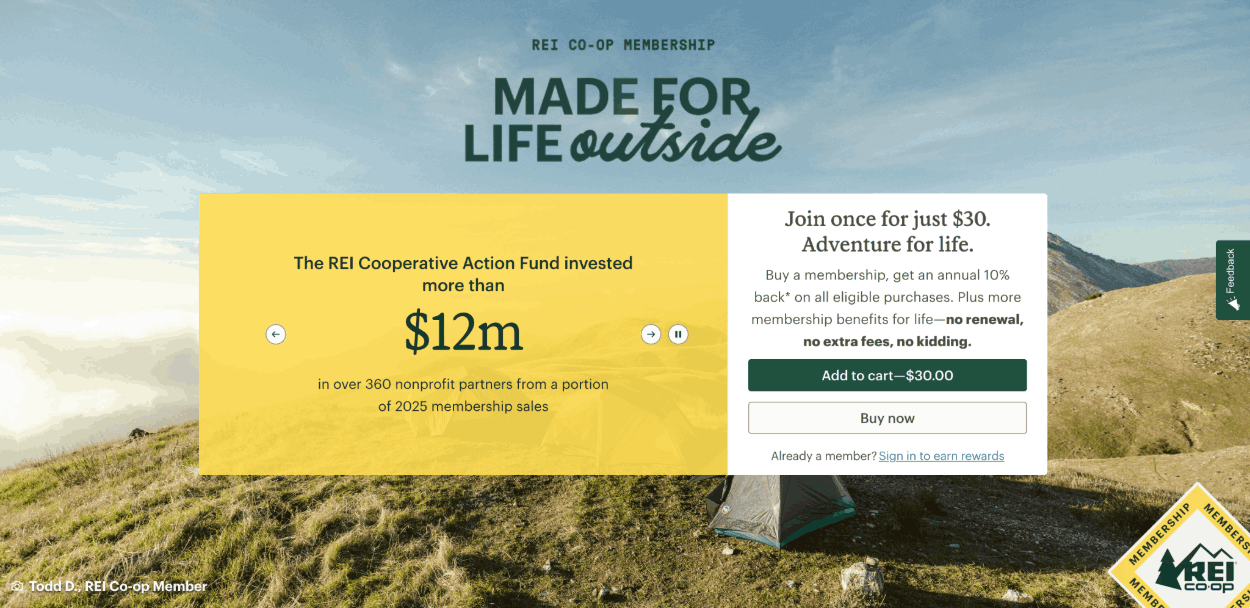
Unlike most programs on this list, REI’s program isn’t free to join. Members pay a one-time $30 fee. In return, members typically get about 10% back on eligible full-price purchases; instead of getting a bit back every time they buy, members get the whole reward once a year, issued by March. For regular shoppers, that adds up to a reward worth waiting for. Because REI is a true cooperative, members can also vote in its board elections, and REI partners with brands like AllTrails to give members a discounted subscription.
That sense of ownership and belonging is what Justin likes most. “You can buy outdoor brands almost anywhere,” he says, “or you can just come to REI and be a part of something larger.”
What to Copy: Partner with another brand for one member perk; ideally it’s a brand that’s a natural partner to yours without competing, like REI and AllTrails.
What to Skip: The co-op structure. Board votes and profit sharing need a legal setup most brands don’t have and can’t support.
Rapha Cycling Club
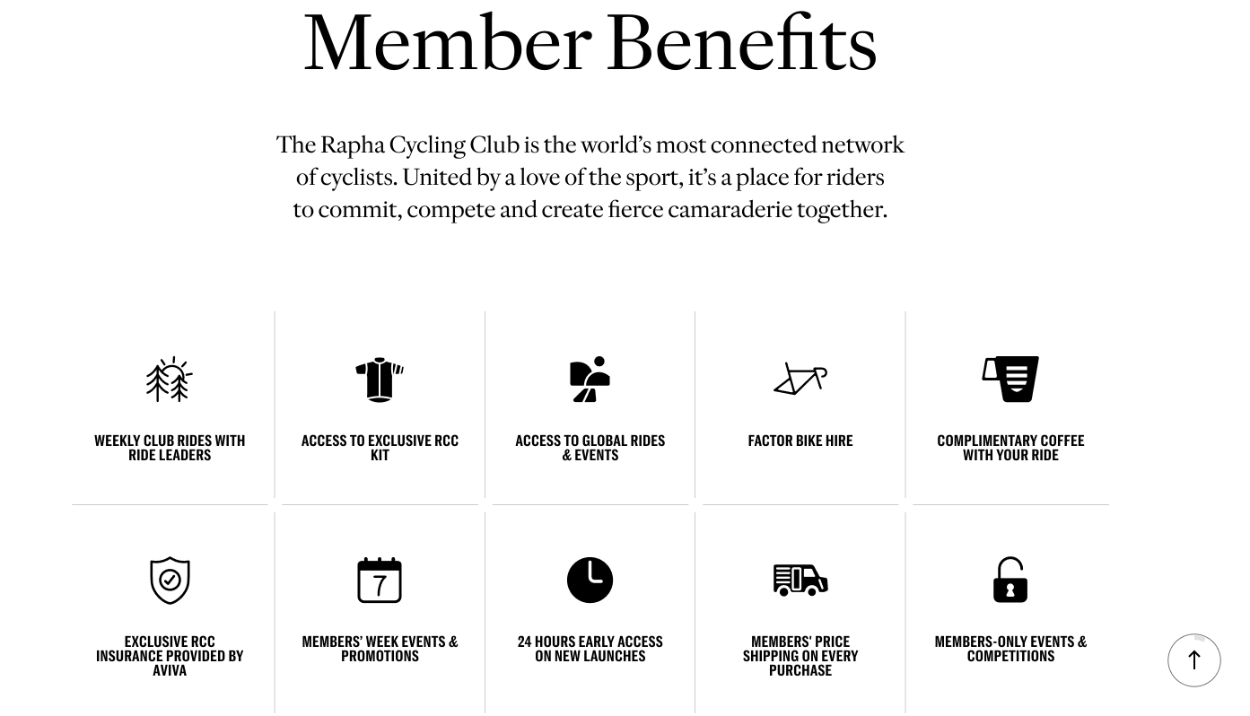
The Rapha Cycling Club costs $95 a year. Members do not earn points. Instead, they get weekly club rides with ride leaders, members-only club kit, and perks like complimentary coffee at rides, an exclusive jersey, and Factor bike rentals at clubhouses.
The membership is best for people who value in-person experiences over tiers and points. Members meet the same riders every week. As Justin puts it: “If I buy clothing from you and you’re going to give me friends for buying clothing, that’s an insane trade-off.”
What to Copy: Host a recurring member meetup. A monthly run club, class, or tasting gives members a reason to show up that a discount can’t.
What to Skip: A global chapter network. Start with one meetup in a city where your customers already gather.
Apparel and Beauty Loyalty Programs Built Around One Business Problem
These four brands use their loyalty programs to offer a creative solution to a problem the brand is facing.
Kylie Cosmetics Rewards
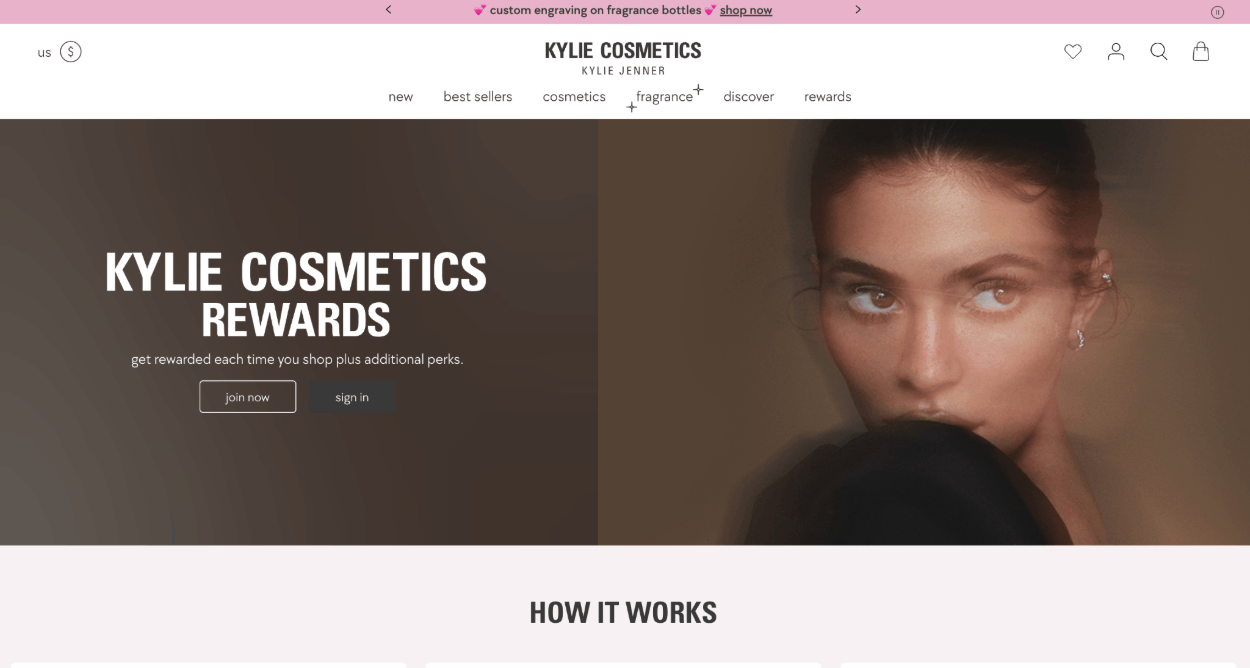
The Problem: Everyone knows Kylie for lip products. But that’s not all it sells.
The Solution: Kylie Cosmetics members earn one point per dollar, plus bonus points for creating an account, following on social, writing reviews, and spending $100 or more in one order. Higher tiers earn faster, and points can buy specific products in new categories.
Justin calls the product redemption “a great opportunity to get people to try new products and new categories for basically no money.” From there, he says, “that then expands the likelihood that they’re going to make more purchases throughout the course of the year, or at the very minimum, increase their order value when they do make those purchases.”
What to Copy: Let points buy products customers haven’t tried yet, especially in your slowest categories.
The Chubbies Collective
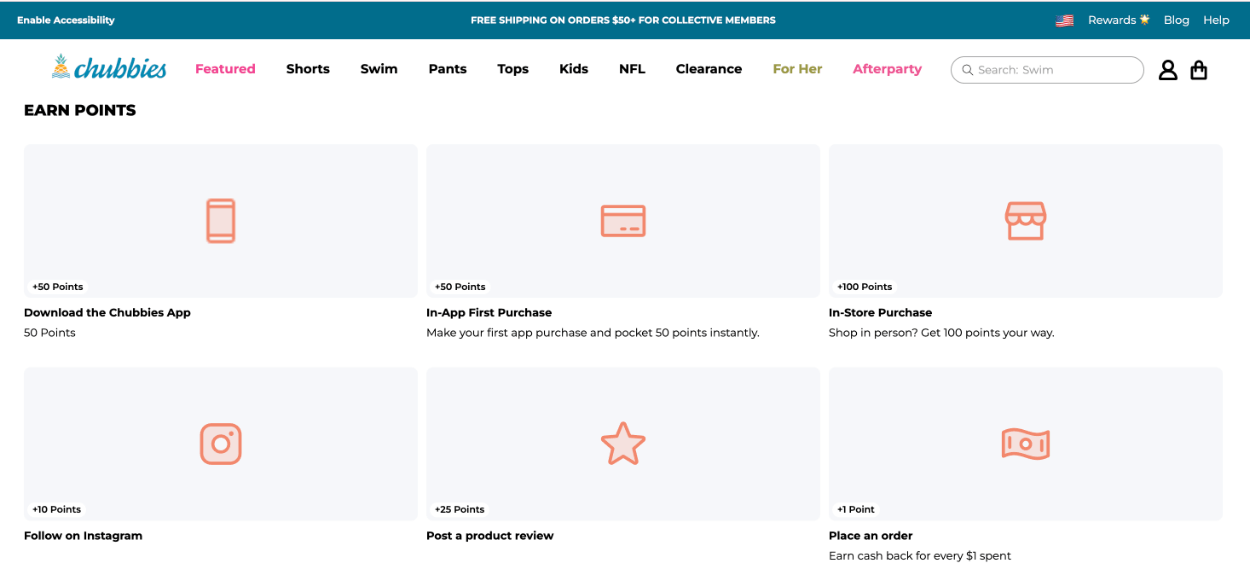
The Problem: Chubbies made its name on short shorts, so customers tend to skip the swim, pants, and tops.
The Solution: Members earn one point per dollar online or in Chubbies stores, plus points for things like downloading the app and following on social. The tiers sound like a natural extension of the brand, with names like Weekend Professional and Weekend Hall of Famer.
Chubbies offers bonus points for a first purchase in each category. “They’re incentivizing everybody to become super familiar with all of the different things that they have,” Justin says. The result is likely higher order value, more purchases, and higher lifetime value.
What to Copy: Reward a customer’s first purchase in a new category.
Princess Polly Rewards
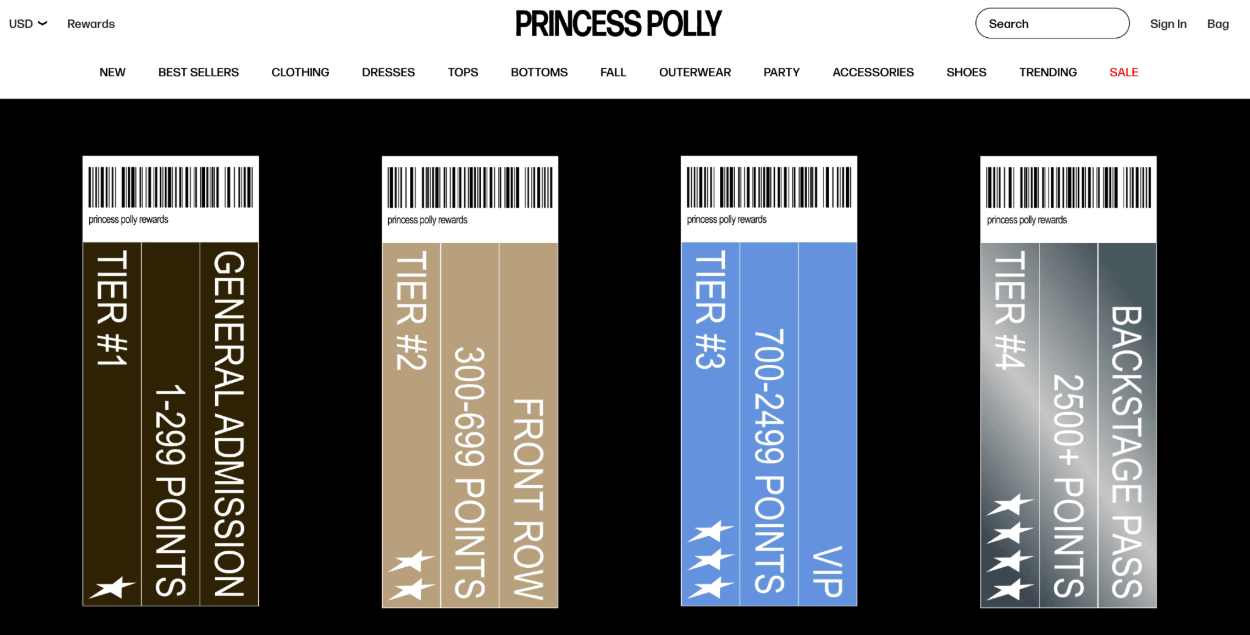
The Problem: Princess Polly’s young, festival-going customers aren’t motivated by points alone.
The Solution: The tiers are named like a festival: General Admission, Front Row at 300 points, VIP at 700, and Backstage Pass at 2,500. Each tier unlocks a bigger one-time discount, from 15% at General Admission to 30% at Backstage Pass. VIP members and above can enter a monthly $100 gift card draw, and Backstage Pass adds exclusive merch, event invites, and entry to an annual major giveaway.
“Their customer base is all about exclusivity,” Justin says.
What to Copy: Name your tiers and perks after what your customers care about.
Girlfriend Collective
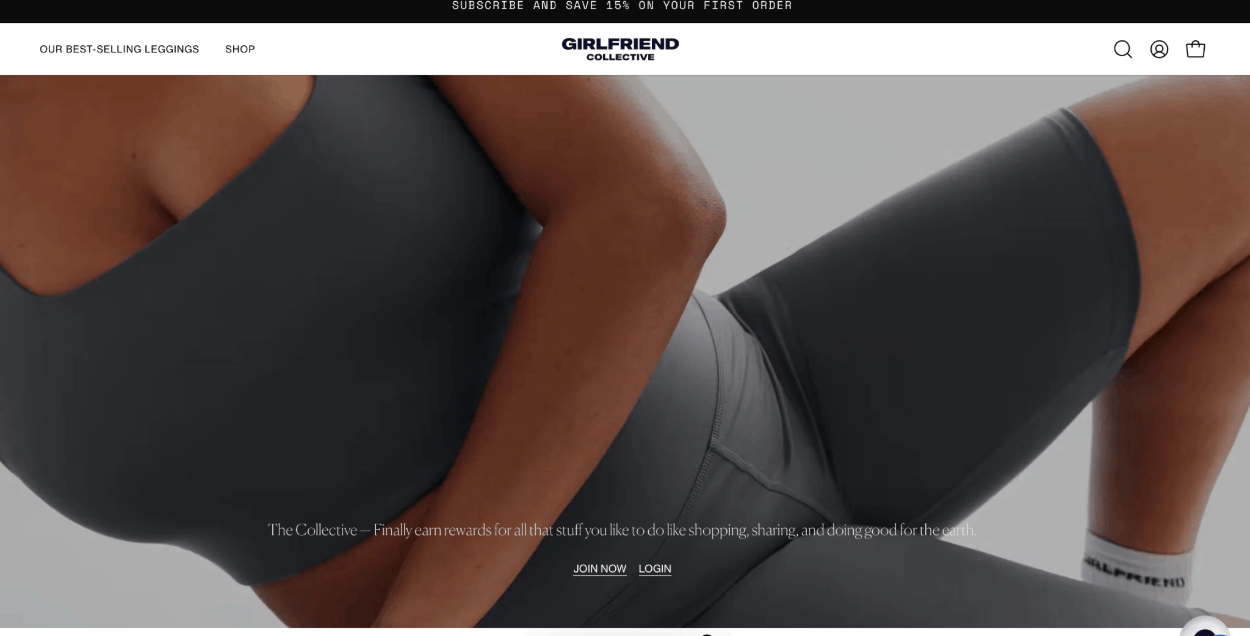
The Problem: Girlfriend Collective sells sustainability, but its loyalty program doesn’t tie back to the core brand value.
The program is a standard tiered points setup. Separately, the brand has a ReGirlfriend recycling program that gives $10 in credit for each Girlfriend item and $5 for other brands’ clothes that are sent in to be recycled. The brand is all about sustainability, but that core tenet is not expressed in the loyalty program because ReGirlfriend credits can’t be combined with loyalty points or other discounts. That’s a real gap.
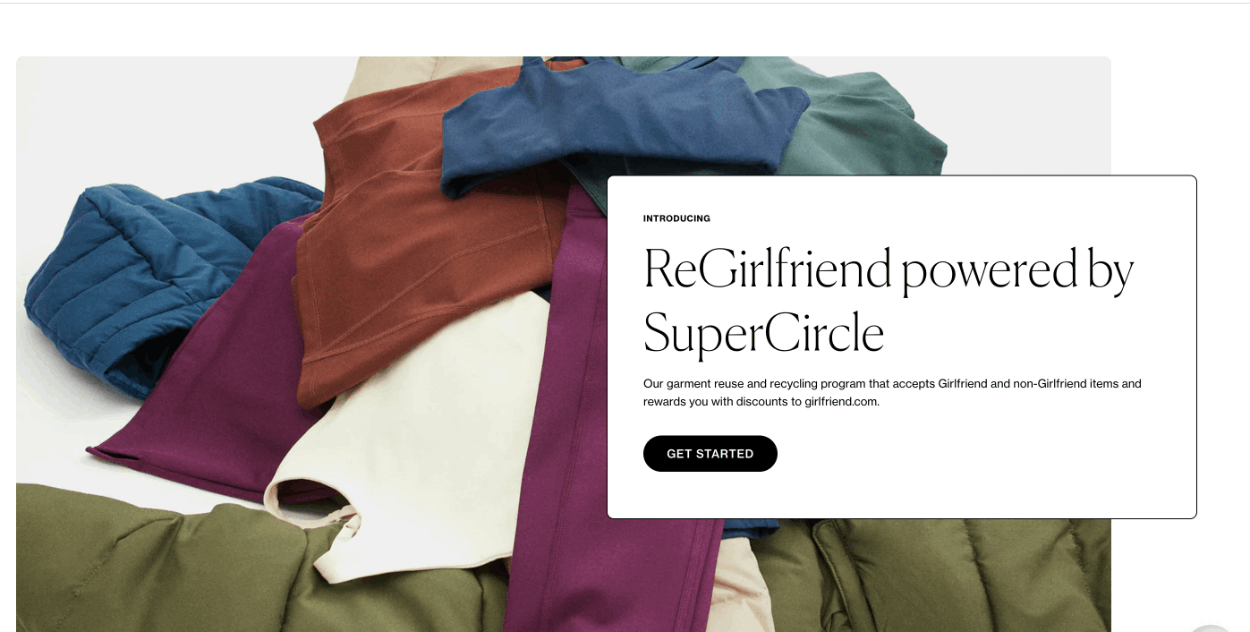
“This is a value prop that they’re not emphasizing through their loyalty program,” Justin says. His suggestion: “Get $10 credit per item that you exchange plus 50 points. Something like that, where we can tie these things together.”
What to Do Instead: Give points for actions tied to your brand’s values, not just purchases.
What the Best Customer Loyalty Programs Have in Common
Look closely at enough loyalty programs and two patterns show up.
Some, like REI and Rapha, build communities members are proud of and feel loyal to. “There’s not a discount out there that can come in and take away that customer from you,” Justin says. Others, like Kylie Cosmetics and Chubbies, solve one specific business problem in a way that also benefits customers. Points, discounts, and birthday rewards are all commonplace and expected, so there has to be something else to set a program apart.
Two Loyalty Program Mistakes to Avoid
Two mistakes come up again and again in loyalty programs, and they’re easy to fix. The first is creating a program that members can finish almost immediately. “In one day, the entire program is exhausted,” Justin says of a typical setup that asks for your birthday, a review, and social follows, for example. “That’s the biggest fatal flaw for any loyalty program.” The fix is to keep adding new ways to earn, so there’s always a reason to come back.
The second is judging success by sign-ups. “If a metric can only go up, it’s not really a valuable metric,” Justin says. Track repeat purchase rate, time to second purchase, and how members move through your tiers instead.
CWILL Loyalty & Referrals customer Phrozen, a 3D printer brand, faced a classic problem: few customers need to buy a second printer, but many come back for materials and accessories. Its program gives members a point for every $10 spent plus a VIP tier, and Phrozen reports a €40,000 increase in retention revenue.
For a step-by-step plan, see our guide to building a loyalty program strategy.
Start With One Idea That Fits Your Brand
You don’t need Sephora’s budget or REI’s co-op board to build a loyalty program customers stick with. Pick one idea from this list that fixes a real problem for your store, like rewarding a first purchase in your slowest category. Then add a new way to earn every month, and send members a monthly “where you stand” email from Klaviyo. If you’re still choosing software, compare the loyalty apps most Shopify brands use.
Set up points, VIP tiers, and referral rewards for your store with CWILL Loyalty & Referrals

Easy to build your loyalty program
Common Customer Loyalty Program FAQs
Yes. Justin Risso, Head of Revenue at CWILL, says a loyalty program can work for almost any brand if it’s set up right, and he doesn’t set an order-volume cutoff. For a newer brand, that often means building the program around community and educational content instead of big rewards, so customers understand why your product is worth coming back for.
Most brands should start with a free loyalty program. Paid programs like REI Co-op Membership ($30 once) and Rapha Cycling Club (an annual fee) work because members get enough value to justify the cost, such as weekly group rides or an annual 10% reward. That’s hard to match at a smaller scale, so test a free program first.
The best loyalty program is the one built around your brand’s specific problem. Justin’s two favorite programs, REI Co-op Membership and Rapha Cycling Club, both give members a community to belong to. For a Shopify brand, that could mean rewarding a first purchase in a new category, like Chubbies does, or hosting a monthly member meetup.

Freelance Writer & Editor
Grace Gallagher is a writer and editor with 10+ years of experience covering health, wellness, lifestyle, and culture. Her work has appeared in Health, Verywell Health, Verywell Mind, Parents, Romper, Healthline, and more. She has also written for brands including Hims & Hers, Moon Juice, Vital Proteins, and Veracity Self-Care.
Grace holds a BA from Hobart and William Smith Colleges and an MFA in creative writing from Hunter College.
You can visit her website or connect with her on LinkedIn for more information.