Return Prime alternatives are worth a look when returns start eating into your team’s time and you need stronger integrations, enterprise-level return fraud protection, or a more generous free plan.
Return Prime handles the basics of returns management well: it automates approvals, speeds up exchanges, and encourages store credit over refunds.
Below are the 10 best Return Prime alternatives, plus the five factors to weigh before you choose one.
5 Factors to Consider in a Return Prime Alternative
Pricing, core features, integrations, room to grow, and support are the five things to weigh when picking a Return Prime alternative.
1. Pricing That Fits How You Work
The right tool should make sense for the way you process returns, not just your budget. Some apps charge per return or use tiered subscriptions, while others let you start with a free or low-cost basic plan before moving up.
Look for clear plans without bundled features you don’t need. And aside from the fee, check if the platform helps reduce other operational costs too, like support tickets or return labels.
2. Features That Cover Everyday Needs
Ask yourself: can the platform handle the returns you deal with every week? At minimum, you’ll want:
- Carrier coverage with major options like USPS, DHL, UPS, and more
- Core functions such as refunds, exchanges, store credits, and protection coverage
- Automation that auto-approves basic return requests
- Reporting and analytics that show return patterns, so you can fix recurring issues
3. Integration With the Rest of Your Stack
If you’re already using Shopify for sales, Klaviyo for email, or Gorgias for support, your returns app should plug into all three.
Integration with other ecommerce platforms and marketplaces is a plus if you sell on multiple channels. Also check the other systems you rely on, like loyalty programs, ERPs, and warehouse tools.
4. Flexibility as Your Business Expands
Most merchants expect their volume to grow over time, whether it’s steady or seasonal. Your returns platform should:
- Manage hundreds or thousands of requests without crashing or breaking workflows
- Add carriers as you start selling in new markets
- Work for both smaller brands and enterprise teams
5. Support You Can Count On
What happens if your portal breaks in the middle of the night during BFCM?
Choose a platform with 24/7 live chat or email support.
Also look for clear documentation, step-by-step guides, and video walkthroughs. They make it easier to train new staff and troubleshoot on your own.
Top 10 Return Prime Alternatives and Competitors
Return Prime is an affordable option for smaller Shopify stores. If you’ve outgrown it or need more flexibility, here’s how the top alternatives compare:
| Software | Key Features | Carriers | Shopify Ratings |
| CWILL Returns & Exchanges | Branded self-serve return portal, flexible exchanges/refunds, automation workflows, notifications, return protection, QR drop-offs | 17+ | 4.9 |
| Loop Returns | Flexible exchange options, Shop Now catalog, Checkout+ return coverage, fraud protection rules | 21 | 4.7 |
| AfterShip Returns Center | Policy automation & routing, in-app label generation, QR drop-offs, real-time tracking & notifications | 62 | 4.6 |
| ReturnGO | Embedded return portal, multiple resolution paths (keep, donate, ship later), customizable policy engine, return insights with photos/videos | 50+ | 4.9 |
| Narvar Shield | AI-powered fraud screening (IRIS™), flexible exchange/store credit, optimized routing, wide drop-off network (UPS, Walgreens, Kohl’s) | 1000+ | 3.7 |
| Redo (GetRedo) | AI-driven exchange recommendations, automated return reviews, product-level analytics, free return labels | 6 | 4.8 |
| Happy Returns | Omnichannel return flows, Return Bar® network (8,000+), BORIS in-store returns, smart routing & logistics | 5 | Not available |
| ClickPost Returns Plus | Branded return portal, automated approval flows, store credit options, returns dashboard & analytics | 500+ | 5.0 |
| Shipup Returns Management | Branded return portal, centralized dashboard, return analytics, branded tracking page | 150 | 4.9 |
| parcelLab Returns & Exchanges | Policy automation, return forecasting, flexible return methods (QR, labels, doorstep pickup), advanced return analytics | 550+ | Not available |
#1 CWILL Returns & Exchanges

CWILL Returns & Exchanges handles returns and exchanges for Shopify merchants.
Use it to offer multiple exchange options and give customers a self-serve return portal, while your team monitors every request from one returns dashboard.
CWILL Returns & Exchanges also integrates with 17+ global carriers, including USPS, DHL, UPS, and FedEx, with discounted rates that lower return shipping costs.
Carriers: 17+
Key Features
- Exchange and Refund Flexibility: Shoppers can switch sizes, change variants, or request store credit. Flexible refund options give your customers choices while helping you protect revenue.
- Self-Service Return Portal: You get a customizable returns portal where customers can initiate returns, track return status, and stay informed throughout the whole return and exchange process.
- Automation and Workflows: Cut manual work with rules for auto-approvals, generate return labels or QR codes depending on the carrier, and let automated workflows handle repetitive steps.
- Return Notifications: Customers receive timely updates, which cuts down on “Where is my return?” messages.
- Return Protection: When activated, it covers return shipping if customers need to send something back, which lowers your operational costs.
Pros
- Made for Shopify (worry-free onboarding and setup).
- Offers flexible pricing with a free plan.
- 24/7 live support.
- Connects with major global carriers and lets you access discounted shipping labels.
- Multilingual (21+ languages) self-serve return portal.
Cons
- It doesn’t connect with other leading ecommerce platforms.
- Some of the more advanced tools are only available on the higher-priced plan.
Best for: Solo, small, and medium-sized Shopify businesses with 6–1,000+ orders a month that want returns software that’s simple to start and easy to upgrade.
Integrated with: Shopify, Shopify Plus, Klaviyo, Yotpo, Gorgias
Pricing: CWILL Returns & Exchanges offers a free plan for up to six returns a month. Tiered plans start at $29/month for 50 returns/month, with a 14-day free trial.
#2 Loop Returns
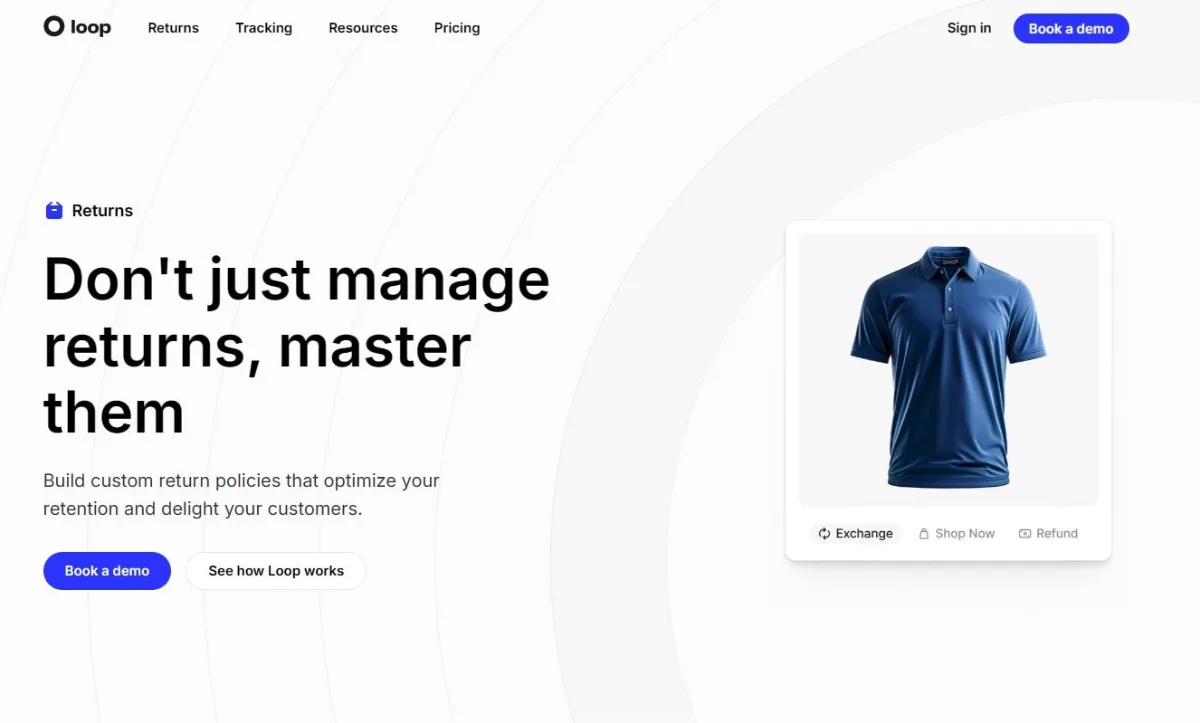
Loop Returns is a Return Prime alternative for Shopify brands with a similar focus: both encourage exchanges and store credit over refunds, so you keep more of your sales.
Carriers: 21
Key Features
- Flexible Exchange Options: Your customers can exchange items instantly, pick something new from your full catalog with the Shop Now option, or choose store credit.
- Checkout+: Buyers can pay a small fee to unlock free return coverage later.
- Fraud Protection Tools: Loop’s rules and automated checks help filter out risky or abusive returns.
Pros
- Easy to set up.
- Works with 100+ popular ecommerce and marketing apps.
- Built-in fraud prevention features.
Cons
- Even the cheapest plan is expensive.
- Most revenue-retention features are only on higher plans.
- Pricing differs between the Shopify App Store and Loop’s website.
Best for: Growing Shopify DTC brands that deal with frequent returns and need advanced options like Shop Now, Bonus Credit, and fraud protection features.
Integrated with: Shopify, Shopify POS, Gorgias, Klaviyo, Shiphero
Pricing: Loop Returns doesn’t offer a free trial or free plan, but Checkout+ is free to install on Shopify. Its subscription-based plans start at $155/month.
#3 AfterShip Returns Center
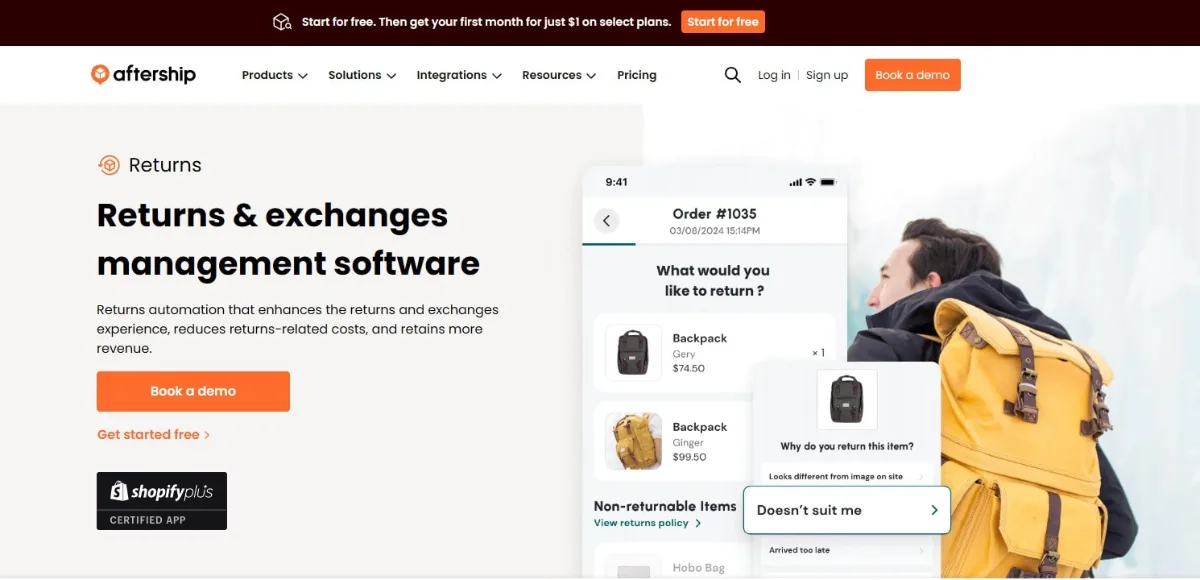
AfterShip Returns is a returns management solution for brands that sell on Shopify and other major ecommerce platforms. It earns its spot by supporting online and offline returns, automating complex policies, and connecting with 3PLs and apps.
Carriers: 62
Key Features
- Policy automation and routing: Set clear rules for how returns are handled post-purchase, like whether a customer gets store credit, an exchange, a refund, or nothing.
- In-app label generation and QR drop-offs: Generate return labels directly in the dashboard and give customers the option to use QR codes (where the carrier supports it).
- Returns tracking and notifications: Let your customers see every return and exchange status in real time, with automated updates sent directly to them.
Pros
- Integrates with 25+ platforms and 70+ apps.
- 300,000+ global drop-off points.
- Built-in return analytics.
Cons
- Carrier connections are capped on lower tiers.
- The basic paid plan is limited for growing stores.
Best for: Mid-sized ecommerce businesses that handle moderate to high volume returns.
Integrated with: Shopify, Magento, BigCommerce, WooCommerce, Salesforce, Klaviyo, Gorgias, Attentive, Zendesk, NetSuite, Wix, and more.
Pricing: AfterShip Returns combines quota-based and tiered pricing. Its Essential plans start at $11/month for 20 return credits. It also offers a 7-day free trial and a free plan (up to 3 returns/month).
#4 ReturnGO Returns
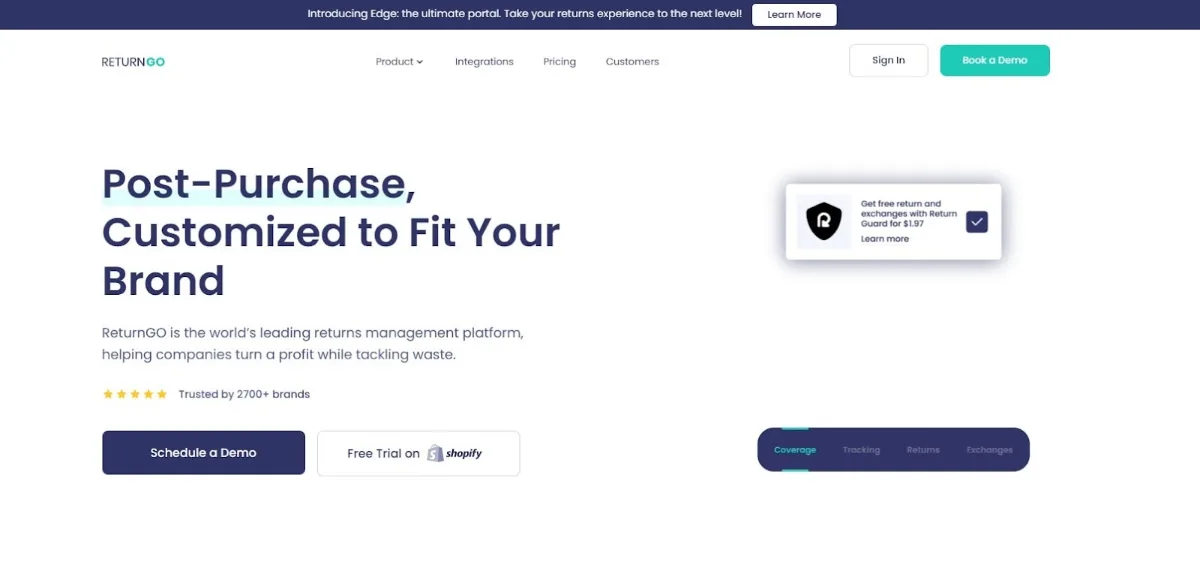
ReturnGO is returns software built for advanced control over the post-purchase process. It centers on an embedded self-serve portal in your store, a flexible policy engine, and revenue-friendly options like keep, donate, or ship later.
Carriers: 50+
Key Features
- Multiple Resolution Tools: Provide more return options to your customers. They can keep or donate items, return them later, or swap in-store.
- Embedded Branded Portal: The return portal lives inside your website instead of on a third-party page.
- Custom Policy: Build rules by product type, vendor, location, or even promotions like Buy X Get Y. That makes complicated returns easier to manage.
- Return Insights: Collect reasons, ask follow-up questions, or request photos and videos to understand your products (or delivery process) better and improve your returns strategy.
Pros
- Handles tricky return cases like bundles, gift returns, and multi-store policies.
- Works well with Shopify and its apps.
- SOC 2 certified.
Cons
- Pricing is higher than many Return Prime competitors.
- Wider ecommerce integrations are only for the Enterprise plan.
Best for: Medium-sized to large businesses managing 20–300 returns a month that want detailed policies and advanced return options.
Integrated with: Shopify, Magento, Salesforce Commerce, Klaviyo, Gorgias, Yotpo, Rise.ai
Pricing: ReturnGO’s Shopify app starts at $23/month for 20 returns and includes a 14-day free trial. If you’re on a different platform, plans start at $147/month.
#5 Narvar Shield
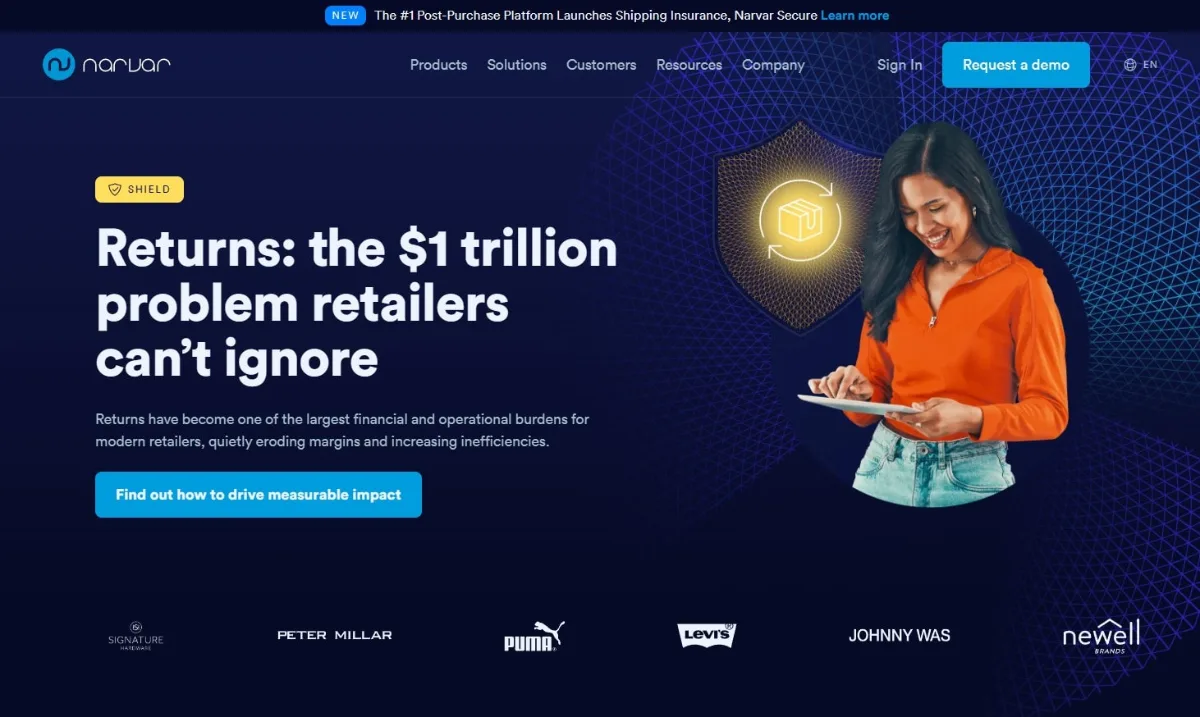
Narvar Shield is a Return Prime alternative that puts fraud prevention at the center of its returns platform.
You’ll get the usual features like refunds, exchanges, and branded return pages. It also reduces revenue lost to fake claims and policy abuse.
Carriers: 1000+
Key Features
- AI-Powered Fraud Screening: Narvar’s IRIS™ engine reviews return requests in real time and flags risky activity before it turns into a loss.
- Flexible Credit and Exchange Options: Shoppers can choose store credit or swap an item.
- Return Routing: Returns are automatically sent through the most cost-effective paths or to places where items can be resold quickly, which lowers transportation costs.
- Wide Drop-Off Network: Customers get box-free, label-free drop-offs through thousands of partner spots like UPS, Walgreens, and Kohl’s.
Pros
- Solid direct carrier integration.
- Strong fraud protection built directly into the platform.
- Offers a large drop-off network.
Cons
- No public pricing (you need to request a demo).
- Complicated to set up.
Best for: Large Shopify Plus retailers or enterprise ecommerce businesses that face more fraud and handle high monthly return volumes.
Integrated with: Shopify, Shopify POS, NetSuite, Klaviyo, and Gorgias
Pricing: Custom pricing only, with no pricing details on the website and no free trial.
#6 Redo (or GetRedo)
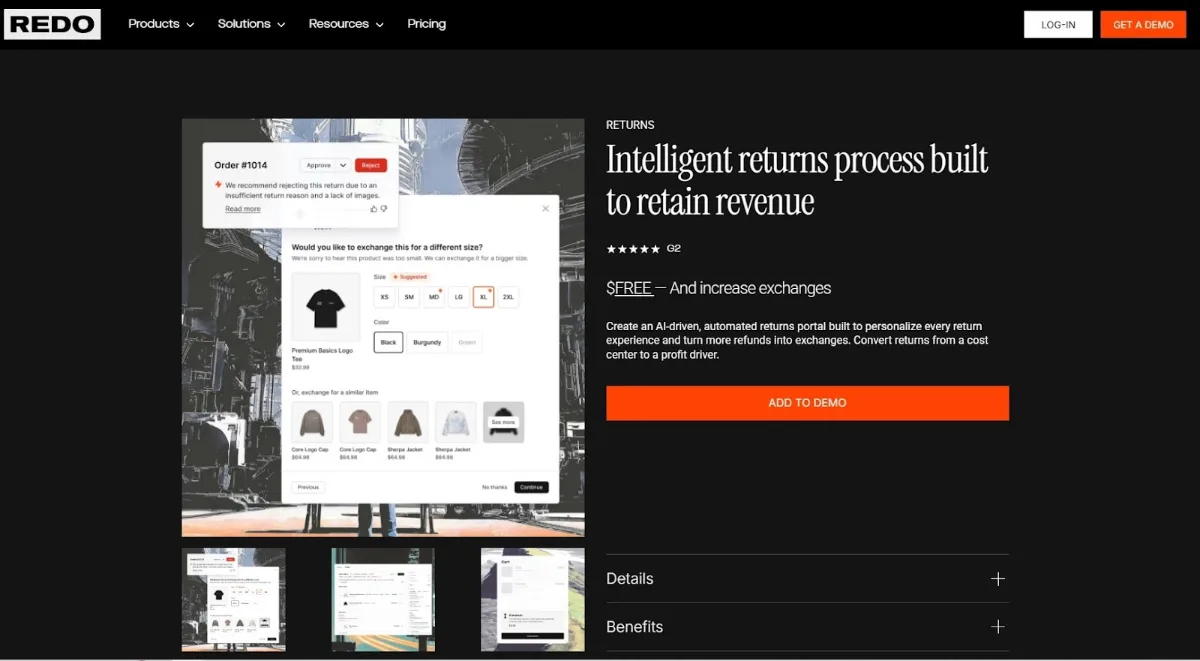
Redo is one of the newer Return Prime competitors (founded in 2023). It uses AI to recommend exchange options in the return flow, so shoppers are more likely to choose an exchange.
Carriers: Six
Key Features
- AI-Driven Exchanges: Redo’s AI suggests replacement products based on return reasons and customer history. It gives customers relevant alternatives right in the portal.
- Automated Return Reviews: The system can scan uploaded images and past orders to help you approve or deny requests faster.
- Product-Level Analytics: Get a clear view of which items are coming back most often and why.
Pros
- Free to use, including return labels.
- Simple dashboard for managing returns and claims in one place.
- Includes AI tools for fraud prevention and smarter exchanges.
Cons
- Limited carrier integrations.
- Customer support is weaker than some competitors.
Best for: Small to medium Shopify stores looking for a budget-friendly returns management solution that still offers AI-driven features.
Integrated with: Shopify, Shopify POS, Salesforce CommerceCloud, BigCommerce, Klaviyo, Yotpo, Gorgias
Pricing: Redo is free to use, and you can install it right away on Shopify.
#7 Happy Returns
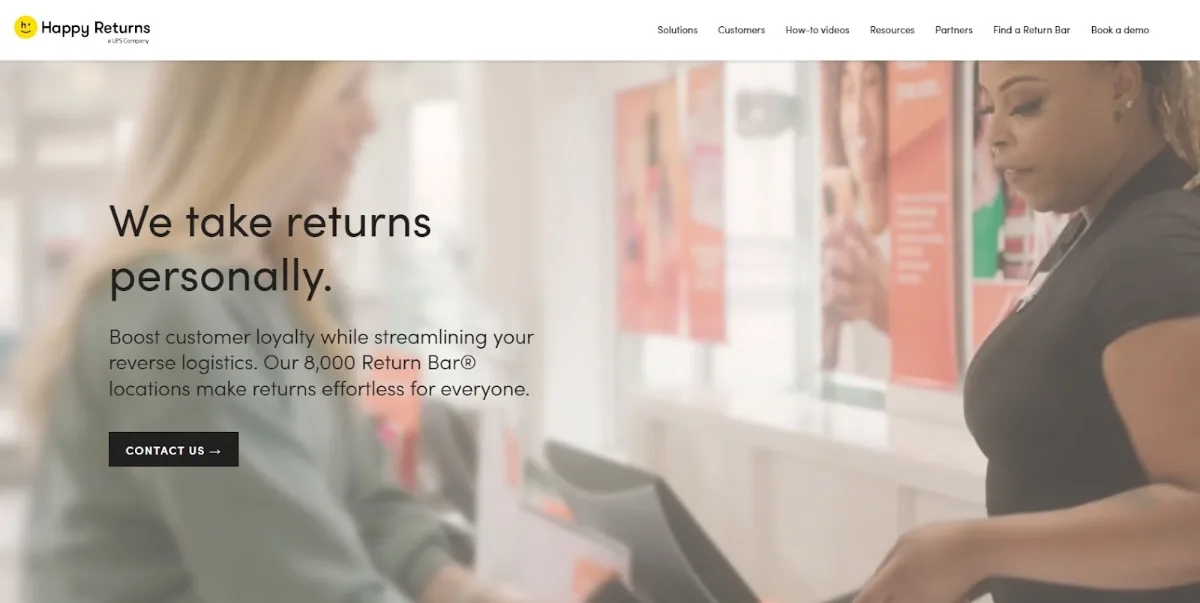
Happy Returns gives online shoppers access to thousands of Return Bar locations. Customers can drop items off without boxes or labels, which reduces return friction and delays. Merchants get more flexible returns with built-in fraud checks.
Carriers: 5 (UPS and four additional partners)
Key Features
- Omnichannel Return Flows: Support both online and in-store returns with options like one-click exchanges, store credit with bonuses, and Return Shopping to push upsells.
- Return Bar® Network: Your customers can drop items at over 8,000 locations. Items are scanned and verified on the spot to stop fraud, then shipped in bulk.
- In-Store Returns (BORIS): Let customers return items at your retail locations, and accept cross-brand returns if you choose.
- Smart Routing and Logistics: Items can be directed back to your warehouse, to another store, or through Return Hubs.
Pros
- Huge drop-off network for offline returns.
- Item verification at drop-off helps prevent “empty box” return fraud.
- Returns reach your warehouse or stores faster.
Cons
- No public pricing (you need to request a demo).
- Works with only a handful of carrier partners.
Best for: Retailers and Shopify Plus brands that want omnichannel return options and access to a nationwide drop-off network.
Integrated with: Shopify, BigCommerce, Klaviyo, Loop, Salesforce, Zendesk
Pricing: Not listed on the website. Book a demo for a quote.
#8 ClickPost Returns Plus
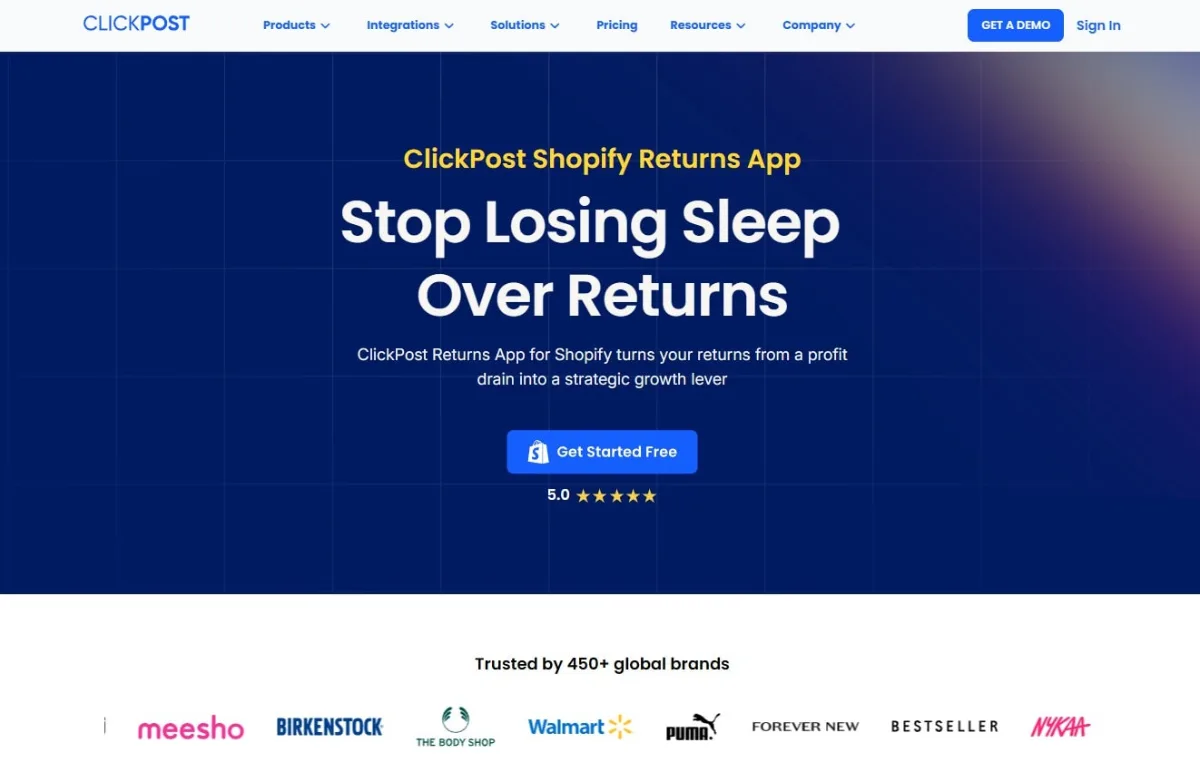
ClickPost Returns is a Shopify app built to simplify returns for your team and your customers. You can set up a branded portal in minutes, automate approvals, and track return trends from a single dashboard.
Carriers: 500+
Key Features
- Branded Return Portal: Launch a self-serve portal that matches your store’s look.
- Automated Approval Flows: Set rules once and let routine returns approve automatically, but you can add some “exceptions” for manual review.
- Store Credit Options: Offer credit alongside refunds to encourage repeat purchases and recover revenue that would otherwise be lost.
- Returns Dashboard: Monitor product-level return patterns and get clear insights on what’s driving send-backs.
Pros
- Broad carrier coverage with 500+ partners.
- Free plan available for up to 100 returns a month.
- SOC 2 and ISO certified.
Cons
- Few integrations outside Shopify.
- Some features from ClickPost’s full suite aren’t included in the Shopify app.
Best for: Small to medium Shopify stores that want reliable returns automation with analytics (at a cost-effective price).
Integrated with: Shopify only
Pricing: ClickPost uses quota-based tiered pricing. Paid plans start at $49/month for 225 returns. It also offers a free plan that lets you process up to 100 returns/month.
#9 Shipup Returns Management
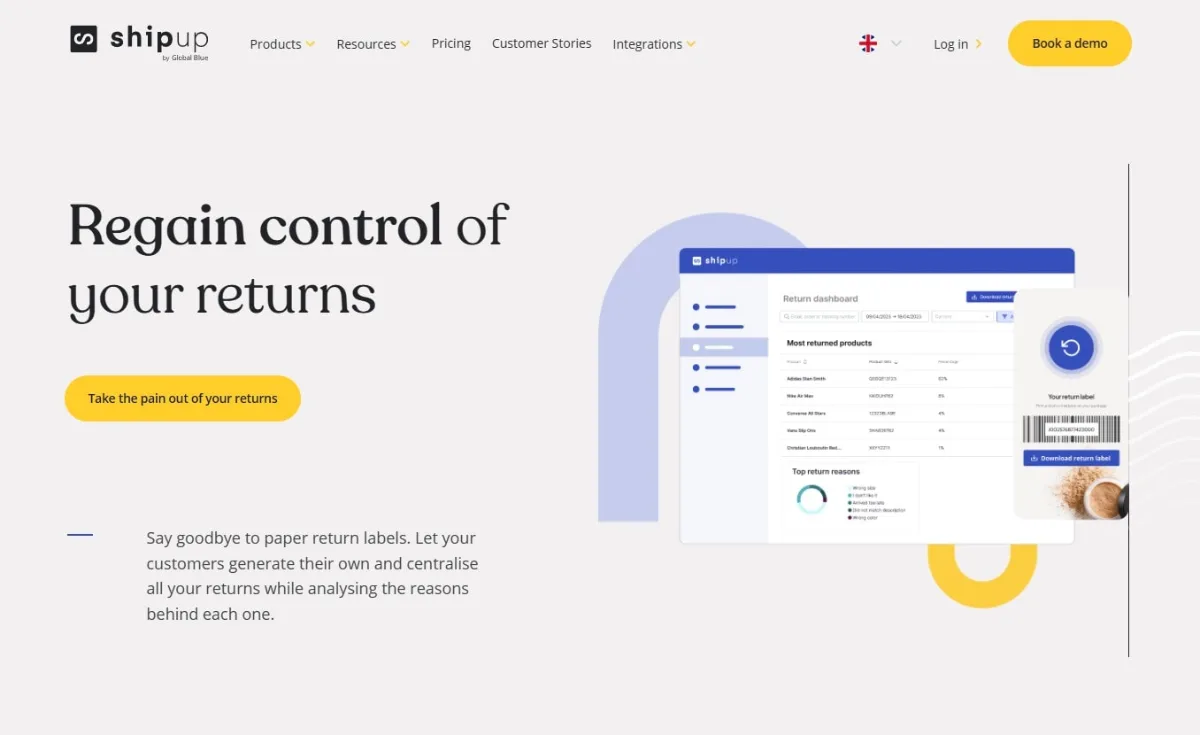
Shipup Returns Management is a return app that focuses on fully digitizing the return process. Customers can log into your site, start a return on their own, and get a digital label right away. Then, each request flows into one dashboard where your team can track progress and review return reasons.
Carriers: 150
Key Features
- Branded Return Portal: Customers can launch and track their returns within your site.
- Centralized Dashboard: Manage all returns in one place, with filters to search by product, reason, or order number.
- Return Analytics: Identify your most returned items and the reasons behind them, helping you adjust product pages or flag quality issues.
Pros
- Plug-and-play setup.
- Analytics that show return trends.
- Branded tracking page that can drive repurchases.
Cons
- Higher price point.
- Returns management is only available on the Advanced plan.
- Returns management isn’t sold as a standalone app.
Best for: Ecommerce merchants that want returns built into a broader post-purchase suite, without needing heavy setup or development.
Integrated with: Shopify, Magento, WooCommerce, BigCommerce, Zendesk, Gorgias
Pricing: Shipup’s Pro plan starts at €299/month (about $350/month), but returns management is only included in the Advanced plan at €599/month (about $700/month).
#10 parcelLab Return and Exchange
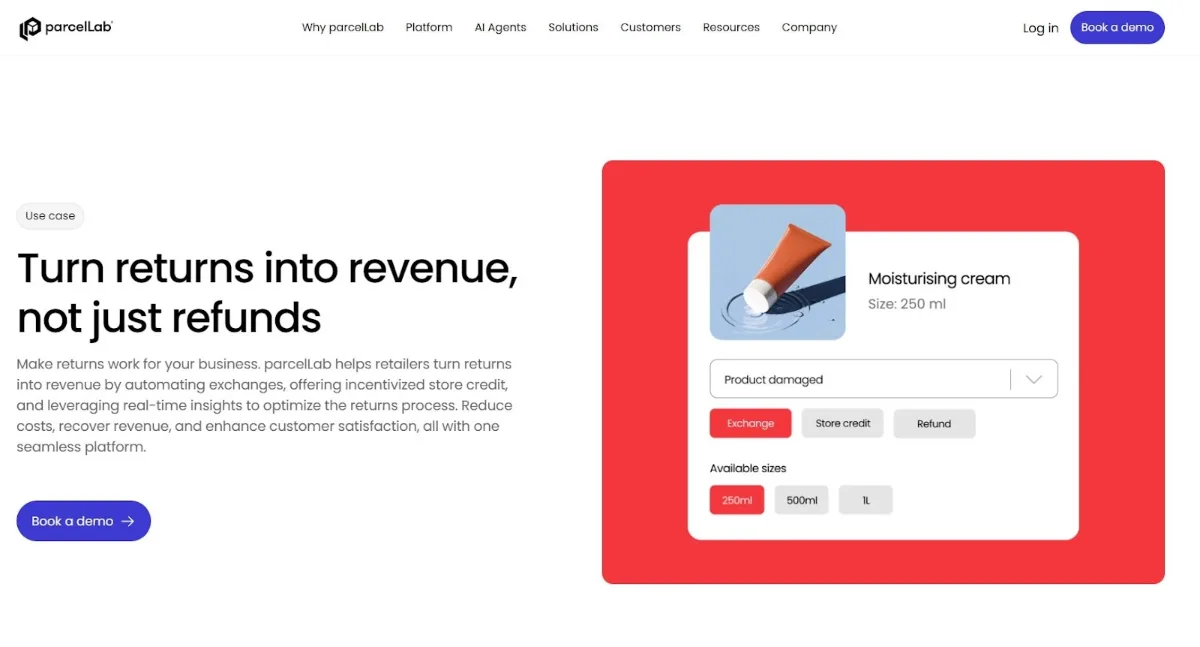
parcelLab Returns and Exchanges is part of parcelLab’s broader post-purchase suite.
It provides tools to help you anticipate return spikes before they overwhelm your warehouse, route items through smart logistics, and use return data to spot product issues early.
Carriers: 550+
Key Features
- Policy Automation: Create rules for different categories, products, or customer groups. Routine requests are then handled automatically.
- Return Forecasting: parcelLab can project when return volumes will rise after big sales or holidays.
- Flexible Return Methods: Customers can send items back with print-at-home labels, QR codes, drop-off points, or doorstep pickup for higher-value orders.
- Analytics and Insights: The app also tracks why products are coming back and shows you trends.
Pros
- Wider carrier coverage than most alternatives on this list.
- Offers premium pickup for high-value returns.
- Detailed return data you can use to improve future product and policy decisions.
Cons
- No designated Shopify app for returns (only tracking).
- No public pricing, and it’s typically expensive.
Best for: Enterprise retailers and global brands that process thousands of returns each month and need forecasting, automation, and detailed analytics.
Integrated with: Salesforce, SAP, Magento, Kustomer, Happy Returns, Shopify (tracking only), plus WMS/3PL tools through APIs.
Pricing: parcelLab doesn’t publish pricing (but Capterra lists a starting price of €2,400/month). There’s no free plan or trial.
How to Choose the Right Return Prime Alternative
No returns platform is perfect, but one will fit your business more closely than the rest.
The right choice depends on how many orders you process, how you manage ecommerce returns today, and the level of operational efficiency you want as you grow.
Here’s which platforms fit different types of merchants:
| Business Type | Recommended Solutions | Why It’s a Good Fit | Pricing Model |
| Small businesses/startups | CWILL Returns & Exchanges, Redo, ClickPost | Simple setup, low or no-cost plans, and self-serve portals that cut support workload | Free plan, low-cost subscription, quota-based |
| Mid-sized ecommerce stores | AfterShip, ReturnGO, ClickPost | Offers policy automation, branded portals, and analytics while staying affordable | Tiered pricing, free or trial plans |
| Large enterprises | Narvar Shield, parcelLab, Happy Returns | Enterprise-level fraud tools, forecasting, and nationwide drop-off networks | Custom enterprise pricing |
| High return rate businesses | CWILL Returns & Exchanges, ReturnGO, Narvar Shield, Loop Returns | Helps manage complex policies, encourages exchanges over refunds, and prevents abusive returns | Subscription or custom quotes |
| DTC brands | Loop Returns, Redo, CWILL Returns & Exchanges | Focused on exchanges, credit, and branded experiences that drive repeat purchases | Monthly subscription |
| Cross-border ecommerce | AfterShip Returns, parcelLab, Shipup | Wide carrier coverage, multi-currency support, and cross-border logistics | Usage-based or custom |
| Subscription-based businesses | Loop Returns, ReturnGO, Narvar Shield | Incentives like store credit, bonus credit, and flexible exchange flows to cut churn | Recurring subscription |
| Sustainable brands | Happy Returns, ReturnGO, Shipup | Box-free drop-offs, donation/keep flows, and recycling or eco-friendly routing | Varies (subscription or per-use fees) |
The next step is to test one or two of them against your real return flow.
Try CWILL Returns & Exchanges free
Return Prime Alternatives FAQs
Yes. Every Return Prime alternative on this list covers refunds, exchanges, store credit, and return automation. Several add more on top: Loop Returns focuses on revenue retention tools, Narvar Shield on fraud protection, ReturnGO on flexible resolutions like keep or donate, and parcelLab on return forecasting. CWILL Returns & Exchanges adds return protection and discounted carrier rates.
It depends on the app. Return Prime’s paid plans start around $20/month. CWILL Returns & Exchanges, ClickPost, and Redo all have free plans, so they cost less to start. AfterShip and ReturnGO sit in the mid-range, while Loop Returns starts at $155/month. Enterprise platforms like parcelLab and Narvar Shield use custom pricing and cost far more.
Usually not, especially for Shopify-native apps. CWILL Returns & Exchanges, Loop Returns, and ClickPost install directly from the Shopify App Store and can be set up quickly, and most providers offer onboarding support. Platforms built for more complex setups, like AfterShip, ReturnGO, Narvar Shield, and parcelLab, can take longer to configure.
Yes, if you choose a Shopify-native app. CWILL Returns & Exchanges, Loop Returns, ReturnGO, and Redo connect with Shopify tools like Klaviyo and Gorgias. AfterShip and Shipup also support other ecommerce platforms if you sell beyond Shopify. Narvar Shield and parcelLab integrate too, but they’re built for enterprise systems and need more setup.

Content Specialist
I’m passionate about creating SEO-friendly content that also resonates with readers. I take data and insights and turn them into actionable, practical ideas. My mission? Helping websites drive organic traffic and grow sustainably.