Shipping can make or break an ecommerce business. Customers expect fast, accurate delivery, and they remember when an order arrives late or a label prints wrong.
A multi-carrier shipping API lets you compare rates, print labels and track packages across many carriers from one integration. This guide covers what these APIs do, what to look for when choosing one and three options worth comparing.
What is a multi-carrier shipping API?
A multi-carrier shipping API is a single integration that connects your store or system to many shipping carriers at once, so you don’t have to build and maintain a separate connection for each carrier.
Through one API, you can compare rates, create labels, schedule pickups and pull tracking data. That makes shipping easier to manage, keeps costs in check and gives customers clearer delivery updates.
The right API keeps deliveries on time, pricing clear and customers happy. The wrong one can lead to logistics problems, higher costs and a hit to your brand’s reputation.
How ecommerce shipping is changing
Shipping is no longer just a back-office task. It’s part of the customer experience, and shoppers now expect faster, more reliable delivery and clear updates along the way.
To keep up, merchants need to understand the trends, technology and tools that shape how orders get delivered.
How to choose a multi-carrier shipping API
When choosing a multi-carrier shipping API, weigh these seven factors:
1. Easy integration
Start with integration. Check how easily the API connects to your ecommerce platform and existing systems. The less custom work it takes, the faster you can start shipping.
2. Platform compatibility
Ecommerce platforms differ in how they’re built and what they need. A good multi-carrier shipping API works with popular platforms like Shopify, WooCommerce and Magento, so businesses of any size can use it without compatibility issues.
3. Multi-carrier support
The best APIs support a wide range of carriers. More carrier options mean you’re not locked into a single carrier and can choose based on cost, speed and reliability for each shipment.
4. Transparent shipping rates
Clear shipping rates build customer trust. A good API returns accurate shipping costs at checkout, so customers aren’t surprised by extra charges later.
5. Cost optimization features
Beyond clear rates, look for tools that lower shipping costs, such as rate comparison, bulk shipping and route optimization. These features help you protect margins, not just print labels.
6. Real-time tracking
Once a label is created, customers want to know where their order is. Look for an API that returns live tracking events from every carrier in a consistent format, so you can show accurate status updates and catch delays early. Good tracking data also cuts down on “where is my order” (WISMO) inquiries to your support team.
7. Shipment visibility features
Tracking data is most useful when customers can see it. Shipping notifications at key milestones and a branded tracking page keep customers informed and make your store the place they go for delivery updates.
Top Multi-Carrier Shipping APIs
ReachShip API
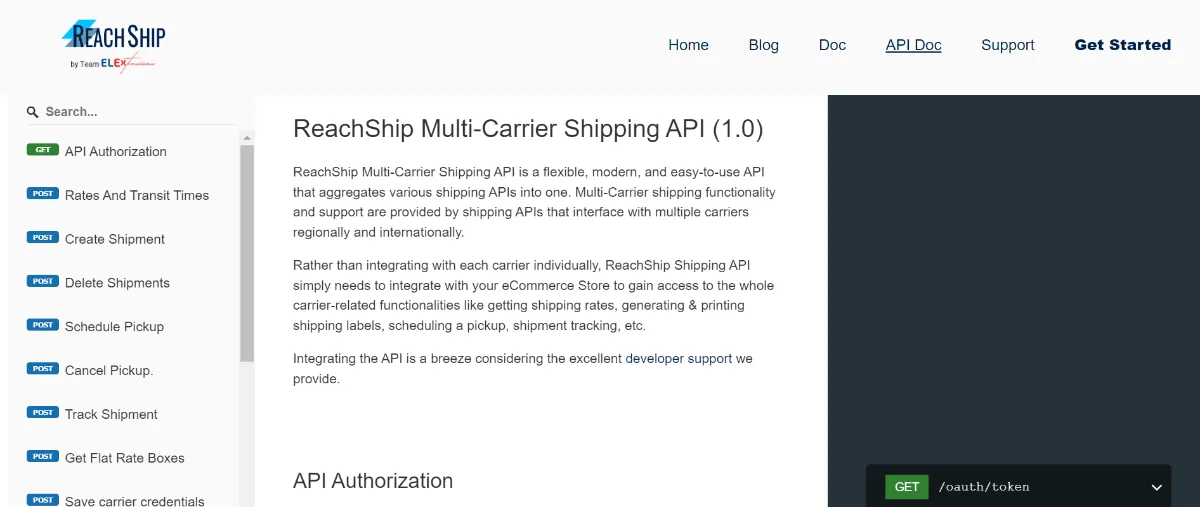
ReachShip API is a multi-carrier shipping solution for ecommerce businesses. It integrates with WooCommerce, giving merchants a straightforward way to manage shipping from their store admin.
Features
- Carrier support: Works with carriers including Australia Post (MyPost Business), DHL and more, so you can choose based on cost, speed and other criteria.
- Transparent shipping rates: Shows clear, upfront rates during checkout.
- Labels from the WooCommerce order page: Print shipping labels directly from the ReachShip tab in the WooCommerce order admin.
- Label generation and automation: Automates label creation for a faster workflow.
- Live shipment tracking: Provides real-time tracking information to keep customers updated on order status.
- International shipping: Supports cross-border shipments for businesses selling internationally.
- Bulk actions: Create shipments in bulk and schedule pickups.
EasyPost API
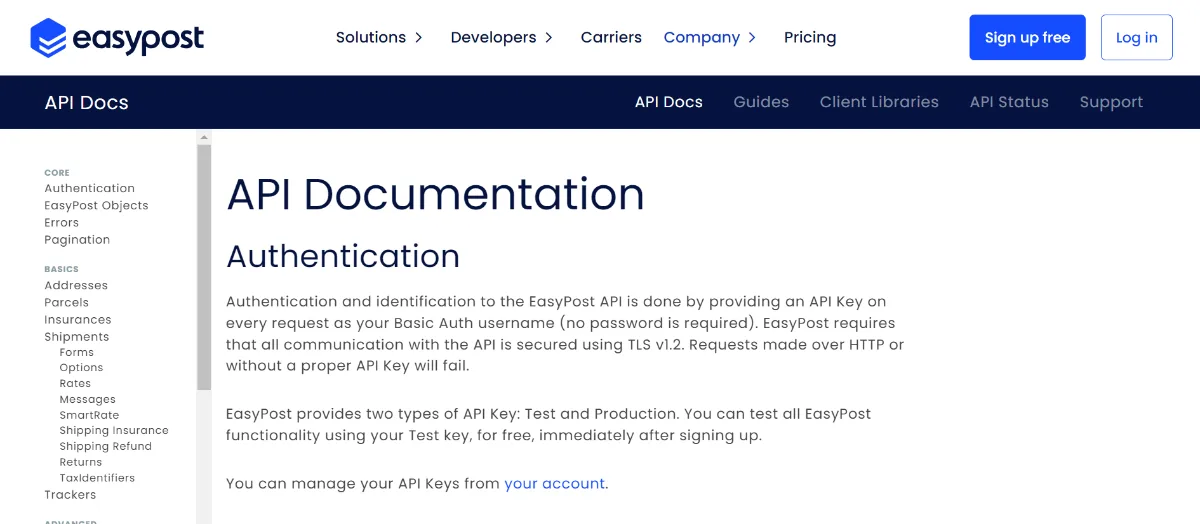
EasyPost API is a multi-carrier shipping solution built for simple integration and access to a large carrier network. It suits ecommerce businesses that want a developer-friendly shipping API.
Features
- Developer-friendly integration: Designed to be easy to integrate, with a short learning curve for developers.
- Large carrier network: Access a wide range of carriers through one API.
- Address verification: Checks shipping addresses for accuracy to reduce delivery issues.
- Rate comparison: Compare rates across carriers to make informed decisions and lower shipping costs.
Stamps.com API
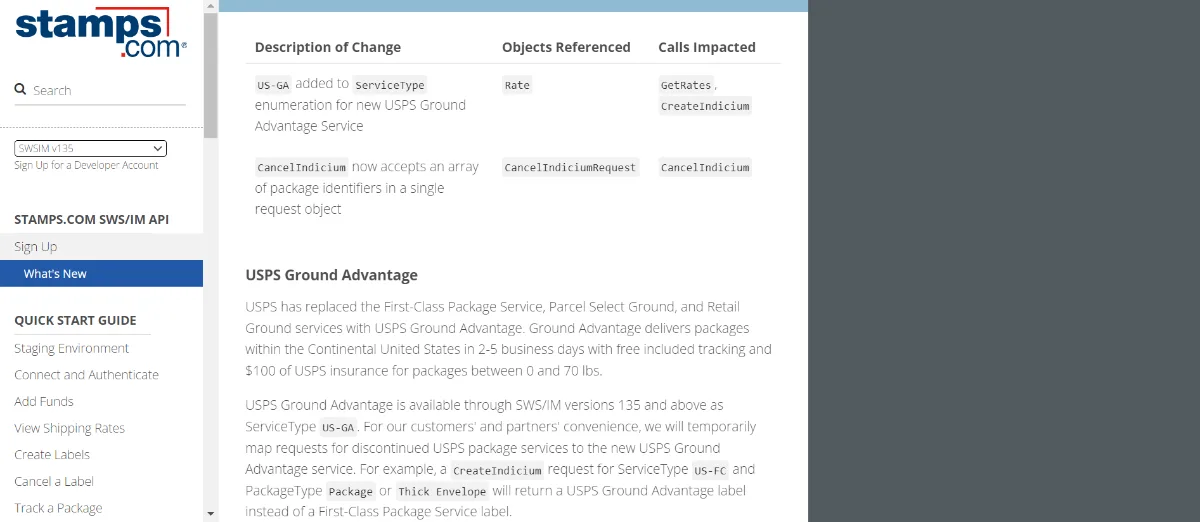
Stamps.com API is a shipping solution focused on label generation, rate quoting and international shipping, built for ecommerce businesses with varied shipping needs.
Features
- Label generation: Create shipping labels for orders quickly.
- Rate quoting: Get accurate, real-time rate quotes so shipping costs are clear for merchants and customers.
- International shipping: Supports cross-border shipments for businesses expanding internationally.
- Batch shipping: Process multiple orders at once to save time.
Future trends in multi-carrier shipping
Multi-carrier shipping keeps changing as technology improves, customer expectations rise and sustainability becomes a bigger priority. The next generation of shipping APIs will focus on customer experience and sustainability, not just efficiency.
For ecommerce businesses, that means choosing flexible APIs, keeping up with new trends and keeping the customer at the center of shipping decisions.
Here are two trends likely to shape the industry:
AI and machine learning
AI and machine learning will play a growing role in multi-carrier shipping APIs, adding smarter automation across the shipping process.
By analyzing historical shipping data, these tools can predict delivery patterns, flag likely delays and optimize routes. For merchants, that means shipping that’s proactive, not just efficient, and more accurate last-mile delivery tracking for customers.
Sustainable shipping
As environmental awareness grows, so does demand for sustainable shipping. Future shipping APIs may let merchants offer eco-friendly delivery options and offset carbon emissions. Some brands already pair this with green shipping protection at checkout.
Turn carrier data into a better tracking experience
A shipping API gets the package moving, but customers judge the experience by what they see after checkout. CWILL Order Tracking pulls in tracking updates from your carriers and shows them on a branded tracking page in your store, with shipping notifications at each milestone, so customers check your site instead of contacting support.
FAQs
A multi-carrier shipping API is a single integration that connects your store to many shipping carriers. Instead of building a separate connection for each carrier, you use one API to compare rates, print labels, schedule pickups and track packages, which saves development time and makes it easier to switch carriers as your needs change.
Using more than one carrier gives you options on cost, speed and coverage. You can pick the best rate for each shipment, offer faster delivery where it matters and keep orders moving if one carrier has delays. It also reduces your reliance on any single carrier’s pricing and service levels.
Most multi-carrier shipping APIs return raw tracking events, but they don’t give customers a branded place to see them. To turn that data into a better post-purchase experience, many brands add a tracking app that shows updates on a branded tracking page and sends shipping notifications, which helps reduce WISMO tickets.
Start with the platforms and carriers you already use, then compare integration effort, rate transparency, cost-saving tools and tracking data. Test the API in a sandbox before committing, check how pricing scales with your order volume and confirm the support options fit your team’s technical skills.