An RMA (return merchandise authorization) is a unique number a merchant assigns to an approved return, so both the merchant and the customer can track the item back to the warehouse. RMAs give your returns process structure: every return has a record, a status, and a reason attached to it.
Product returns are a major headache for businesses of all sizes. They cost money and can hurt your brand. Still, to keep customers satisfied and stay ahead of the competition, you need to offer returns and exchanges. An RMA process is the most effective way to keep those returns organized.
What is RMA?
RMA stands for return merchandise authorization. It’s also called a return authorization (RA) or return goods authorization (RGA). An RMA, RA, or RGA is a number customers use when returning a package because they’re not satisfied with the product.
RMA vs. RGA
RMA and RGA are often used interchangeably, but some businesses draw a line between them based on the reason for the return. In that case, an RMA covers defective or damaged products, while an RGA covers wrong items or missing parts.
What is an RMA Number?
This RMA number or return authorization number is a unique identifier assigned to the products or orders for which customers request a return or refund. Moreover, this number works as a tracking number that helps merchants monitor the product return progress and update inventory accordingly with an ERP system.
Usually, the customer service department assigns the RMA number after approving the return request from the customer. However, whether the customer will receive a refund, use store credit, or get a replacement depends on the return policy of the company or merchant. Also, if the customer requests a return or refund after the warranty period, merchants have the authority to decline the return request.
Here are a few of the reasons why RMA is beneficial for both merchants and customers:
- It helps merchants keep track of the return parcel from the customer to the warehouse.
- Merchants can calculate the financial impact of returned packages.
- Merchants can keep tabs on which return issues have been resolved and which are still pending.
- It is an effective source for merchants to collect customer information and analyze the reason for returns.
- Merchants can assess the condition of a product to determine whether it is eligible for returns or refunds, thereby preventing return fraud.
- Customers can use the RMA number as a reference to track the return process and conduct inquiries in case a refund or replacement takes longer.
- RMA data helps identify areas for improvement to ensure customer satisfaction for future orders.
Learn More: Ecommerce Returns Management
Return Authorization Form Template
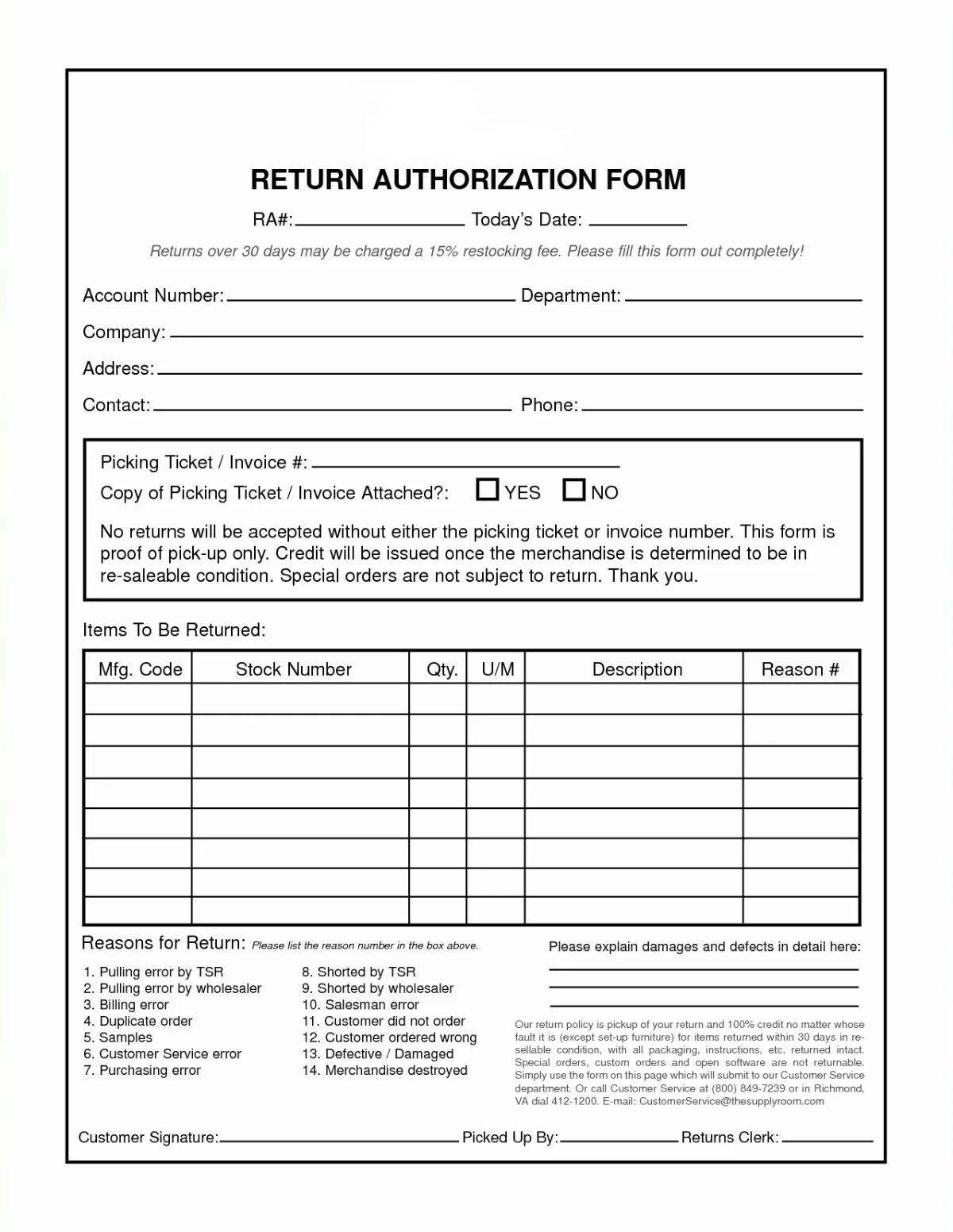
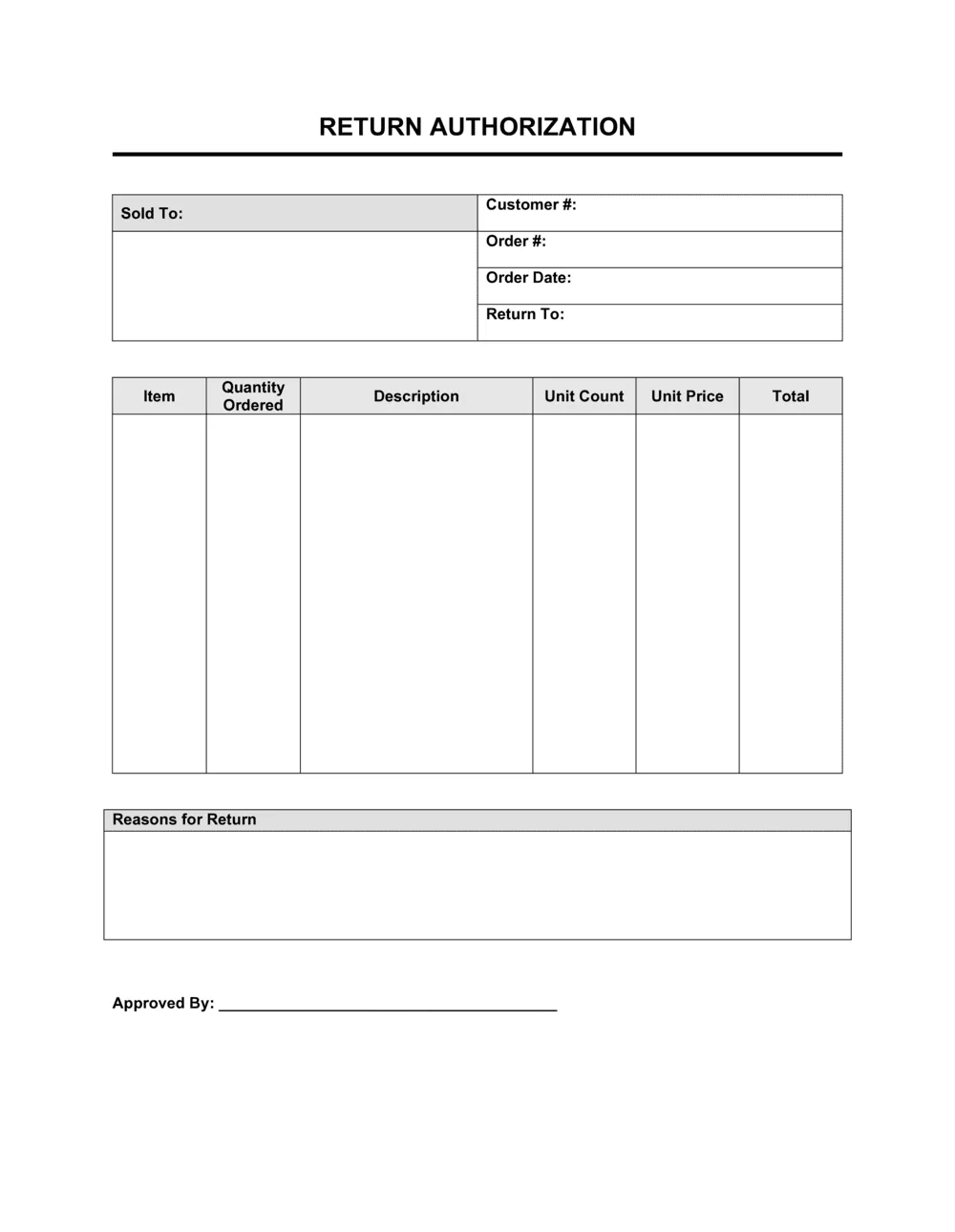
A Return Authorization or RMA form is the first thing customers need for an RMA request. So, what is an RMA form?
An RMA form is a document that contains all of the necessary information about the product, the customer, and the reasons for the return or refund. RMA forms come in various templates, depending on the industry and business type (ecommerce or brick-and-mortar store).
However, there is certain key information that every RMA form includes:
- Customer contact information: This section includes the customer’s name, phone number, address, and email address.
- Product information: This section requires information such as order ID, product name, return product quantity, return reasons, purchase date, product image, warranty date, and so on.
- Expected solution: Customer’s claim regarding whether they want a refund, replacement, repair, etc.
Some companies include return policies and instructions on how to package the product for return. Some companies only accept returns in their original packaging, while others accept products in any condition within the warranty period. The form may also include space for customer feedback, where they describe the reasons for returning in detail.
Here are a few standard RMA form templates:
 |  |
Understanding the RMA Process
The RMA process may not be exactly the same for every business. However, understanding the basics of the RMA process can make the whole process more efficient.
Step 1: Create your store’s return policy
The return policy acts as a guideline for the RMA management software to identify the return requests eligible for returns. Consequently, it streamlines the return process and ensures customer satisfaction.
The company or store must first set their return policy and use it to determine the RMA process.
The terms and conditions of the return policy include:
- The warranty period within which customers can submit the RMA request;
- Product status acceptable for return, such as returning in the original package, unused clothing or accessories with intact hangtags, etc.;
- Clauses regarding the return shipping cost. It should clearly state who bears the shipping fee and for what product condition the company bears the fee;
- The need for additional documents like proof of purchase;
- The refund clause mentioning the conditions under which customers receive store credit, a full refund, a partial refund, or a replacement;
- Terms and conditions where return is not acceptable.
Step 2: Design the RMA form
Next, the RMA form should be created, through which customers will submit their return request. Make sure to include all the important sections in the form, such as product information, customer information, product image, return reason, solution, and so on.
Plus, make sure to include every piece of data you may need for your warehouse management. Also, incorporate additional information, such as the key points of the return policy, the return timeframe, shipping cost, and other specialized instructions.
Step 3: Customer initiating the return request
This step is for the customers. They have to apply for the return request from the return portal of the eCommerce website. The portal contains the RMA form, which they must fill out and mention their preferred compensation type, such as refund, replacement, etc.
The information provided in the form assists the RMA system in determining whether the request should be approved or denied.
Step 4: Generate the RMA number
Afterward, if the return request is accepted, an RMA (the unique number that serves as the identifier of the return package) will be assigned. The customer is then responsible for packaging and shipping the product. Through this RMA number, both the merchant and the customer can track the return progress.
Step 5: Return processing in the warehouse
When the returned product arrives at the warehouse with the RMA number, the warehouse staff can efficiently retrieve relevant information and process the returned product. If the product is defective or damaged, an exchange order is created. Refunds or store credits can also be issued if the requirements are met.
Simplify Your RMA Process with CWILL Post-Purchase
Managing returns gets hard when you handle a large number of them every day. CWILL Returns & Exchanges is a Shopify app built to make the RMA process more efficient. Its return portal handles returns and exchanges in one flow, so it works as RMA management software: it collects return requests, processes them, provides return labels, and analyzes the results.
Customers submit returns through the return page and can check their status anytime in the 24/7 return center. You can connect with carriers like USPS, UPS, and FedEx, set return eligibility rules, and set multiple return addresses, so you stay in full control of every return.
CWILL Returns & Exchanges has a free plan, so you can set up your RMA process without upfront cost.
RMA FAQs
Return Merchandise Authorization, in short RMA, is a part of the product returning process that customers use to receive refunds, repairs, or replacements. The RMA number that sellers give can be seen as permission to grant the request to solve issues regarding defective, damaged, or unwanted products.
The Return Merchandise Authorization number, or RMA number, is a unique identifier assigned by the merchant or manufacturer to products or orders that have received a return request. This number serves as a tracking number so that merchants can track the product as it arrives at the warehouse.
The RMA number should be written on the outside of the package body. Usually, merchants provide the RMA number with proper instructions. As the package needs to pass various transit points and get scanned to reach its destination warehouse, it is best to provide the RMA number on all sides of the package in large, clear text.
The charge of RMA shipping fees depends on the seller’s return policy. Some sellers charge for RMA shipping in the form of a restocking fee. Some businesses may bear the shipping cost considering the product condition and return reason. In contrast, others may let the customers pay for the RMA shipping and provide free shipping for replacements.

Content Director | 9+ years decoding B2C & B2B eCommerce, obsessed with SaaS and retail storytelling
Words are my weapon—crafting killer copy, decoding trends, and turning data into gold. When not strategizing: Coffee addict, pun enthusiast, and book lover. Ready to level up your eCommerce game? Let’s chat. ☕️