Some ecommerce brands are confused about how a Klaviyo loyalty program works, and that’s totally fair. Klaviyo is a well-known email and SMS marketing tool, but to use it you’ll need to pair it with a loyalty program software.
In this article, we’ll talk about how that setup works, what data you can sync, the best loyalty email campaigns to run, and how to choose the right app for your Shopify store.
What Is a Klaviyo Loyalty Program?
A Klaviyo loyalty program is a setup where Klaviyo connects with a third-party loyalty app to run your customer loyalty program using reward data. This is because loyalty points, tiers, and rewards are managed inside a dedicated loyalty platform, not within Klaviyo itself.
Doing so allows you to trigger flows based on real actions. We’re talking about when they bought an item and earn points or move from a bronze to a silver tier.
Since Klaviyo helps you segment your audience to send more relevant messages, you won’t be sending broad campaigns anymore. You’ll be able to improve customer engagement through timely emails and SMS campaigns based on purchase behavior, which (by the way) can encourage repeat purchases.
Can Klaviyo Run a Loyalty Program?
Klaviyo can help you send reward emails and notify customers about expiring points (or new perks they can enjoy), but it can’t run a loyalty program on its own. Unlike a loyalty app, it doesn’t have the feature to create and manage points… or even handle referrals.
If you really want to run a successful loyalty program, you need to invest in a dedicated loyalty app. Because that’s the only way you can manage relevant customers’ data, their points, tier status, and reward activity.
Klaviyo needs all of those to send proper and personalized messages to your customers.
How Klaviyo Works With Loyalty Platforms
Klaviyo works with loyalty platforms by receiving customer data and real-time activity, then using that information to power your emails and SMS campaigns.
But before you can sync anything, you need to set up your earning rules, rewards, tiers, and customer fields inside your loyalty app so the data coming into Klaviyo is accurate and useful.
1. Loyalty data sync
Loyalty data sync connects your loyalty platform with Klaviyo by sending customer activity directly into their profiles. When someone interacts with your program, that update flows into Klaviyo and keeps their profile current (so you’re always working with fresh data).
This connection works both ways in some setups, but the main role is keeping profiles updated with what customers are doing. As profiles change, you can group customers more accurately and build segments that reflect their latest activity without manual updates.
2. Customer profile properties
Customer profile properties are stored pieces of data tied to each individual customer in Klaviyo. These properties reflect where someone stands in your loyalty program, which helps you group customers based on their status, tier, or points balance.
With this information saved on each profile, you can create more targeted segments, personalize your messages, and send campaigns that match each customer’s current position in your program.
3. Loyalty events and triggers
Klaviyo also works by responding to loyalty events as they happen. These events are real-time actions your customers take, and they activate flows inside your account.
Let’s say that one of your customers decided to redeem a reward. Klaviyo can immediately send a follow-up email with the reward details or suggest what they can do next.
Your messages will arrive at the right time (while the action is still “fresh”), and that can make it easier to engage customers and create better customer relationships.
Why Shopify Merchants Use Loyalty Data in Klaviyo?
Loyalty data gives you a new level of insight that you can use to power up Klaviyo’s post-purchase email flows. You get to send more relevant emails even after your customers receive their package. Plus, you don’t have to base it only on the past purchase history.
What will that change? Since your messages are based on real customer activity, your customer relationships will feel more consistent and intentional. These efforts will cascade and improve your customer retention plus lifetime value.
It also gives you better control over who you’re targeting. You can group them based on customers’ loyalty status and activity, then adjust your campaigns to match where they are in your program.
What Loyalty Data Can Sync to Klaviyo?
Integration with a loyalty platform will allow you to sync points and rewards data, VIP and member status, and referral and profile data. It can support different types of loyalty programs. Let’s discuss each in detail:
1. Points and reward data
Points and rewards data cover what your customers earn, what they can redeem, and how close they are to using those rewards. This gives you a clearer view of their activity inside your loyalty program.
- Points balance
- Earned points
- Redeemable rewards
- Reward codes
- Expiration dates
With this data, you can send timely reminders and guide customers toward using their rewards while they’re still available.
2. VIP and member status
For a tiered or membership-style loyalty program, you can also sync your customers’ member status, current tier, next tier, tier benefits, and expiration details.
You can use this information to segment your customers based on their loyalty status and offer messages that match their “level” in the program.
3. Referral and profile data
Besides the usual “order-related” data, you can also sync the following info for your customers:
- Referral links (which they can share to get you new customers)
- Referral completed events
- Customer profile data (birthday, tiers, and other personal details)
These allow you to identify who your most loyal customers are and reward or encourage them at the key moments.
Best Klaviyo Loyalty Email Campaigns
Now, once your loyalty data is syncing into Klaviyo, you can start building emails that actually respond to what your customers are doing.
Here are the most common loyalty email campaigns you could set up:
1. Loyalty program welcome email
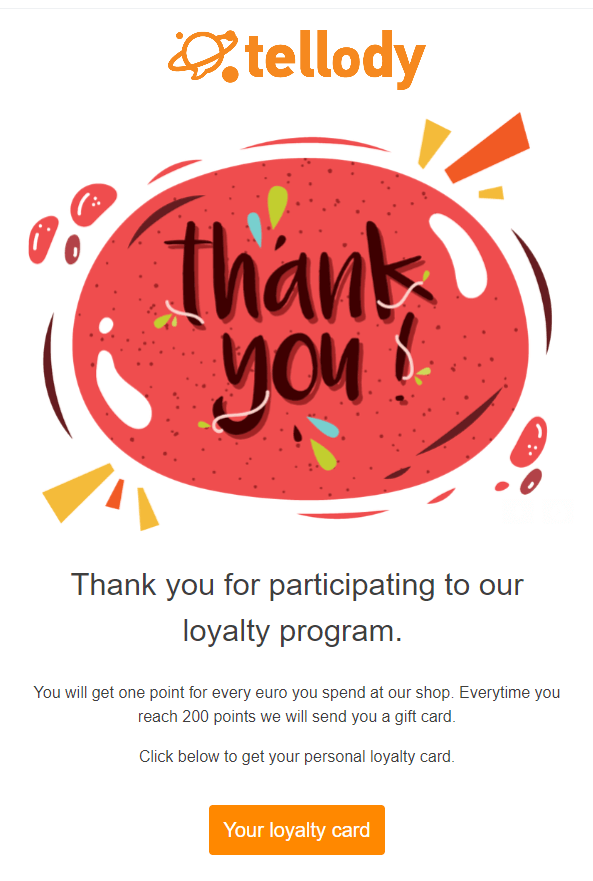
The “welcome email” is the very first thing your new loyalty member receives after signing up.
Here, you have to explain:
- The benefits of being a member,
- how they can earn points (and whether there are multiple ways to do so),
- what rewards they can redeem,
- and what step can they take after reading the email (aka the CTA).
If you set this email campaign correctly, your customers will be more confident in using your loyalty program because they understand the reward system better.
PRO-TIP: Offer a bonus to encourage a quick action from your new members. You can provide a simple 10% off or free shipping on their next purchase.
2. Points earned and reward reminders
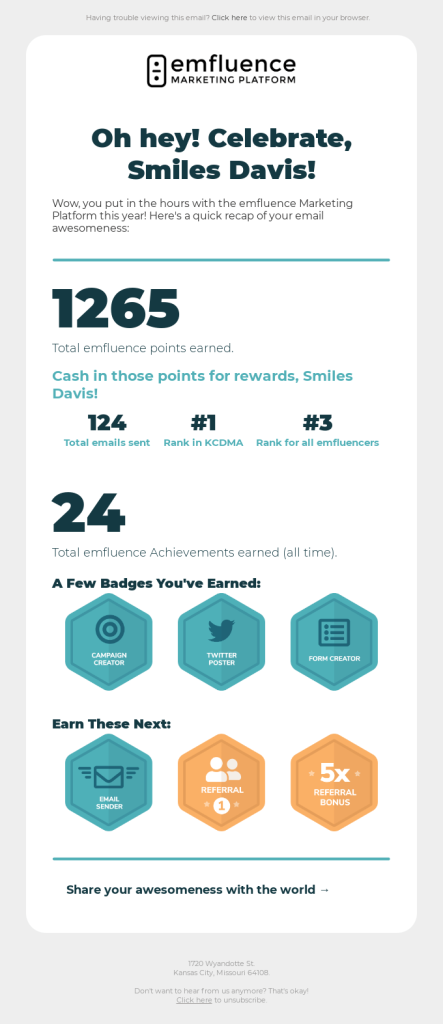
The next campaign is for sending reminders to keep your customers aware of their points and rewards.
You can mention their current balance and how close they are to the next reward. This campaign is also useful to confirm a redeemed reward, mention any “unused coupons”, or even talk about the possible reward if they go back and check out their abandoned items.
With this Klaviyo email campaign, you can keep an active loyalty program and increase the number of orders you get from your existing customers.
3. VIP tier and birthday reward emails
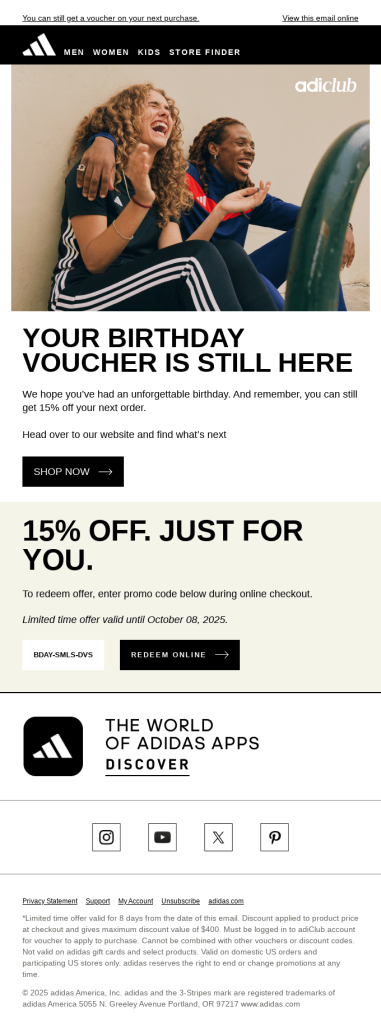
Since they are more personal, milestones are the best moments to send emails that ordinary promotions can’t top up. They make your loyal customers feel more valued because the message is specifically for them. It’s not a part of an ongoing holiday or a “segmented” campaign.
You can send a personalized reward on your customer’s birthday or when they move up to a new loyalty tier. Congratulating them on a points milestone (like hitting 1,000 points) and offering a freebie they can enjoy if they opt to use the points is also a must-try strategy.
4. Referral program email
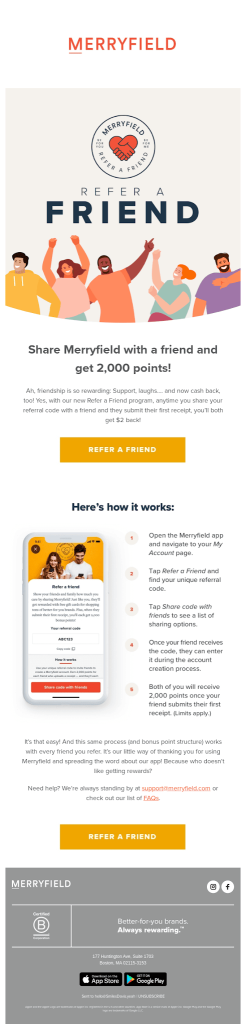
Another great Klaviyo loyalty campaign is the referral email, as it rewards two important people: your happy customers and the new ones they bring in.
A good place to start is a post-purchase referral prompt. After your customer receives the order (and leaves a positive impression of your brand), you can send them their unique referral link and explain what both sides get when a friend signs up.
Besides that, you also want to welcome the new referred friend with a reward when they make their first purchase, and notify the original referrer when their reward has been earned.
Explore more referral marketing ideas here.
Beauty brand loyalty campaign examples: Refill reminders
Refill reminders are a good campaign to add if you sell products that people reorder on a regular basis. You send them a timely email when they’re likely running low, before they even think about looking for alternatives.
Beauty brands are one of the industries that use this most, since it’s easier to calculate when a customer is likely to run out of something like a moisturizer or body wash based on typical usage.
Salt & Stone, for example, sends refill reminder emails for their products and pairs them with a discount to make the reorder easier to act on.
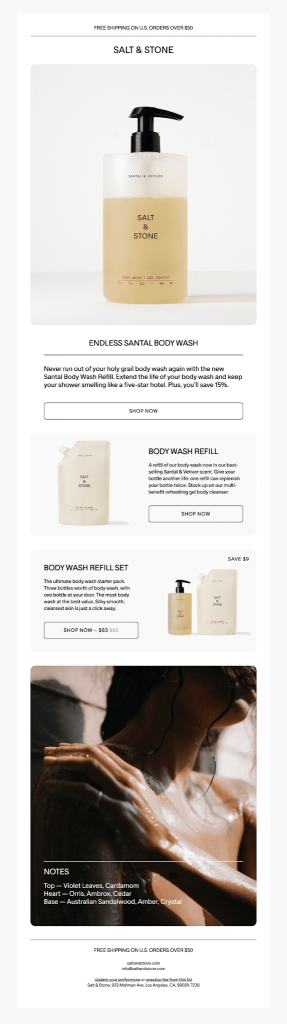
This campaign also works for any Shopify store that sells consumable or repeat-purchase products, from supplements to pet food to coffee. You can pair the reminder with a points incentive to reorder, or offer an exclusive discount for VIP members.
How to Make Your Klaviyo Loyalty Program More Effective
Next, let’s discuss how you can make your Klaviyo loyalty program more relevant to your customers. It comes down to four things: segmentation, going beyond discounts, getting more out of your loyal customers, and tracking the right numbers.
1. Segment customers by loyalty status
Customer segmentation is one of the most effective strategies you can use for your loyalty program. It gives you the power to automate, but also keep the message “relevance” on the table.
What you can do is group your customers by their loyalty status: new buyers, repeat customers, VIP members, and inactive ones. If you have a tier program, you can also segment them based on Bronze, Silver, and Gold (or whatever you name your tiers).
Sometimes one customer can fit into more than one segment (like a VIP member who hasn’t purchased in 90 days). That’s perfectly fine, as you can build separate flows for each scenario… and make sure each one gets a message that actually matches their situation.
2. Use loyalty emails beyond discounts
Discount coupons, free shipping, and cashback are usually the first things merchants reach for in a loyalty program. But you can actually build lasting customer relationships if you also focus on “non-monetary” gains.
Try to offer early access, point milestones, or brand community prompts (like inviting loyal members to join a private Facebook group or an exclusive online event) from time to time.
For example, if you sell skiing gear, you can set up a campaign that encourages your VIP members to share their best run photos for a chance to earn bonus points.
Some customers appreciate rewards in other forms,… so be creative with what you offer for them.
3. Push for advocacy
One other way to make your Klaviyo loyalty program even more powerful is to encourage advocacy. People love it when they feel like they’re part of something, and you can do that by creating a “retention ecosystem” where your existing customers can participate.
- Referrals: Reward customers for bringing in new ones.
- Reviews: Give points for customer feedback (as social proof can earn you more trust from potential buyers).
- UGC: Encourage customers to share photos or videos of your products.
- Community engagement: Invite loyal members to exclusive events or groups (to increase sense of belonging).
PRO-TIP: Mention how their action can make a difference in your brand. Something like “with your reviews, we can improve our products to serve you and other customers better.”
4. Track Repeat Purchase Performance
And of course, the unskippable part: measuring your performance metrics.
We suggest that you keep an eye on the following:
- Repeat purchase rate: so you know if your loyalty program is actually bringing customers back.
- Customer lifetime value: to see if your loyal customers are spending more over time.
- Redemption rate: so you know whether your rewards are really appealing enough for customers to use.
- Referral revenue: to find out if your referral emails are worth the effort.
All of these can help you learn more about your loyalty program strategy and where to improve your next campaigns.
Okay. You already know some best practices. Next, we’re going to share some of the things you have to avoid.
Common Mistakes to Avoid
Here are three mistakes you have to avoid when creating a Klaviyo loyalty program:
Treating Klaviyo as the loyalty platform
This is a common misconception, but Klaviyo only handles the email and SMS marketing part of your loyalty program. It needs to be integrated with a loyalty software for the points, tiers, and reward management to actually work.
So, remember to choose a loyalty app first, set up the program, and then you can connect it to Klaviyo for the post-purchase communication side.
Sending the same emails to every customer
Generic emails will never win against personalized ones. If you send the same message to a new buyer and a VIP member, one of them will feel the “misalignment” and might stop reading messages from your brand.
You can solve this with customer segments and applying specific incentives for each group.
Ignoring rewards or overcomplicating the setup
Building too many flows at once (before you even know what your customers respond to) makes the whole thing harder to manage.
Start with the priority ones: unused reward reminders, expiration nudges, and points earned notifications. Get those running well first, then build from there. Because a simple setup that runs consistently is usually what keeps a loyalty program alive long-term.
Best Shopify Loyalty Platforms With Klaviyo Integration
The three best Shopify loyalty platforms we hand-picked are CWILL Loyalty & Referrals, LoyaltyLion, and Yotpo.
1. CWILL Loyalty & Referrals
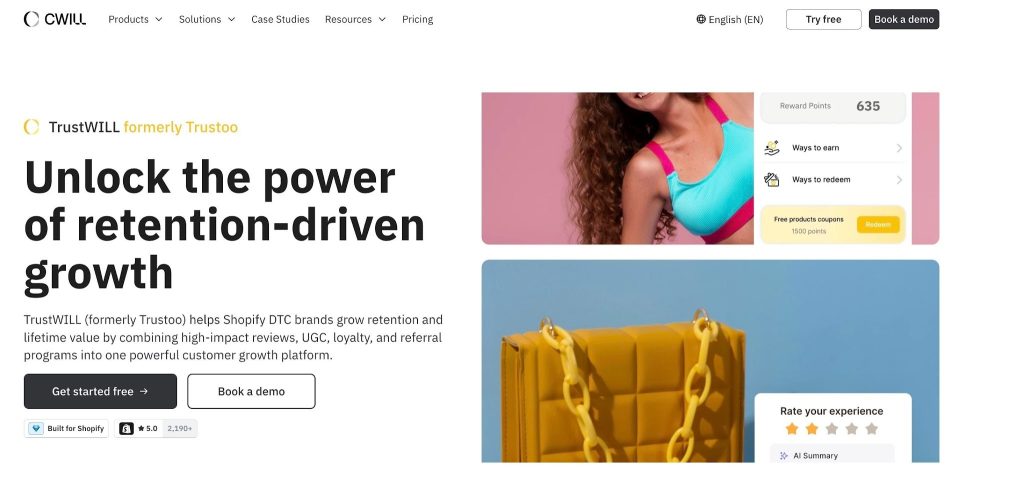
CWILL Loyalty & Referrals is CWILL’s Shopify loyalty and referral app that connects directly (and easily) with Klaviyo. It’s a great tool that helps merchants like you to create more personalized retention and referral flows. Something based on your real customers’ loyalty behavior.
Once you connect it to Klaviyo, you get to enjoy the following features:
- 10+ loyalty events that let you trigger automated flows (like points earned, reward redeemed, tier upgraded, and reward expiring).
- Live customer attributes synced to Klaviyo profiles, such as points balance, tier status, and days since last redeemed.
- Referral link tracking that allows you to set up follow-up flows that activate once your customers successfully share referrals (or when their referee completes the action needed).
- Pre-built flow templates that speed up your setup time so you can launch your loyalty campaign in a snap.
All of the data we mentioned can be used to build more targeted lifecycle messaging. With them, you can create tier-based emails, timely reminders (for expiring points and rewards), plus milestone-driven campaigns.
On top of that, CWILL supports two-stage expiration flows. You can improve redemption rates by sending reminders 30 days and 3 days before expiration.
With this integration, you no longer have to use generic email blasts. You can build stronger retention flows based on real activities and engagement, so you can increase repeat purchase rate and improve customer lifetime value for the long term.
2. LoyaltyLion Klaviyo Integration
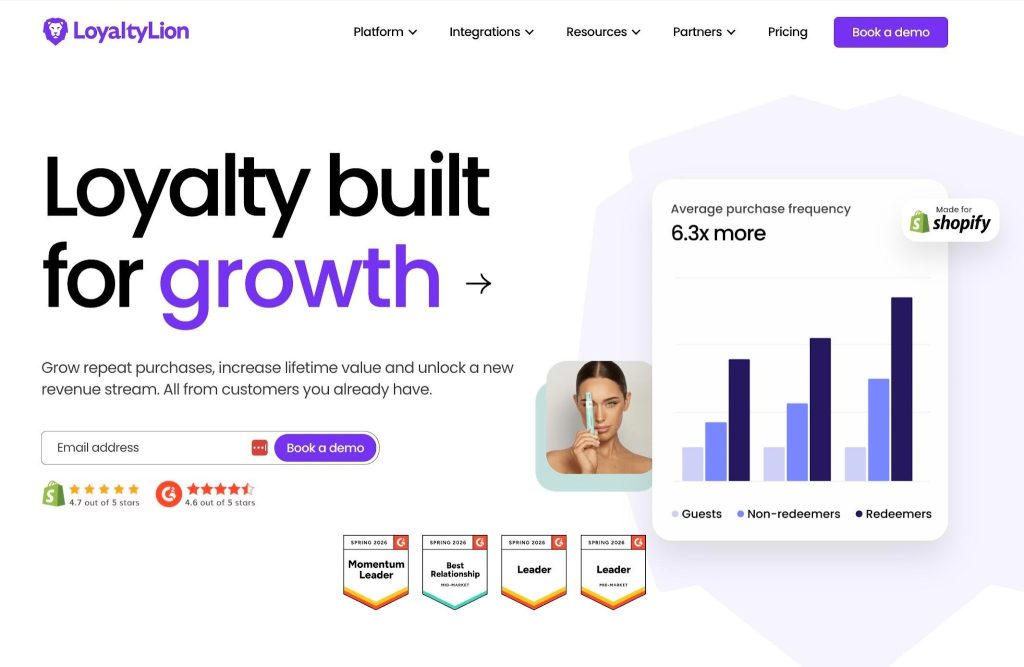
Another loyalty app you can check is LoyaltyLion, which also connects with Klaviyo to sync your customers’ loyalty data for email and SMS campaigns.
It passes customer properties like points balance, tier status, referral links, and progress toward the next reward into Klaviyo profiles.
From there, you can build flows (including welcome emails, reward reminders, points expiry nudges, and tier upgrade notifications) based on real-time loyalty events.
Referral prompt emails and post-purchase flows are also available… but this will depend on the plan you choose.
3. Yotpo Loyalty Klaviyo integration
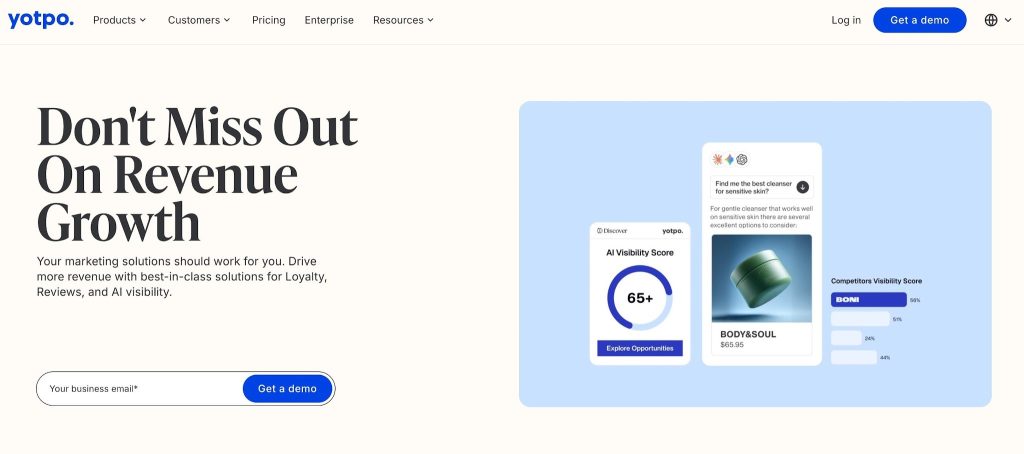
The last app we recommend is Yotpo. It’s another Shopify-ready loyalty and referral app that you can use with Klaviyo.
With its integration with Klaviyo’s Customer Hub, you can access your customers’ loyalty data, including points balance, VIP status, tier information, and reward activity.
And like the first two apps I mentioned, you can use that data to create your loyalty program triggers, email campaigns, and flows.
How to Choose the Right Klaviyo Loyalty Integration
Not every loyalty app works the same way with Klaviyo. Before you commit to one, it helps to check a few things first.
1. Check Available Loyalty Data
Some apps only sync basic customer properties, while others pass through a full set of events, referral links, and real-time updates. Having access to data like tier status, points balance, and expiry dates gives you more options when building segments and flows.
The depth of data an app can sync directly affects how specific and flexible your campaigns can be.
2. Match Features to Email Use Cases
If referral emails are a priority, make sure the app sends referral events and links to Klaviyo. But for VIP tier upgrades, expiration reminders, or reward confirmations, check that those events are supported too (otherwise you’ll end up working around gaps in your setup).
Your use cases should guide which app you pick, not the other way around.
3. Consider Setup, Team Size, and Growth Stage
What app can match your current stage and still keep up as you grow? For new stores, basic points tracking and a welcome flow are usually enough. But growing brands might need multi-tier support and more advanced segmentation.
Picking the right fit from the start means you won’t have to switch platforms mid-growth.
Final Thoughts on Klaviyo Loyalty Programs
We all know that Klaviyo is a solid email and SMS marketing tool. But it can only be a powerful loyalty marketing platform if you connect it with a loyalty app. Because with this, you get to access the customer data, events, and reward activity that make your campaigns actually relevant.
Now that you know what you have to do to get started, it’s time to choose your loyalty app. CWILL Loyalty & Referrals is an affordable and easy-to-set-up option for Shopify merchants. Plus, you can sync points, tiers, referral links, and loyalty events directly into Klaviyo from day one.
FAQ About Klaviyo Loyalty Programs
Yes, you can combine loyalty data with Shopify data as long as you connect a loyalty app that syncs both into Klaviyo. This will give you a clearer view of each customer, so you can send emails based on what they bought and how they engage with your loyalty program.
Flow and campaign both work for brand loyalty emails, but they serve different roles. Flows are great for reacting to customer actions as they happen (like when someone earns points). But campaigns are better suited for scheduled promotions that go out at a specific time (like holiday season exclusive discounts).
It’s still best to send loyalty emails based on customer actions, rewards, and expiration timing. But we suggest you start with a few loyalty-related updates (about 1 to 2) each month.

Content Specialist
I’m passionate about creating SEO-friendly content that also resonates with readers. I take data and insights and turn them into actionable, practical ideas. My mission? Helping websites drive organic traffic and grow sustainably.