Reverse logistics is the process of moving a product from your customer back to you or your supplier after a sale, through a return, exchange, repair, or recycling. For ecommerce brands it’s a big part of the business: an estimated 19.3% of online sales are returned, according to the National Retail Federation.
Knowing how reverse logistics works helps you give better customer service, which builds loyalty and brings repeat sales. This guide explains how the process works, gives common examples, covers eight benefits, and lists 8 reverse logistics companies worth considering.
What is Reverse Logistics?
Reverse logistics covers the processes involved in handling product returns and exchanges. It focuses on how a product moves from your customer back to you or a supplier. Traditional logistics is the opposite: how an item moves from your store to the customer.
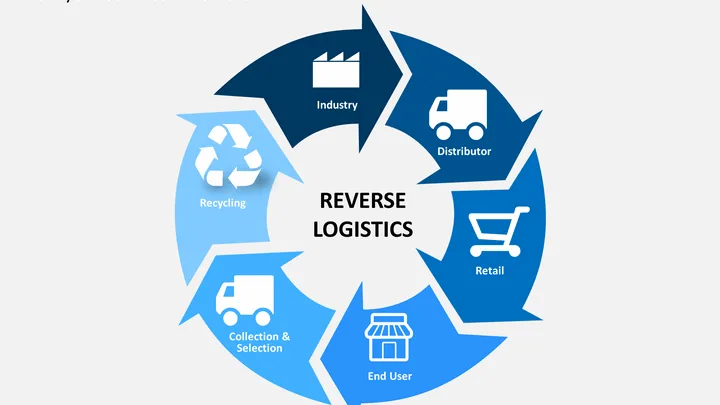
Both matter to your business. Many ecommerce brands still neglect reverse logistics because it’s complicated and costly, or because the focus stays on closing the next sale.
How the Reverse Logistics Process Works
The reverse logistics process, also called the reverse supply chain, exists to recover value for your business and help you meet sustainability goals. The details depend on your business and the products you sell.
If you sell electronics, your process might involve repairing and refurbishing devices before reselling them to a different market. You might also handle disposal yourself, to reduce the environmental impact of products at the end of their life.
A sustainable clothing brand might accept used clothing in good condition and donate it to communities in need, keeping it out of landfills.
No matter how your online shop executes the reverse logistics process, it will generally be associated with the following flow:
- Return Processing
Every reverse logistics process starts with processing the return, whatever the industry. This step covers issuing a return authorization and inspecting the product to decide its condition and whether it can be resold. That decision shapes every step after it, including return shipping, refund approval, and exchanges.
- Categorizing the Return
Next, sort the return into categories you’ve set in advance. Categorizing tells you what needs to happen to each return next.
- Moving the Product to Reduce Waste
A key goal of reverse logistics is cutting waste and getting the most value out of every item. At this stage, you send each product where it belongs: refurbishment, resale, or disposal. Doing this well keeps your reverse supply chain efficient.
- Repairs
Some items need repairs, and this is where they happen. Skilled technicians make sure repaired products meet the standard customers expect before they go back on sale.
- Recycling
The last step is recycling items that can’t be repaired or resold. Sending them to a recycling facility lowers your brand’s environmental impact and supports a circular economy.
Reverse Logistics Examples
Reverse logistics takes several forms, also called reverse logistics components. Which ones apply to your business depends on what you sell.
1. Customer Returns
Customer returns are the most common type of reverse logistics for ecommerce brands. Customers return items for many reasons, such as a product not meeting their expectations or the wrong item being shipped. A smooth returns process keeps customers satisfied and loyal to your brand.
2. Unsold Goods
Distribution partners may return goods they consider excess or outdated. This requires a contract with the seller that spells out the terms for returning unsold goods.
3. Packaging Management
Environmentally conscious brands reuse packaging materials to meet sustainability goals. Reusing packaging cuts waste and gives ecommerce companies control over how packaging is eventually disposed of.
4. Remanufacturing and Refurbishment
Refurbishment restores returned products to their original condition so they can be sold again. Remanufacturing turns returned or defective items into new products. Both let businesses take part in the circular economy by turning returns into market-ready products. Cannibalization of parts, where parts from one returned item are used in another, is also common in both.
5. Repairs and Maintenance
Warranties and guarantees are standard for many products sold online, especially electronics. They make repairs and maintenance part of the reverse supply chain, so customers get the service and support they were promised.
6. Equipment Rental
Leased equipment has to be returned when the lease ends. A solid reverse logistics plan gets those items back to the leasing company, which can then redeploy, recycle, or resell them.
7. End of Life
Items may also go back to the merchant or retailer once they’re no longer useful to the customer, so they can be recycled or disposed of properly.
Eight Benefits of Reverse Logistics
Investing in reverse logistics is one of the smartest decisions an ecommerce business can make. Here’s what it does for your store.
1. Higher Customer Satisfaction
Online shoppers want brands that deliver on time and handle returns well. A clear return policy gives customers the confidence to buy, because they know they won’t be stuck with an item or have to jump through hoops to return it. That confidence builds satisfaction and loyalty. Free return shipping and a full-refund option make the experience even better.
2. Cost Savings
Running a business costs more than ever, but efficient operations protect your margins. A well-run reverse logistics flow saves on administration, repair, storage, and disposal costs, which improves your store’s profit.
3. Data for Continuous Improvement
Reverse logistics produces a lot of data on customer behavior, market demand, and product quality. If you analyze it closely, it shows you how to improve your strategy and your products.
4. A Stronger Brand Image
An easy returns process lifts your brand’s reputation. Customers think better of brands that handle returns well, and they share positive reviews that help your business stand out online. A stronger brand image attracts new customers and keeps existing ones.
5. Reduced Risk
A reverse logistics system helps you spot defective products among customer returns quickly. You can then recall those products and dispose of them properly. Some products, like electronics, may need their data wiped before disposal. Reverse logistics makes sure that happens, which reduces the risk of misuse.
6. Resale Opportunities
Through reverse logistics, products that don’t sell in one market can be refurbished and resold in another. You recover value that would otherwise be lost.
7. Better Sustainability Practices
Reverse logistics gives ecommerce businesses a real way to improve their sustainability. Recycling products and reusing packaging help you meet sustainability goals and support your ESG reporting.
8. Easier Regulatory Compliance
Many governments now require businesses to follow strict environmental and product disposal rules. Reverse logistics helps you comply with those laws and avoid legal disputes.
8 Reverse Logistics Companies for Ecommerce
The right returns partner makes reverse logistics far easier to manage. These companies pick up returns, deliver them to your warehouses, and help manage your supply chain. Many also inspect and repackage returned items, manage inventory, and sometimes handle customer refunds.
Here are 8 reverse logistics companies for ecommerce to consider.
1. Shippo
Shippo is a multi-carrier shipping platform founded in 2013. For returns, it offers return label generation: scan-based labels you include in the outbound box and pay for only if they’re used, plus on-demand labels. Shippo integrates with individual websites, marketplaces, and Shopify stores, and it connects to carriers like USPS, UPS, and FedEx.
2. ShipBob
ShipBob is an international third-party logistics (3PL) provider known for its warehouse network. Through that network, it offers warehousing, picking and packing, shipping, and returns management. ShipBob receives and processes returns in its facilities, tracks them from start to finish, and routes items to restocking, quarantine, or disposal. Customer-generated return labels come through ShipBob’s returns app integrations.
3. Sendcloud
Sendcloud is a shipping platform that connects to more than 170 carriers. It lets online brands manage returns from every sales channel in one place. Its branded returns portal lets brands set return criteria and track data on returned items. Sendcloud supports bulk printing of return labels and makes customs documents easy to generate, which simplifies international returns. Its paperless returns use a QR code or barcode at more than 390,000 service points across Europe and the UK.
4. FedEx
FedEx is one of the best-known logistics providers in the world, and it also handles returns for ecommerce brands. Customers can drop off returns at more than 56,000 FedEx locations and Drop Boxes. FedEx accepts pre-printed return labels and emailed QR codes, which staff scan to print the label in store. QR codes also allow no-box, no-label returns at participating FedEx Office, FedEx Ship Center, and Walgreens locations.
5. UPS
United Parcel Service (UPS) is one of the largest logistics providers in the US. UPS acquired Happy Returns in late 2023, adding box-free returns to its services. Happy Returns has 10,000 Return Bar locations where customers can drop off items without a box or label. Its software lets ecommerce brands automate returns management and offer exchanges based on the return reason and available inventory, which saves sales that would otherwise be lost.
6. DHL
DHL, headquartered in Germany, is one of the most experienced logistics providers. It offers returns from 25 European countries. DHL supports paper-free returns using QR codes in markets like Germany, Sweden, Spain, and Portugal. It also offers in-box returns with a pre-printed label included in the original packaging, and labels can be emailed if the customer prefers. Customers can drop items off at a DHL service point.
7. Delhivery
Delhivery is one of India’s leading logistics providers and a go-to for ecommerce brands that need express parcel delivery, warehousing, freight forwarding, and supply chain management in India. It has about 4,550 delivery centers and serves 18,833 PIN codes. Its reverse logistics services include doorstep pickup and checks that a returned item can be resold. Merchants can also verify return claims on their own websites through Delhivery’s API.
8. Shiprocket
Shiprocket is another major Indian logistics provider, serving 19,000+ unique PIN codes. It lets your brand accept return requests directly from the order tracking page, which shows customers real-time shipment updates.
Shiprocket also offers instant refunds, quality-checked pickups, and restocking without manual steps. Customers get email and SMS updates throughout the return.
Manage Reverse Logistics With CWILL Returns & Exchanges
Customer returns are where reverse logistics starts for most Shopify stores, and CWILL Returns & Exchanges handles that first step. Customers submit and track returns through a branded self-serve portal. You set return rules, generate labels through carriers like USPS, UPS, and FedEx, and steer refunds toward exchanges or store credit. Hike Footwear used it to keep 56% of its return revenue.
CWILL Returns & Exchanges has a free plan for Shopify merchants, so you can start improving your returns process without upfront cost.

Content Director | 9+ years decoding B2C & B2B eCommerce, obsessed with SaaS and retail storytelling
Words are my weapon—crafting killer copy, decoding trends, and turning data into gold. When not strategizing: Coffee addict, pun enthusiast, and book lover. Ready to level up your eCommerce game? Let’s chat. ☕️