A delivery promise is your store’s commitment to giving customers a clear and accurate date for when their order will arrive, based on real data like inventory availability, carrier performance, and fulfillment time.
It’s way different from the generic “5-7 business days” range, and online customers prefer reliable delivery information, like “arrives by April 25-27 the most. With it, they can prepare in advance, plan around the arrival date, and have a better overall delivery experience from start to finish.
Besides that, it gives you a competitive advantage that can attract customers, as buyers (about 46% based on MarketingDive’s report) consider reliability one of the top factors when choosing where to shop.
In this article, we’ll talk about how delivery promise affects your revenue and the costs of not having one. We’ll also show you how to build a more accurate delivery promise for your Shopify store.
Why Delivery Promises Drive Higher Revenue
You might think providing clear delivery dates is just a simple (and not-so-important) detail at checkout. But they actually get rid of buyers’ hesitations and improve their confidence in your brand. And with that, customer satisfaction also goes up.
Once you build that trust at checkout, you can expect higher conversion rates. One detailed study published by the Baymard Institute shows how online shoppers primarily want to know when their order will arrive.
When they see a specific date like “Delivers Thursday, April 28th” instead of “3-5 business days,” they can make a confident decision without halting the checkout process to do the math. And since 41% of e-commerce businesses fail to provide this, you can use it as your competitive advantage.
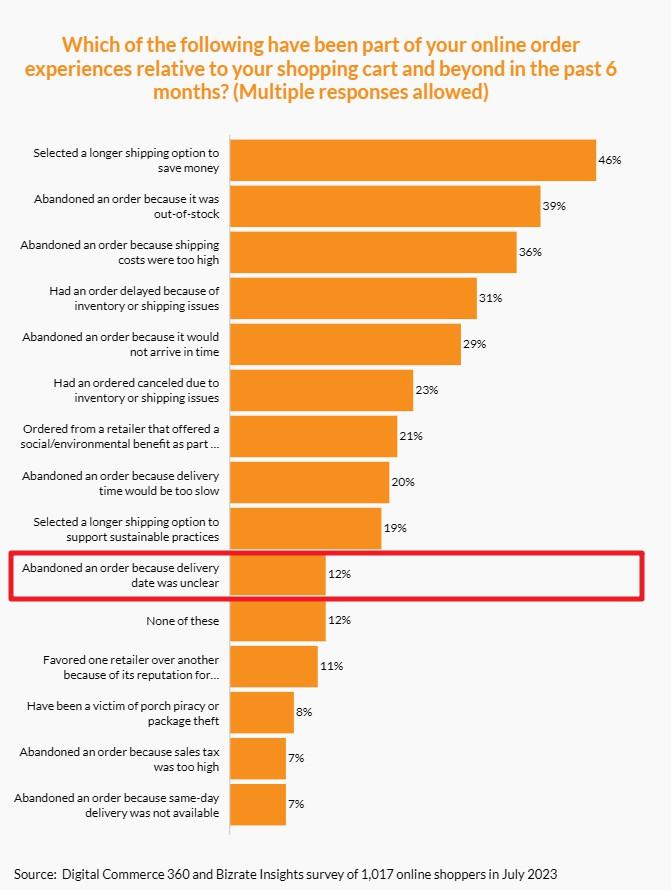
Accurate delivery promises also lower cart abandonment. One survey from Digital Commerce 360 found that 12% of online shoppers leave their carts because of unclear delivery timelines. Meeting delivery expectations at this stage is directly tied to increased sales.
Besides accurate delivery dates, offering faster or more reliable shipping options also pushes average order value up.
Imagine one of your customers is buying a birthday gift with a tight deadline. If you offer them a 2-3 day shipping option at checkout, some will gladly pay a little more just to make sure it arrives in time.
The benefits don’t stop at the first purchase either. A well-kept delivery promise influences how customers perceive your brand’s reliability, which leads to word-of-mouth referrals (so new customers for you!) and long-term customer loyalty.
The Operational and Customer Cost of Vague Delivery Dates
As much as a solid delivery promise can help your revenue, sticking with vague delivery dates puts your business in a position where customers are constantly left guessing about their order status.
Vague delivery dates are one of the biggest drivers of WISMO tickets, which are “Where Is My Order?” inquiries that pile up in your support queue and eat into your team’s time. When customers have no clear delivery time to reference, they start asking. And they ask a lot.
When the order doesn’t show up when a customer assumed it would, based on whatever mental math they did with your “5-7 business days” shipping time window, you’re probably looking at refund requests, disputes, and one-star reviews.
According to Radial, nearly 80% of shoppers won’t buy from a brand again after a bad post-purchase experience. One delivery estimate that ruins someone’s plans is enough to lose them for good. And that’s not all.
Customers who get their order later than their expected delivery time also tend to spend less the next time around, and some just stop ordering altogether. If you fix this, you can lower your dispute rate, cut down on negative reviews, and reduce the kind of costs that quietly build up when delivery goes wrong.
Where to Display Delivery Promises Across the Funnel
Your delivery promise should be visible in all the locations where your customers make decisions about their orders. Here are the key spots to cover:
- Product page: Place it right below the price or near the add-to-cart button. This is where shoppers are still deciding, and a specific arrival date gives them the information they need to commit to the purchase.
- Checkout: Show projected delivery dates alongside each shipping speed option, so customers can see exactly when their order arrives based on what they choose. This is where buyers make their final call, and having that laid out clearly reduces the chance they leave without completing their order.
- Order confirmation page or email: Once the purchase is done, confirm the delivery date again. It reassures customers that their order is being handled and sets a clear expectation from the start (which saves you a lot of “did my order go through?” messages).
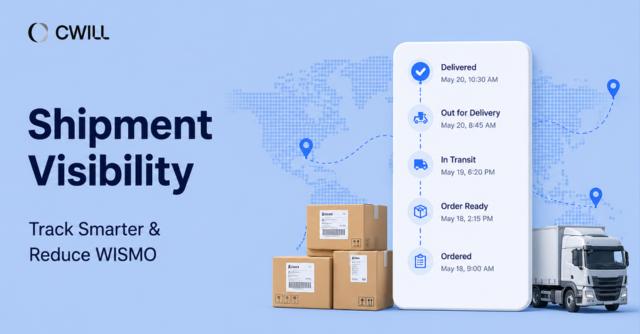
It doesn’t end there. Your post-purchase tracking page should also reflect the delivery promise you made at checkout, with real-time shipment updates that keep customers informed at every stage.
If you’re able to cover all three touchpoints, you’ll see fewer support tickets, stronger purchase confidence, and customers who are more likely to come back.
Build Accurate Delivery Promises with Operational Data
If you want to provide an accurate delivery promise, you need to review your partner carriers’ historical performance. Look at how long the past orders took to arrive, then use that to set a more “realistic” baseline for estimated delivery dates.
After checking historical data, you have to align it with your operations. Audit the following factors:
- Warehouse cutoff times
- Order processing speed
- Staffing levels
- Fulfillment capacity
ALL of these affect when an order can actually leave your facility (and when it will land at your customer’s door).
Let’s say that your warehouse processes same-day orders, but the cutoff time is 2 PM. You need to make sure that the displayed estimate on your product page reflects that, so any order placed after that time shows a later delivery date (usually the next day).
Delivery promises should also be adjusted based on region and season. Online orders from remote areas may have longer transit times than those from the city. Peak periods… like holidays and sales events, are also factors you need to consider when setting a delivery promise.
Changing estimates based on the factors we mentioned will help you prevent over-promising, reduce support tickets, and also improve customer trust.
Strengthen Delivery Promises with ParcelWILL Tracking
A clear delivery promise shouldn’t stop after your customer has checked out their product. It actually starts from the moment they see an estimated delivery date on your product page and continues until the order is in their hands.
Post-purchase tools like ParcelWILL help store owners like you support promises with more accurate estimated delivery dates. It analyzes shipping destination, carrier performance, and historical data to get more precise arrival predictions.
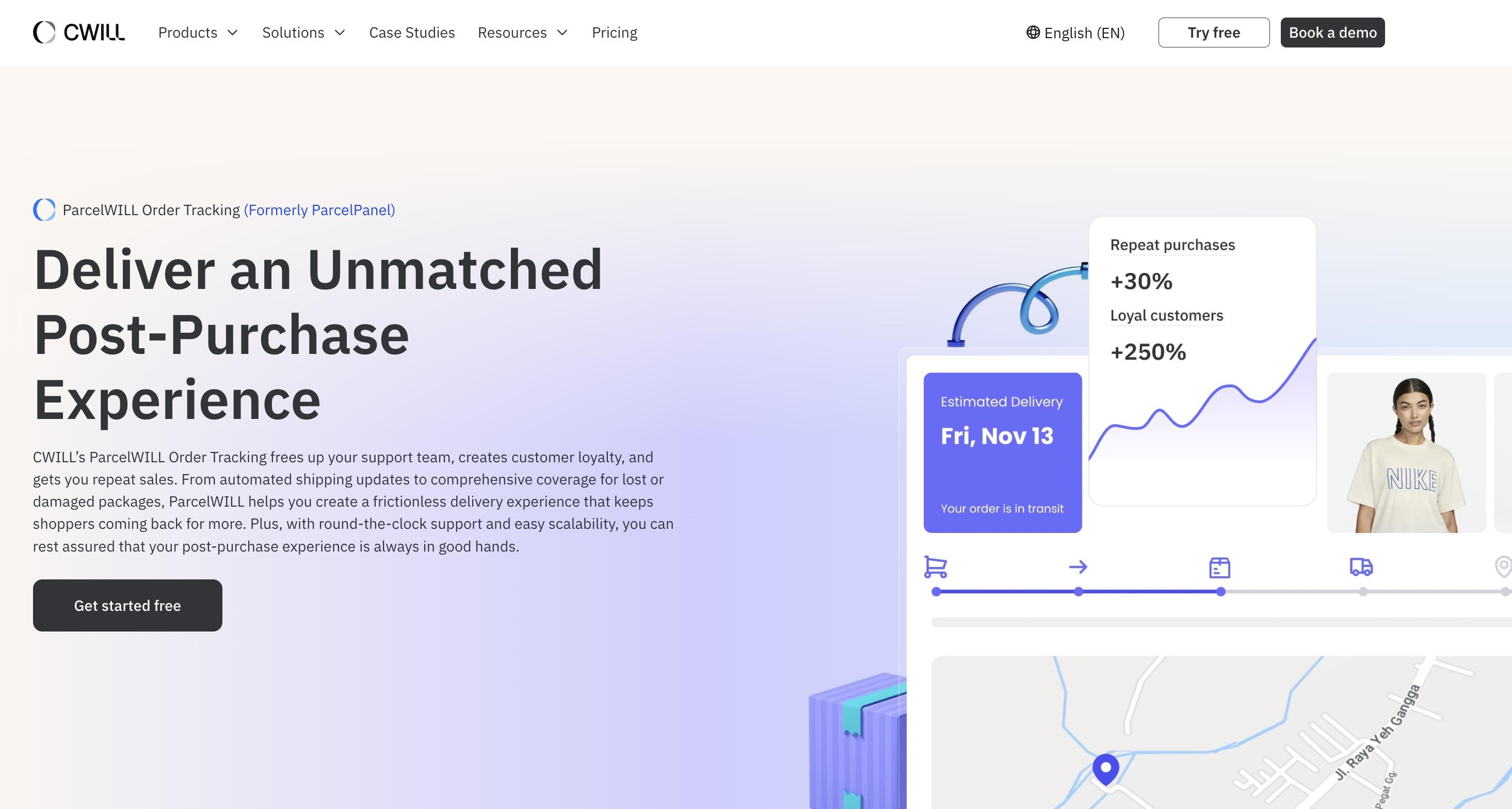
With this feature, your customers will have a better idea of when their order will arrive. It’ll also boost your confidence when setting expectations.
Once their order ships, the app provides real-time tracking updates at all the important delivery stages. Your customers won’t have to send “Where will my order arrive?” to your support, thanks to the proactive notifications.
And lastly, we all know how customers love tracking packages. ParcelWILL provides a branded tracking page you can set up for your online store, so you can keep the experience familiar and consistent. They no longer have to visit carrier websites, and you can create more chances for repeat purchases… and brand engagement.
With this solid order tracking app, you provide clearer delivery visibility to your customers from checkout to delivery. You’ll also lower the support pressure brought by WISMO tickets and build a more reliable post-purchase experience.
Try ParcelWILL for free within your Shopify store.
Measure Delivery Promise Performance with Key Metrics
If you want to know whether your efforts on the delivery promise worked or not, you can track these three metrics:
- Conversion rate: Compare your numbers before and after adding delivery date visibility to your product pages and checkout.
- Cart abandonment rate and WISMO ticket volume: These two work together as your operational health checks. If both trend down after your changes, you’re moving in the right direction.
- Repeat purchase rate: A higher repeat purchase rate means your delivery performance matched your promises (and that customers are satisfied and willing to buy from you again).
Knowing and monitoring these three gives you a data-backed way to decide about your fulfillment process, your checkout experience,… and where to focus your time next.
Conclusion: Delivery Promise as a Growth Lever
A delivery promise connects your operations, your marketing, and your customer experience into one commitment. And you don’t need to offer the fastest shipping to get it right. You just need to be accurate and transparent about what you can actually deliver.
Merchants who treat the post-purchase experience as a growth driver (and not an afterthought) are the ones who see better retention and fewer support issues over time. Start there, and the rest follows.
Ready to reduce WISMO and improve your delivery promises? Install ParcelWILL for free.
FAQs About Delivery Promise
What is a delivery promise?
A delivery promise is a commitment your store makes to customers about when their order will arrive. Unlike vague shipping ranges or speeds, it shows a specific date calculated from real data like inventory availability, carrier performance, and fulfillment time.
How can Shopify merchants improve delivery promise accuracy?
You can improve the accuracy of your delivery promises by reviewing your operational data. Start with your carrier’s historical performance, align it with your warehouse cutoff times and fulfillment capacity, and adjust estimates by region and season. You can also invest in order tracking tools like ParcelWILL to improve post-purchase visibility.

Content Specialist
I’m passionate about creating SEO-friendly content that also resonates with readers. I take data and insights and turn them into actionable, practical ideas. My mission? Helping websites drive organic traffic and grow sustainably.