A shipping policy template is one of the first things customers look for when buying from a new store. It answers key questions about shipping costs, delivery times, and where you ship.
In this article, we put together a free shipping policy template, real examples from well-known brands, and a step-by-step guide to help you build one.
What Is a Shipping Policy?
A shipping policy is a page on your online store that explains how orders are managed, including shipping costs, delivery times, shipping restrictions, tracking, and handling lost or damaged packages.
It helps customers understand what to expect before and during delivery, ensuring transparency and trust. Note that a shipping policy is different from a return policy, which covers what customers should do after a package arrives, including refunds, exchanges, and return windows.
Why Every Ecommerce Store Needs a Shipping Policy
Reduces Cart Abandonment
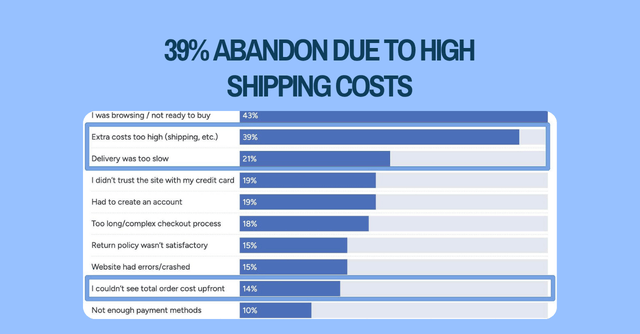
A clear shipping policy explains shipping costs, delivery estimates, and shipping options, which are common reasons for cart abandonment.
With an accessible shipping policy page, customers understand how long shipping takes, shipping fees, and whether you ship internationally or to local customers.
Cuts Down Customer Support Volume
Customers often contact support when shipping information is unclear. A well-written shipping policy acts as a self-service FAQ.
It answers questions about tracking numbers, shipment confirmation emails, lost packages, and shipping delays, saving your team time and reducing repetitive inquiries.
Builds Trust with New Customers
A visible shipping page reassures potential customers that your ecommerce business is credible. Sharing shipping times and shipping carriers shows transparency and professionalism.
Including domestic orders, international shipping information, and multiple shipping options helps customers feel confident about delivery and your overall shipping process.
What to Include in Your Shipping Policy Template
Before creating your shipping policy template, let’s go over the must-have sections you need to cover:
Shipping Rates and Costs
Customers want to know how much shipping will cost them. Your shipping policy should mention all your rate structures (whether that’s a flat rate or weight-based pricing). Plus, make sure to include free shipping threshold, if you offer one.
We suggest you use a table to present the rates. Like this:
| Order Amount | Shipping Cost |
|---|---|
| Under $50 | $5.95 |
| $50 and over | Free |
Handling fees should also be communicated. Your customers won’t appreciate “hidden fees” at checkout, and it can discourage them from buying.
Order Processing Times
How long does it take for your business to prepare and ship orders?
Explain how long it takes to process orders and ship them. Include business days, processing times, and estimated delivery times. Distinguish:
- Processing time: Time to process orders and prepare packages shipped.
- Transit time: How long the shipment carrier takes to deliver domestic orders or international orders.
Shipping Methods and Estimated Delivery Times
You also have to list every shipping options you offer and provide a realistic delivery window for each of them. Somethig like this table:
| Shipping Method | Estimated Delivery |
|---|---|
| Standard | 5-7 business days |
| Expedited | 2-3 business days |
| Overnight | 1 business day |
| Local Pickup / BOPIS | Same day or next day |
Note potential shipping delays during holidays or peak seasons. Mention your primary shipping carriers and that others may be used.
International Shipping Options
If you offer international shipping, include a section for international shipping policy, international shipping information, international shipping options, and countries served.
Clarify responsibility for customs and import duties, import duties, and taxes. Include realistic delivery estimates for international customers and instructions to ship internationally properly.
Shipping Restrictions and Exclusions
Not all products can be shipped everywhere, and your policy needs to say that clearly.
Certain items like alcohol, aerosols, and lithium batteries have carrier restrictions or regional regulations that affect how and where they can be delivered.
Also clarify whether you ship to P.O. boxes, APO/FPO addresses, or military bases. These destinations often require different carriers or longer processing times, and customers in those situations need that information before placing an order.
Order Tracking Details
Let customers know when to expect their shipment confirmation email and when the tracking number will update (typically within 24 hours).
Clear tracking information reduces WISMO inquiries and improves the post-purchase experience.
With ParcelWILL Order Tracking, customers get a branded tracking page with real-time updates, so they always know where their order is without contacting support.
Lost, Damaged, or Missing Packages
Lost packages can happen, even with the best shipment carrier. A clear shipping protection process helps protect both you and your customers.
Explain what to do for lost or damaged orders, including contact steps, timelines, and expected resolutions. This sets clear expectations and reduces chargebacks by guiding customers to follow the proper process first.
Free Shipping Policy Template
Writing your shipping policy from scratch takes time. Using a template means you can fill in your details and publish it in one sitting, without accidentally missing a section that confuses customers later.
Here’s a sample shipping policy template you can copy and edit for your own policy:
[Your Store Name] Shipping Policy
Last updated: [Date]
Order Processing
All orders are processed within [#] business days. We do not process or ship orders on weekends and public holidays. If there is a delay in your order, we will reach out to you via email.
Shipping Rates and Delivery Times
| Shipping Method | Estimated Delivery | Cost |
|---|---|---|
| Standard Shipping | [#-#] business days | [Free / $X] |
| Expedited Shipping | [#-#] business days | $X |
| Overnight Shipping | 1 business day | $X |
Free shipping is available on orders over $[amount].
Order Tracking
Once your order ships, you will receive a confirmation email with your tracking number. Please allow up to [#] hours for tracking to activate.
Lost or Damaged Packages
If your order arrives damaged or does not arrive at all, please contact us at [email] within [#] days of your expected delivery date. Please keep all packaging materials and photos of any damage, as these may be needed to process your claim.
International Shipping
We currently ship to the following countries: [list countries]. International orders are estimated to arrive within [#-#] business days after processing.
Please note that customs fees, import duties, and taxes are the responsibility of the customer. We have no control over these fees and cannot predict what they may be.
For more information on customs in your country, please contact your local customs office.
Questions?
If you have any questions about your order, reach out to us at [email] or visit [contact page URL].
Shipping Policy Examples from Real Stores
Here are some great shipping policy examples you should check out:
ASOS
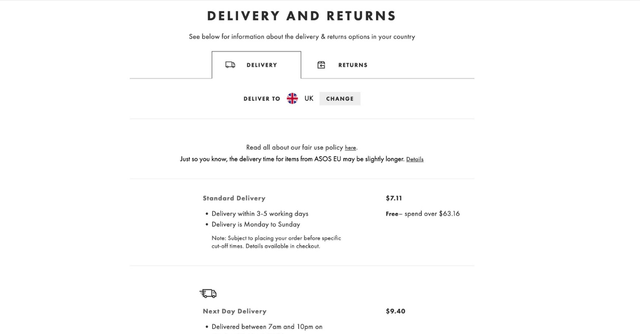
ASOS presents a clear shipping policy with delivery and returns in separate tabs. Each shipping method is detailed with pricing, delivery windows, and order cutoff times.
Best Buy
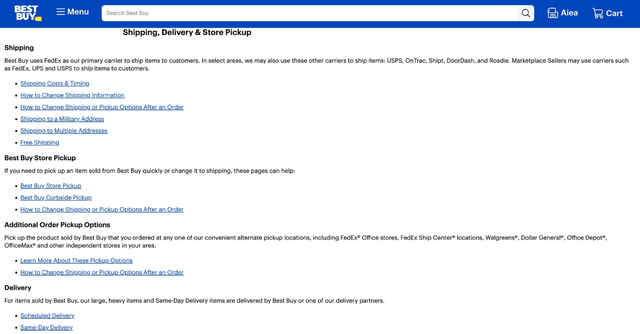
Best Buy organizes its shipping policy like a directory, with short descriptions and linked subpages. Shipping carriers are listed for transparency, letting customers quickly find the information they need.
Glossier
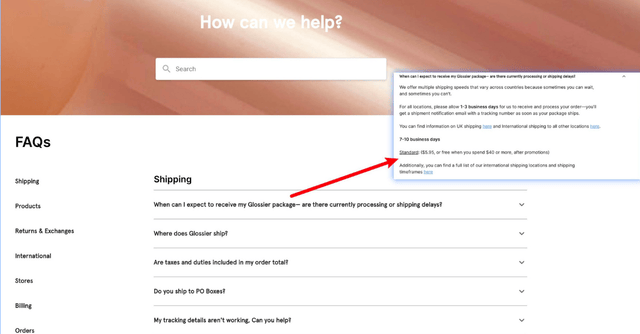
Glossier uses a FAQ-style shipping policy with collapsible questions, keeping the page clean. It’s placed in the Help Center alongside returns, billing, and order information.
How to Create a Shipping Policy for Your Store
Now that you have a template and examples, it’s time to create or update your shipping policy.
Step 1: Gather Your Shipping Details
List all important shipping details so nothing is missed:
- Your order processing and delivery estimates (for domestic and international shipping)
- All your shipping carriers, shipping carriers, and third-party logistics partners
- Shipping rates, flat rate shipping, fees imposed, customs and import duties, and import duties
- Shipping methods, including expedited shipping, standard shipping, and local pickups
- Free shipping thresholds if you offer free shipping
Step 2: Write It in Plain Language
Use clear language customers can understand. Avoid jargon and legal terms. For example:
- Freight charges → Shipping costs
- Transit period → Delivery time
- Liability is disclaimed → We are not responsible
A well-written shipping policy reduces questions, keeps customers informed, and improves the post-purchase experience.
Step 3: Build a Dedicated Shipping Policy Page
The next step is creating a dedicated shipping policy page on your store. It shouldn’t be a section tucked inside your terms and conditions or any other long document. It needs its own page so customers can find it quickly.
Then, once you publish the page, you have to make it visible. Link it to your footer, checkout page, and product pages. Doing so will allow more customers to find your shipping information right when they need it.
Step 4: Keep It Updated
Regularly update your own policy to reflect changes in:
- Shipping times, shipping charges, and international shipping information
- Shipping restrictions and new regions covered
- Business days for processing and domestic orders
An outdated shipping policy template can confuse customers and damage trust in your online store. Keeping it current helps you manage customer expectations, reduce inquiries, and support smooth online purchases.
Where to Display Your Shipping Policy
Your shipping policy will only do its job if your customers can find it. These are the best places to display your shipping policy:
- Website footer: Most brands put their shipping policy here, and for good reason. It’s the most common place customers look when they want to find store policies, and it stays visible on every page of your site.
- Checkout and cart pages: Your customers might want to double-check shipping costs and delivery times before they checkout.
- Product pages: This is where most buying decisions happen. Having your shipping policy linked here answers shipping questions right before a customer decides to add an item to their cart.
- FAQ or Help Center: These pages are where customers who have questions really go to for answers. Your shipping policy is a natural fit here.
Shipping Policy FAQs
Is a Shipping Policy Legally Required?
No, you’re not legally required to have one. But we highly recommend that you set one up to avoid customer disputes. It can also help increase customer trust and add credibility to your store.
How Long Should a Shipping Policy Be?
There’s no strict word count for this. Your shipping policy just needs to cover every common question a customer might have about their order. A good rule of thumb: if a customer can read it in under 3 minutes, then it’s good.
Do I Need a Separate International Shipping Policy?
Yes, you should have a dedicated international shipping section. It covers customs and import duties, taxes, delivery estimates, shipping restrictions, and international shipping options, making it easy for international customers to understand before online purchases.