Loyalty marketing helps you turn existing customers into brand advocates, lowering acquisition costs while boosting retention, revenue, and engagement.
In this article, we’ll show you what loyalty marketing is, why it is important, and the common types of loyalty programs. We’ll also talk about some strategies to apply for high-converting loyalty marketing.
What is Loyalty Marketing?
Loyalty marketing is a strategy focused on retaining existing customers by offering rewards, personalized offers, and loyalty programs. It helps build customer loyalty, strengthen customer relationships, and encourage repeat purchases.
By using customer data, purchase history, and customer preferences, brands can create a more effective loyalty marketing strategy that increases customer lifetime value, improves customer retention, and turns loyal customers into brand advocates.
Why Loyalty Marketing Is Important for Your eCommerce Brands?
A strong loyalty marketing strategy improves customer retention, boosts customer lifetime value, and increases customer engagement. It also helps build brand loyalty and stand out in competitive markets.
Improve Customer Retention
Loyalty marketing programs are effective customer retention strategies that help retain customers and encourage repeat purchases. By offering rewards and exclusive perks, brands motivate existing customers to return.
There have been many studies showing how powerful loyalty marketing is for customer retention. For example, 85% of customers are more likely to stay with brands that offer loyalty programs, according to Bond’s 2025 loyalty report.
Increase Customer Lifetime Value
Another key benefit of loyalty marketing is that loyal and repeat customers spend more than new ones. This increases repeat purchases and the total revenue a customer brings over their lifetime.
Higher lifetime revenue also helps reduce acquisition costs, making your loyalty marketing strategy more cost-effective and sustainable.
Differentiate Your Brand with Rewards
A well-designed loyalty program helps your brand stand out in a competitive market and attract new customers. By offering rewards and exclusive perks, you create more than just a product advantage.
Even when competitors offer lower prices, strong loyalty marketing programs can shift focus from price to experience. This builds brand loyalty, encourages repeat purchases, and turns customers into brand advocates.
Collect Customer Data to Drive Engagement
Loyalty programs help you collect valuable customer data to improve your loyalty marketing strategy. This includes purchase history, customer preferences, and customer behavior, helping you understand what drives your customers.
With these insights, you can refine your marketing strategies, offer more relevant rewards, and boost customer engagement and customer satisfaction. This leads to better results and more effective customer retention.
Common Types of Customer Loyalty Programs
The common types of customer loyalty programs are point-based, tiered loyalty, paid, value-based and hybrid. We’ll talk about each of them.
Points-Based Loyalty Programs
Points-based loyalty programs let customers earn points for actions that benefit a brand. This can include making purchases, leaving reviews, or sharing on social media.
Customers can redeem points for discounts, or free products. PetSmart’s Treats Rewards is a points-based loyalty program example. It encourages repeat business, and turns satisfied customers into loyal brand advocates.
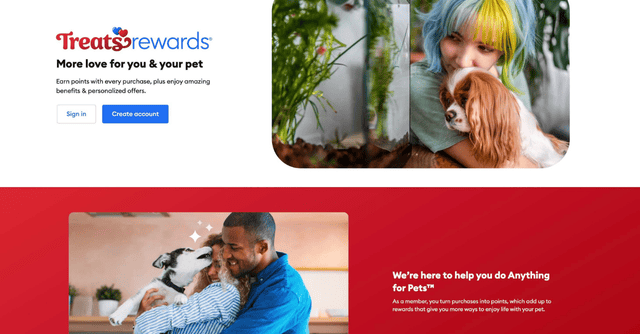
Their members earn points per purchase and can redeem them for savings, on top of getting personalized offers, free shipping, and even birthday gifts for their pets.
Many brands use this type because it’s easy to understand and very flexible (as they can offer any kinds of rewards). It’s also an effective strategy in bringing repeat business. But it needs a reliable system that can accurately track every single point earned, redeemed, and expired for every customer.
Tiered Loyalty Programs
Tiered loyalty programs also use points, but customers can unlock better rewards as their status or level gets higher. That makes it more effective in creating loyal customers.
Nordstrom’s The Nordy Club is a great loyalty program example for this. It has four tiers: Member, Influencer, Ambassador, and Icon. And while all members get similar base benefits, those in the higher tiers enjoy more premium perks.
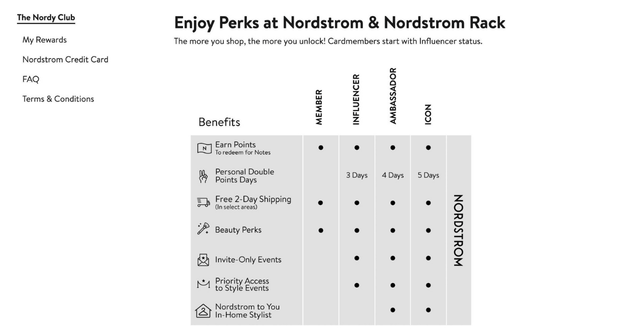
Because tiered loyalty programs offer a sort of progress, customers are more willing to spend and engage more to reach their desired tier. The only thing is that brands have to be smart with the reward structure. Offering too little or too much at each level can ruin the motivation to keep going.
VIP / Paid Loyalty Programs
Up next is VIP/Paid loyalty programs. These are subscription-based reward systems, so customers pay a fee (either monthly or yearly) to get access to “perks.”
With this program type, customers don’t have to worry about collecting points. But what you might offer instead are plans.
We think Amazon Prime is the best example for this. Their customers can pick and pay for their desired plan for fast free delivery, unlimited streaming, grocery savings… and even fuel discounts.
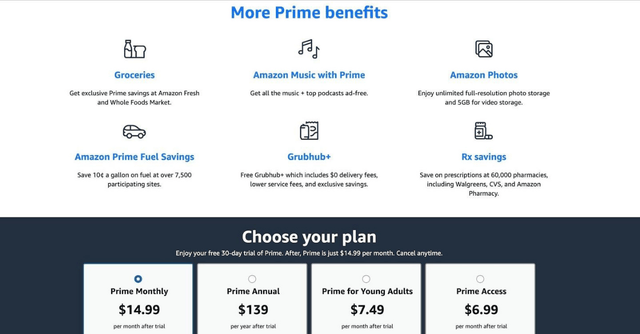
For merchants like you, this type of loyalty marketing program is simpler to manage since you’re not tracking points for every single action.
And since customers PAY for it, there’s a higher chance that they’ll actually use the benefits and buy from you more consistently. But that can also be a downside (as not everyone is willing to pay). So, expect that your sign-up rate will be lower compared to free programs.
Value-Based Loyalty Programs
Not all loyalty programs are just about points and discounts. Some brands connect their program to a cause that attracts socially conscious consumers. That’s the whole idea behind “value-based” loyalty.
The Body Shop is one of the brands that commit to this type of customer loyalty marketing. With their Love Your Body Club, members earn points per purchase, but the twist is that they can donate those points directly to partner charities.
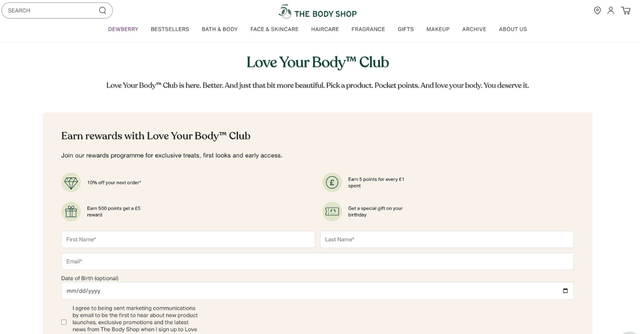
It makes purchasing more special because it adds a meaningful layer to every transaction.
Hybrid Loyalty Programs
Last on our list is a mix of two or more loyalty programs: Hybrid. The most common combinations here are:
- Points with tiers
- Points plus value-based
- Tiers plus VIP/Paid
Take TOMS’ loyalty program. Their existing customers earn points for purchases and other actions like signing up for emails, following on social media, leaving reviews, and even reading content.
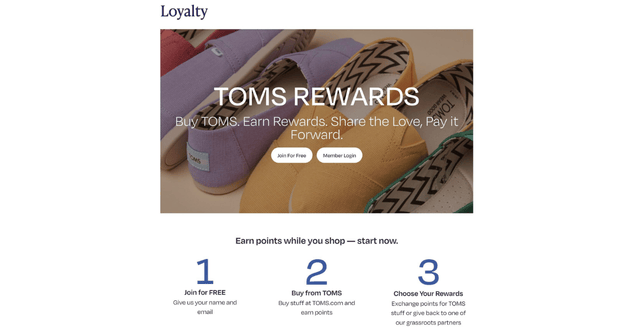
Then they connect this with three tiers, where higher tiers unlock exclusive perks (i.e., birthday discounts and point multipliers).
Since it includes multiple customer retention strategies, hybrid loyalty programs can speed up results. But its complexity can cause a huge mess on the back-end… if you don’t have a good loyalty app to manage it.
How to Create a High-Converting Loyalty Program
To create a loyalty program that works, start with clear goals. Know your customers, pick the right type of program, and offer rewards they will love. Here’s how to do it:
Define Clear Goals and Metrics
If you really want to create a results-driven loyalty program, you have to be sure of what you want to achieve. Do you want to:
- Get more repeat purchases?
- Improve your customer retention rate?
- Increase customer lifetime value?
We suggest you pick one or two goals (or metrics) and focus your efforts on them. This is the best way to not get side-tracked… and to stay consistent on your decision-making.
Let’s say your goal is to bring up customer lifetime value from $250 to $500 per customer in one year. You introduced a loyalty program, and within six months, it improved your repeat purchase rate… but the average order value is still the same.
Since that’s not aligned with the goal you set, you can “recalibrate” your strategy right away.
Know Your Customers
Your customers are the heroes of any successful loyalty program. Use purchase history, buyer behavior, and customer feedback to find your most loyal customers and what motivates them.
Group customers by behavior. Offer discounts to repeat customers and exclusive perks to big spenders. This rewards customers, attracts potential customers, and improves your program for both new and existing customers.
Select the Right Loyalty Program Type
If you’re done defining your goal and customers, it’s time to pick the right loyalty program to run. We already discussed the choices earlier (with some brand examples), so feel free to read that section again.
But if you don’t know which one works best for your type of business, here’s a quick guide:
- Points-based: Perfect for stores with frequent but small purchases.
- Tiered: Fits brands that want to reward and retain higher spenders.
- VIP/Paid: This is for brands that already have a loyal following and are willing to pay for better access.
- Value-based: Brands that are also about a cause or mission that their customers care about.
- Hybrid: If your customer base is diverse and one program type alone won’t cover what they need.
PRO-TIP: Check out your best-selling products and how often your average customer buys them. If they buy small items regularly, a points-based program is a good place to start. But if they spend more per order and buy less often, tiered or VIP might get you better results.
Offer Engaging Rewards
After picking the right program, choose rewards that match customer preferences, like discounts, free products, free shipping, or early access. Make them achievable so customers stay motivated, for example 1 point per $1 spent and 500 points for a 10% discount.
Provide multiple reward options, including monetary rewards, experiential perks, and exclusive access, so customers have choices. Loyalty apps like TrustWILL make managing these rewards simple and keep engagement fun without extra work.
Promote Your Loyalty Program Across Channels
Email, SMS, social media, on-site banners, and a referral program are just some great channels to promote your loyalty program.
If you really want to get more participants, you need to repeatedly expose your existing customers to your offers. Conversion takes time… and the chances of them signing up right away are pretty slim. So, you need to make an effort to keep it within their sight (and at the top of their mind).
PRO-TIP: Use consistent messaging, but don’t be too pushy. Share it in a way that feels natural, such as mentioning it at the end of a thank-you email or adding a simple banner to your homepage.
Track and Optimize
The final step in an effective loyalty program is tracking and optimizing. Review key metrics regularly to see if your rewards encourage customers, drive repeat purchases, and build emotional loyalty.
Use purchase history and referral program data to refine rewards and messaging. Regular updates help create lasting relationships, turn customers into enthusiastic brand advocates, and encourage word of mouth marketing while making customers feel valued.
Effective Loyalty Marketing Strategies to Increase Customer Retention
There are several loyalty marketing strategies you can use to increase customer retention. Some of them are launching referral programs, gamifying your member experience, and building a brand community around your products.
Launch Referral Programs
One of the best ways to really grow your customer base is to design your own referral program. You can be creative here and think of the best rewards you can offer to your customers (at the same time, ones that won’t cost you too much).
Start with discounts or store credit, and work your way up to exclusive gifts for your most active referrers.
What’s great about this is that you’re working on two things at once. Your existing customers feel rewarded for sharing, which keeps them coming back. And the new customers they bring in already have a good impression of your brand before they even buy.
Leverage Social Media Engagement
If you have social media accounts and haven’t been using them for your loyalty strategy, this is the sign you should.
Consistent posting, running giveaways, collaborating with influencers, and sharing real customer feedback are all things you can do to stay visible and build a stronger connection with your audience. When customers see your brand regularly and feel like there’s a real person behind it, they’re more likely to trust you, come back, and recommend you to others.
Social media shapes how customers perceive your brand before, during, and after a purchase. So if your presence is weak or inconsistent, it can affect how loyal your customers actually feel toward you.
Gamify Member Experience
Have you ever wondered why computer games are fun and addicting? The “small wins” give a dopamine boost (that feel-good brain response that makes you want to keep going).
You can use that same level of “fun” in your loyalty marketing. Adding tiers, badges, missions, and progress bars to your program gives customers something to work toward beyond just discounts. Each small achievement they unlock makes them more invested in your brand, which is what you really need to increase repeat purchases and long-term customer value.
Offer Surprise Rewards
Another great dopamine boost is getting something you didn’t expect. And that’s exactly what surprise rewards do for your customers.
Let’s say that you want to show some appreciation to your most loyal buyers. What you can do is offer surprise bonuses either during their birthdays, Christmas, or after they hit a certain number of purchases. It doesn’t have to be extravagant to gain customer satisfaction.
Just a simple “Hi, Ben. Here’s an extra 100 points for your birthday” or “Happy 1 year with us, Alexa. Enjoy this exclusive discount on your next order” goes a long way.
PRO-TIP: Keep track of which surprise rewards actually get redeemed. If a birthday discount gets used more than a milestone gift, that tells you what your customers actually value, and you can focus more of your budget there.
Support Social Causes
Is there a cause you really want to support? Maybe supporting a local charity for underprivileged children or funding mental health programs in your community. You can use that to promote successful loyalty programs that are value-based.
It’s effective in building long-term customer relationships because you tied your brand to a purpose. When your customers know that buying from you means contributing to something meaningful, they feel more connected to your brand than any points system can provide.
Some great examples are donating a percentage of each purchase to a cause, offering points for sharing your mission on social media, or letting customers choose which charity their rewards go to.
Build a Brand Community & Advocacy
Creating an exclusive online community for your loyalty program members is one of the more underrated strategies on this list. It can be a private Facebook group, a Discord server, or even a members-only section on your website.
Inside that space, you can share behind-the-scenes content, recognize your top members publicly, and encourage conversations about your products.
What happens over time is that your most engaged customers start talking to each other, sharing experiences, and naturally recommending your brand to people outside the group.
How TrustWILL Helps You Build and Scale Loyalty Programs
TrustWILL Loyalty & Referrals is a Shopify app that provides you with powerful features to build, manage, and grow a loyalty program that fits your store and your customers.
Build Flexible and Impactful Loyalty Programs
TrustWILL lets you design a loyalty program around how your business actually works. You can set up a custom points system, create VIP tiers, run bonus campaigns, and give customers multiple ways to redeem their rewards.
What’s worth noting is that you’re not limited to rewarding purchases only. Customers can also earn points for signing up, sharing on social media, or leaving a product review.
That keeps them engaged with your brand even between orders, which naturally increases how often they come back.
Integrate Loyalty with Reviews for Maximum Engagement
TrustWILL Loyalty works directly with TrustWILL Reviews, and that combination is where things get interesting. When a customer leaves a review, submits a photo, or uploads a video, they earn points for it automatically.
This creates a feedback loop that benefits both sides. Your customers feel rewarded for sharing their experience, and you get authentic user-generated content that builds trust with new shoppers.
And because the whole process is automated, you don’t have to manually track who submitted what. TrustWILL handles it, so your customers get their points right away, and you stay focused on running your store.
You can book a demo to learn more about this app.
FAQs About Loyalty Marketing
What are the main types of loyalty programs?
There are four types you’ll commonly see: points-based, tiered, paid/VIP, and value-based programs.
- Points-based: Customers earn points per purchase and redeem them for discounts or free products.
- Tiered: Higher spenders unlock better perks and rewards.
- Paid/VIP: Customers pay a recurring fee for exclusive benefits like free shipping or early access.
- Value-based: Rewards are tied to a cause or mission your customers care about.
What’s the difference between a loyalty program and a referral program?
A loyalty program rewards your existing customers for coming back and engaging with your brand. A referral program rewards them for bringing new customers in. One focuses on retention, the other on acquisition. You can benefit from running them together because they support different parts of the customer journey.
Should I reward customers for things beyond purchases?
Yes. Rewarding actions like reviews, referrals, and social shares does more than just keep customers engaged. It brings in new buyers, builds trust with real content, and keeps your brand visible. Just don’t overdo it… and only reward actions that are meaningful for your business’ growth.
How long to see results from a loyalty program?
Seeing results may vary depending on what you’re measuring. Early engagement like sign-ups, points activity, and redemptions can show up within a few weeks. But bigger wins like improved retention and increased revenue might take around 6-12 months to build up.

Marketing Manager
Jaelle Lin is the Marketing Manager at CWILL, driving DTC growth on Shopify across retention, loyalty, and post-purchase experience. She works with brands to optimize the entire customer journey from acquisition to order tracking, shipping protection, returns, and lifecycle engagement, helping build sustainable, long-term revenue through customer relationships.